Income Tax Basics: Understanding the Difference Between TDS and TCS
- 3 min read•
- 1,218•
- Published 18 Dec 2025
While presenting the Union Budget 2024, Finance Minister Nirmala Sitharaman announced the formation of a group to review the Income Tax Act 1961 to make it clearer and more understandable.
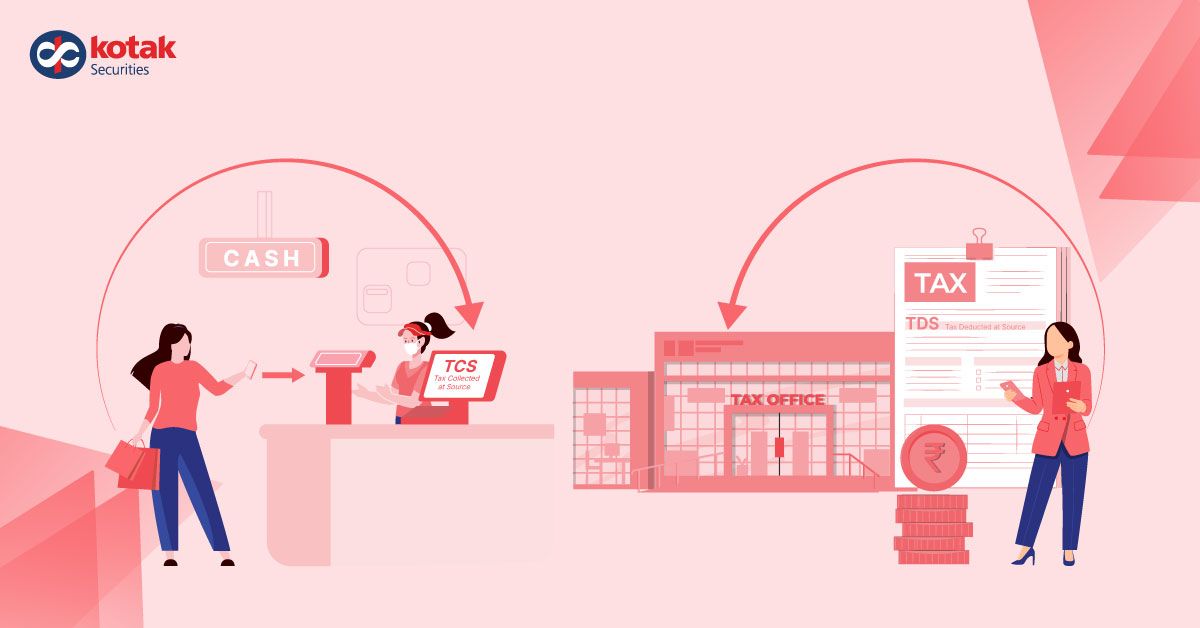
This blog aims to simplify two essential concepts of income tax: tax deducted at source (TDS) and tax collected at source (TCS). Individuals often mix these up and use them interchangeably, which isn’t correct. Read on to learn the key differences between TDS and TCS.
What is TDS and TCS?
TDS and TCS are essential taxes levied by the Government of India and form a vital cog in the wheel of tax collection. Simply put, they are methods through which the government collects taxes from the income of businesses and individuals.
TDS vs TCS: The differences
The table captures TDS and TCS differences on various parameters:
Meaning | TDS involves income payer deducting tax from payment and paying it to the government on the payee's behalf | It’s a system where seller of goods collects tax from buyer and remits it to the government |
Transactions covered | Applicable for a wide range of payments, including salaries, interest, professional fees, brokerage, commissions, and rent, among others | Applicable for a limited number of goods and services such as minerals, precious metals, and e-commerce transactions, among others |
Deduction time | When payment is made or due date, whichever is earlier | At the time of sale |
Person responsible | Individual or company which makes payment | Individual or business selling goods and service |
TDS and TCS rates
Now that you know the differences between TDS and TCS, let’s see their rates applicable. TDS rates for some types of payments are as follows:
Salaries | As per the individuals tax slab |
Rental charges more than ₹ 2.4 lakhs for machinery, land, plant, building, etc | 10% for land and building and 2% for plant and machinery |
Purchase of immovable property of more than ₹ 50 lakhs | 1% |
Prize money of more than ₹ 10,000 for horse race, crossword, etc | 30% |
The TCS rates for some of the commonly purchased goods are as follows:
Tendu leaves | 5% |
Motor vehicles costing more than ₹ 10 lakhs | 1% |
Metals | 1% |
Forest produce barring timber and tendu leaves | 2.5% |
Reasons for imposing TDS and TCS
TDS and TCS are imposed to:
- Thwart tax evasion
- Streamline the tax collection process
In TDS, as the income payer remits tax to the government on the payee's behalf, it results in upfront tax payments. This ensures that the government promptly receives its revenues. On the other hand, in the case of TCS as the seller of goods and services collects tax from the buyer and transfers it to the government, it simplifies tax collection by reducing the number of taxpayers who are obligated to file returns.
Wrapping it up
While TDS and TCS are ways for the government to collect taxes, the difference primarily lies in the tax collection mechanism. Whether you are running a business or are an individual, it is crucial to know the differences between TDS and TCS and stay updated about their recent regulations to avoid penalties.
Disclaimer: This article is for informational purposes only and does not constitute financial advice. It is not produced by the desk of the Kotak Neo Research Team, nor is it a report published by the Kotak Neo Research Team. The information presented is compiled from several secondary sources available on the internet and may change over time. Investors should conduct their research and consult with financial professionals before making any investment decisions. Read the full disclaimer here.
Investments in the securities market are subject to market risks, read all the related documents carefully before investing. Please read the SEBI-prescribed Combined Risk Disclosure Document before investing. Brokerage will not exceed SEBI’s prescribed limit.