RBI cuts repo rates third time in a row - What does it mean for you?
- 5 min read
- 1,136
- Published 18 Dec 2025
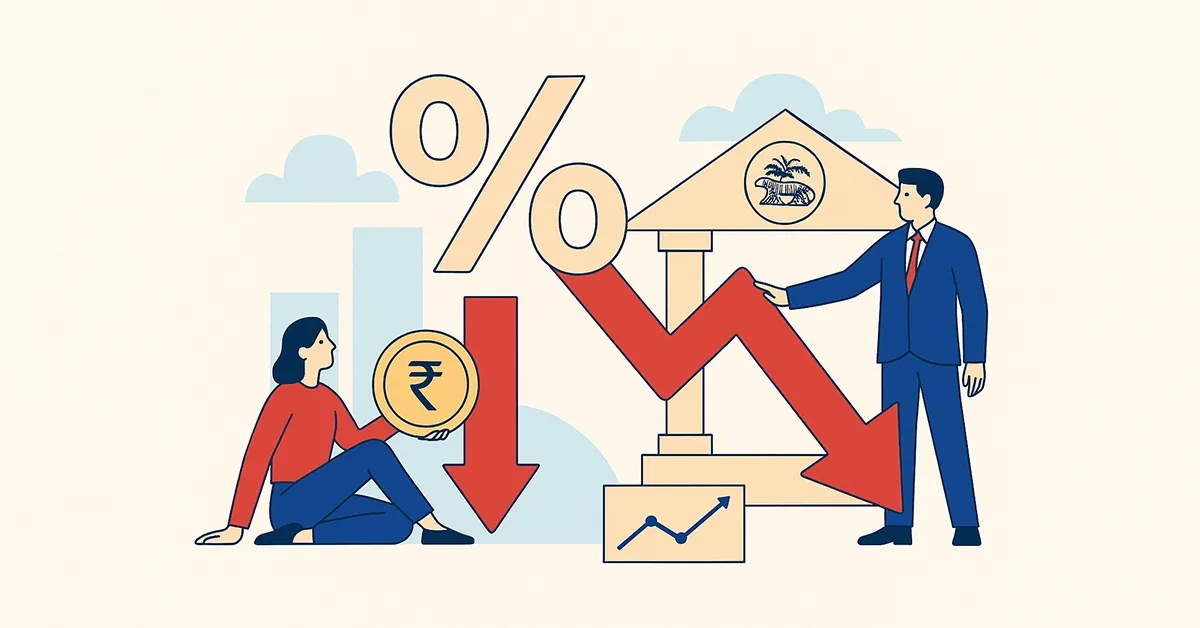
The Reserve Bank of India (RBI) has cut the repo rate for the third time in a row, leaving many to wonder how this policy change will impact their everyday finances, investments and borrowing costs. For the unitiated, Tthe repo rate, or the rate at which the RBI lends money to commercial banks, is a very effective tool for the Indian economy. Each time the central bank changes the repo rate, it is not just bankers or economists who pay attention to the change – you, the consumer, investor, and borrower, ultimately get the end result.
Why has the RBI cut the rates again ?
This third consecutive rate cut comes against a multi-faceted economic backdrop. Inflation is now forecast to average 3.7% in FY26, well below the RBI’s 4% target, which gives the RBI more scope for manoeuvre. Meanwhile, economic growth has just begun to show signs of recovery, with urban demand rebounding and investment activity picking up. The RBI has cut the repo rate by 50 basis points (0.50%) to 5.5% and slashed the CRR by 100 basis points, releasing ₹2.5 lakh crore into the system to ease liquidity and reduce the cost of funds, particularly for NBFCs.
What does this repo rate cut mean for you?
Cheaper loans and lower EMIs
You will feel the effect of this repo rate cut most directly if you have a home loan, car loan, or any other floating-rate loan. Most banks will pass on the benefit of a lower repo rate to their customers by reducing the rate they offer loans at. This will lead to lower Equated Monthly Instalments (EMIs) and result in more money in your pocket every month.
Easier access to credit
When repo rates decrease, it is easier for banks and financial institutions to lend. For instance, if you are going to buy a new car, renovate your home or expand your business, banks are likely to be much more open to lending and at fairly attractive rates.
Impact on fixed deposits and savings
While borrowers cheer rate cuts, savers may feel a pinch. Banks tend to reduce deposit rates when the repo rate falls, which means your fixed deposits and savings accounts might earn lower interest. If you rely on interest income, you may need to reassess your investment strategy to maintain your returns.
The broader economic impact
Boost to consumer spending
When loans become cheaper and EMIs fall, consumers are more likely to spend on big-ticket items like homes, cars, and appliances. This uptick in spending can help revive sectors like real estate, automobiles, and consumer durables, which have been under pressure in recent quarters.
Stock market implications
Equity investors have a particular interest in the RBI’s rate decisions. Lower interest rates often make equities more attractive compared to fixed-income investments. Sectors like banking, real estate, and automobiles typically see positive momentum when rates are cut, as their earnings prospects improve.
However, the impact isn’t uniform across all sectors. Companies with high debt levels benefit more from lower rates, while those with strong cash flows may see less of a direct effect. It’s also worth noting that sustained rate cuts can sometimes signal economic weakness, which could temper investor enthusiasm in the long run.
What should you do as an investor?
Rebalance your portfolio
With deposit rates predicted to fall further, you might consider rebalancing your portfolio. Diversifying into equities or debt mutual funds could help offset the lower returns from fixed deposits. However, remember that it’s important to align your investments with your risk tolerance and financial goals.
Review your loans
Loans linked to external benchmarks, like the repo rate, see quicker transmission of benefits. If your loan is on the older Marginal Cost of Funds based Lending Rate (MCLR) system, you could consider switching to a repo-linked loan in light of the recent update. Do remember it is prudent to do your due diligence before making any major financial move.
What are the risks?
While a rate cut can be a boon for borrowers and equity investors, it’s not without risks. If inflation starts to rise, the RBI may also reverse course and hike rates again, which could increase borrowing costs.
Conclusion
The repo rate cut will directly affect your wallet, your investments, and your future financial planning. Whether you’re a borrower looking forward to lower EMIs, a saver worried about shrinking deposit rates, or an investor eyeing new opportunities in equities, this policy shift demands your attention and the need to review your finances and stay agile.
FAQs
0 people liked this article.