New vs Old Tax Regime (2025–26)
- 4 min read
- 1,098
- Published 18 Dec 2025
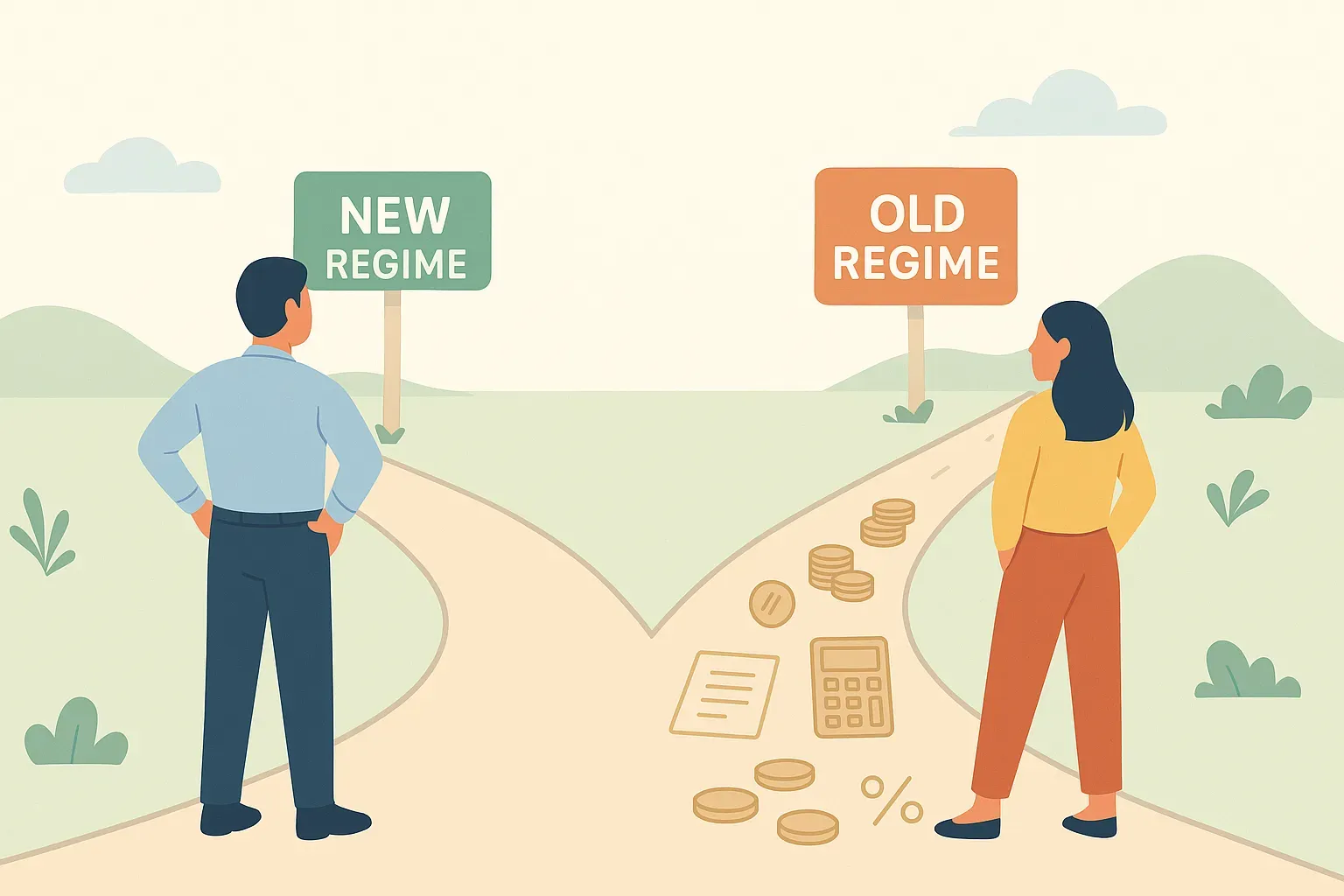
People often say that change is the only constant and even taxes are no exception to this. In recent years, a major shift arrived with the government’s introduction of the new tax regime in FY 2020–21.
Before that, there used to be just one tax regime. What makes matters more interesting is the fact, since the introduction of the new tax regime, the government has made changes only in this regime, keeping the old one untouched. In this blog, we bring to you the various aspects of the old tax vs new tax regimes that can help you understand which one to choose based on your investments.
What is the Old Tax Regime?
First things first. The old tax regime, stories of which you might have heard from your father and grandfather, is a tax structure that taxes you according to your income under 4 distinct slabs. The tax rates under this regime have remained the same for several financial years. Even in the last union budget, the honourable finance minister did not make any changes to the old regime.
The table below shows the various rates applicable under the old tax regime for resident individuals below 60 years under this regime for FY 25-26: Clear Tax
Up to 2.5 lakhs | Nil |
2.5 lakhs to 5 lakhs | 5% |
5 lakhs to 10 lakhs | 20% |
Above 10 lakhs | 30% |
What is the New Tax Regime?
The new tax regime that has been a hot topic of discussion is a new tax structure. This regime has more tax slabs than the old regime. If that scares you, wait! More tax slabs do not always translate into more tax outgo. The table below shows the tax rates in the new tax regime for FY 25–26 for resident individuals under 60.
Up to 4 lakhs | Nil |
From 4 to 8 lakhs | 5% |
From 8 to 12 lakhs | 10% |
From 12 to 16 lakhs | 15% |
From 16 to 20 lakhs | 20% |
From 20 lakhs to 24 lakhs | 25% |
Above 24 lakhs | 30% |
Differences Between Old and New Tax Regime
Here comes the real deal. Knowing the differences between the old and new tax regimes is vital for informed decision-making. Let us understand them one by one.
- Number of Tax Slabs
This is no rocket science. As you can see from the tables above, the number of tax slabs is higher in the new tax regime than the old one. While the old tax regime for individuals below 60 has four slabs, the new one has seven.
- Standard Deduction
The good old standard deduction was reintroduced into the system during Budget 2018, after a 13-year gap. This deduction is a fixed amount you can reduce from your taxable income to lower your tax outgo. The standard deduction amount in the old tax regime for FY 25-26 stands at ₹50,000, while it is ₹75,000 in the new regime.
- Deductions and Exemptions
Perhaps the biggest bone of contention between the old and the new tax regimes is the availability of exemptions and deductions. Note that in the old tax regime, several investments you made qualified for tax exemption.
For instance, premiums paid towards life and health insurance, investments made in public provident fund (PPF), equity-linked savings schemes (ELSS), etc., were eligible for tax exemption in the old tax regime. However, the new tax regime has done away with most of the exemptions available in the old tax regime.
However, before you pass the verdict on the new tax regime based on this difference, listen. Not everything is lost in the new regime. Exemptions available under different sections are:
80 CCD (2) | Contribution made by the employer under the National Pension System (NPS) |
80 CCH | Income earned via Agnipath scheme |
80JJ AA | Eligible businesses can claim a 30% deduction on additional employee recruitment costs. The deduction is available for 3 consecutive assessment years |
- Rebate in the old tax regime vs the new tax regime
Have you noticed that often even after you have a certain tax amount, your overall tax liability comes to zero? The magic is in the rebate under section 87A. It is a tax reduction you get if your income is within the 10% tax slab. Under the old tax regime, a rebate of ₹12,500 is available on income of up to ₹5 lakhs. In the new tax regime, for FY 25-26, this rebate stands at ₹60,000 for an income of up to ₹12 lakhs.
The table summarises key differences between old and new tax regimes based on the above parameters:
Number of Tax Slabs | Less | More |
Standard Deduction | Less (₹ 50,000) | More (₹75,000) |
Deductions and Exemptions | More | Less |
Rebate | Less (₹12,500) | More (₹60,000) |
What Should You Choose?
There is no right or wrong answer to this question. The choice is entirely on your circumstances and needs. The old tax regime may be more suitable if you make significant investments in different financial instruments and want to take their advantage while filing your tax returns.
However, if you prefer a simplified tax structure during ITR filing, you can opt for the new tax regime. That said, you can consult a tax planner in case of any doubts.
Sources:
Economic Times
Clear Tax (1)
Clear Tax (2)
Livemint (1)
Livemint (2)
Clear Tax (3)
Incometax
0 people liked this article.