5 Iconic Budgets that changed the Indian Economy
- 4 min read
- 1,033
- Published 29 Jan 2026
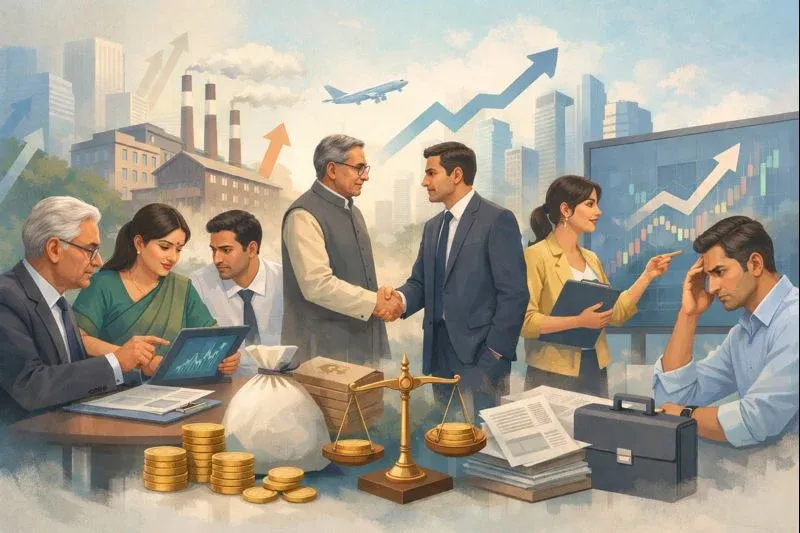
Union Finance Minister of India Nirmala Sitharaman is going to present the Union Budget for FY27 on 1st February, 2026. India’s budget is much more than just a financial statement. There have been some notable moments in history when the budget has reshaped the nation’s economic trajectory.
Some Budgets have brought reforms which have opened up the economy, others have modernised the systems, or even transformed the strategic sectors. Each budget sets the base for India’s economic status and development by ensuring social justice and equality for all people. Let’s have a look at 5 iconic budgets that changed the Indian economy.
1957-58: Wealth Tax Was Introduced
The 1957-58 budget was presented by TT Krishnamachari. It became very popular due to the introduction of the wealth tax, a reform that aimed to reduce inequality and broaden the tax base.
Why Did It Matter So Much At That Time?
- The wealth tax was levied on the net wealth of individuals. Hindu Undivided Families (HUFs) and companies that are based on asset value that is beyond the threshold.
- It brought a shift towards greater fiscal equity by targeting asset-rich individuals rather than just income.
- However, this wealth tax was abolished later in 2016. But it really broadened the tax base, and also provided the tools for fiscal policy during early economic development.
This budget revealed India’s motive to build a progressive tax structure to fund development priorities.
1991-92: The Epochal Budget
The 1991-92 budget, which was presented by then Finance Minister Dr Manmohan Singh in 1991, is one of the milestone budgets. This budget was presented when India was facing a serious Balance-of-Payment crisis and low foreign exchange reserves.
Why Did It Matter So Much At That Time?
- The budget cut down import tariffs and removed restrictive licenses for most industries. It also deregulated industries and opened them up to foreign investments by removing restrictions.
- License Raj came to an end as industrial licensing requirements for many sectors were removed.
- It introduced liberalisation, privatisation, and globalisation. Hence, India was no longer limited to a state-controlled economy but an open and competitive economy.
These structural changes reversed the economic crises, attracted foreign capital, and improved India’s role in the foreign economy.
1997-98: The Dream Budget
Finance Minister P. Chidambaram presented the 1997-98 Union Budget. It earned the title of “Dream Budget” for bringing some really good tax reforms aimed at stimulating growth and investment.
Why Did It Matter So Much At That Time?
- It reduced personal income tax rates with the highest slab cut from 40% to 30%.
- Corporate taxes were simplified by the removal of surcharges and the rationalisation of corporate taxes.
- Voluntary Disclosure of Income Scheme (VDIS) came into existence. This was introduced to encourage the disclosure of income by those who used to hide it. They were charged a lower tax for this. This was aimed at reducing black money.
2000-01: The Millennium Budget
This was the first budget of the Millennium and was presented by then Finance Minister Yashwant Sinha. This budget helped to accelerate India’s emergence as a global IT and Software powerhouse.
Why Did It Matter So Much At That Time?
- Custom duties on computers, software, and related hardware components were reduced with the purpose to encourage the growth of the tech sector.
- Although the budget phased out earlier export incentives (from Manmohan Singh’s reforms) it still gave a boost to IT by lowering duties and encouraging infrastructure.
- Due to reforms in the IT sector, India’s IT/ITeS exports grew significantly, a sector that today plays a major role in contributing to GDP and employment.
- The budget also brought a shift towards using fiscal policy to promote emerging industries rather than just managing macro balances.
2016-17: Digital Inclusion and Modernisation
The 2016-17 budget was presented by Finance Minister Arun Jaitley. It brought many strategic policy innovations.
The budget also introduced the JAM Trinity: JAN Dhan (Inclusive banking), Aadhar (unique identity), and Mobile connectivity. This aimed to improve direct subsidy transfers, lower leakages, and encourage financial inclusion.
Why Did It Matter So Much At That Time?
JAM innovations laid the groundwork for direct benefit transfers, reducing subsidy waste and improving digital infrastructure nationwide.
Conclusion
These five iconic Union Budgets are the reflection of India’s economic journey that has been shaped not by routine policymaking, but by strong decisions taken at critical moments. The 1957–58 Budget laid the foundation for a progressive tax system by addressing wealth inequality. The 1991–92 Budget brought a historic turning point by bringing India out of a severe economic crisis and setting it on the path of liberalisation and global integration. The Popular 1997-98 “Dream Budget” lowered the tax rates and brought confidence in the tax system, while the 2000-01 Millennium Budget recognised technology as a growth engine and helped India become a global IT powerhouse.
The most recent 2016–17 Budget reflected a shift towards modern governance through digital inclusion, financial efficiency, and institutional reform. All these Budgets highlight how fiscal policy has evolved alongside India’s aspirations from equity and stability to growth, innovation, and inclusion. As India awaits the upcoming FY27 Budget, these landmark moments remind us of how well-designed policies can leave a lasting legacy by shaping markets, industries, and the lives of millions of citizens.
Sources
0 people liked this article.