What Is Coffee Can Investing? Strategy & Portfolio Explained
- Updated: 22 May 2026, 5:10 PM IST
- | 6 min read
- 2,200
 Add Preferred News Source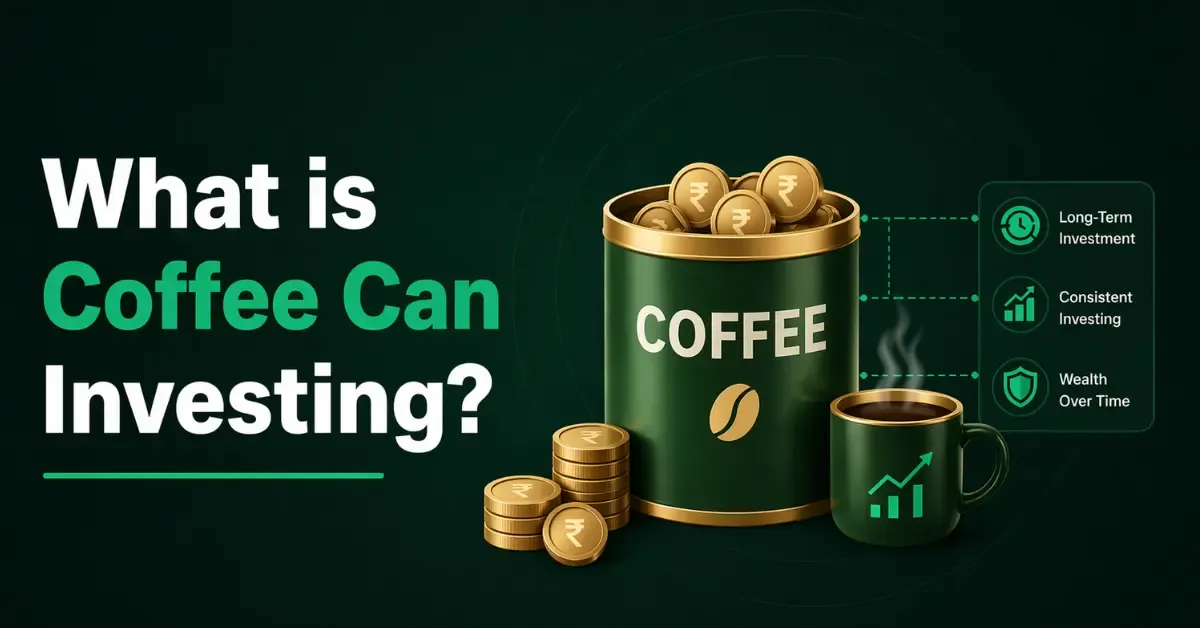
Not everyone enjoys tracking stock prices all day. For many people, constant buying and selling feels tiring and, at times, confusing. Some investors prefer a calmer route. They invest, step back, and allow time to do its job. This is where the idea of coffee can investing comes in.
It is not a new concept. In fact, it is quite simple. You choose a few strong companies, invest in them, and then avoid touching that portfolio for years. It sounds easy, but it demands patience and discipline.
What Is Coffee Can Investing?
To understand what coffee can investing is, think of it as a long-term approach where decisions are made upfront, not every day. You pick a set of good stocks and hold on to them for a long period.
There is no attempt to predict short-term price moves. There is no rush to exit when markets turn volatile. The idea is to stay invested and let the companies grow over time.
In simple terms, it is about buying with care and then doing very little after that.
Origin Of Coffee Can Investing
The term “Coffee Can Investing” traces back to a simple old American habit; people would stash their valuables in a coffee can and leave it alone for years. Drawing on that idea, Robert G. Kirby introduced the concept in a 1984 article. His argument was straightforward: investors might actually do better by picking high-quality stocks and then just holding on to them for the long haul, rather than constantly buying, and selling.
The approach later took off in India after being discussed by Saurabh Mukherjea in his book Coffee Can Investing: The Low-Risk Road to Stupendous Wealth. At its core, it’s a “buy and forget” strategy. This implies focusing on fundamentally strong companies and holding them for a decade or more. The goal is to open up pathways for compounding to grow wealth as time passes, all while minimizing buying and selling.
What Is A Coffee Can Portfolio?
A coffee can portfolio isn’t made by just tossing together a bunch of randomly chosen stocks. Instead, it holds a small group of companies that have shown steady performance, are well-managed, and have the ability to grow over the long term.
As per the coffee can investment strategy, once you’ve invested in them, you largely leave the portfolio alone. There’s very little buying or selling; just a steady commitment to staying invested. The focus is on the long haul, not on chasing or reacting to every quick shift in the market.
In the end, the outcome depends on how these companies perform over the years, not on how often trades are made.
Key Features of Coffee Can Investing
Long-Term Horizon
Time is the backbone of this approach. Investments are generally held for over 10 years. Short-term ups and downs are ignored.
Buy And Hold Strategy
There is no regular churning. You buy and then hold. This reduces trading costs and avoids emotional decisions.
Focus On Quality Stocks
Picking the right stocks is way more important than anything else. Typically, investors go for companies that have stable earnings, a low level of debt, and have been consistently performing.
Low Portfolio Churn
Very few changes are made once the portfolio is built. This keeps things simple and reduces unnecessary activity.
How Coffee Can Investing Works?
It begins with picking the right companies. The focus is on businesses that have grown consistently over time. These are usually firms with steady sales, solid profits, and a business model that has worked well over the years.
After investing, the next step is often the hardest doing nothing. Prices will move. Markets will react to news. But in this approach, you do not respond to every change.
Over time, if the businesses perform well, the value of your investment may grow. The longer you stay invested, the more time these companies get to expand and improve.
Who Should Consider Coffee Can Investing?
This style of investing is not for everyone. It suits people who do not want to sit in front of the screen all day watching prices move.
If you are comfortable keeping things simple and letting your money stay invested for years, it can work well. It also helps if you would rather not keep buying and selling or taking frequent calls.
But one thing cannot be avoided patience. There will be times when markets dip. Staying invested through those phases is part of how this approach works.
Tips To Build A Strong Coffee Can Portfolio
Choose Companies With Strong Fundamentals
Focus on businesses that have shown steady performance over time. Take a close look at their earnings, how much debt they carry, and their long-term growth trajectory. The idea is simple: companies that consistently deliver (e.g., with ROCE above 15% and annual revenue growth over 10%) may outperform the broader market over a ten-year period.
Diversify Across Sectors
Putting your entire capital into a single company can be risky. Allocating it across multiple sectors helps reduce that risk and brings more balance to the portfolio.
Stay Invested For Long Term
This strategy depends on time. Exiting too early may defeat the purpose. Give your investments space and enough time to actually grow.
Avoid Frequent Monitoring
Checking prices every day can create doubt. It may lead to unnecessary actions. Reviewing your portfolio once in a while is usually enough.
Conclusion
At first glance, coffee can investing feels easy to follow. But it does call for a shift in how you think. Instead of reacting to every rise or fall, the idea is to give time for businesses to grow and let that drive returns. The focus slowly moves away from quick gains to steady progress over the years.
With a little patience and less urge to change things often, this approach might be able to gradually accumulate wealth for you over time.
Sources:
Moneycontrol
The Economic Times
Livemint
FAQs On Coffee Can Investing
In this style of investing, you choose a small number of well-established companies and stay invested in them for years, without regularly tracking or altering your holdings.
It is a set of selected stocks that are held for the long term (often decades) without frequently selling or monitoring them.
There is no method that is 100% risk-free. However, focusing on fundamentally strong companies and keeping your investments for a long period of time might be a way to control some of the risks.
There is no fixed rule. Most investors following this approach stay invested for several years to allow the businesses to grow.
The content in this blog is intended purely for educational purposes. Any securities or mutual funds referenced are illustrative in nature and do not constitute a recommendation or endorsement by Kotak Neo. Investors are encouraged to assess their own financial situation and seek professional advice before making any investment decisions. For compliance T&C and disclaimers, Visit https://www.kotakneo.com/disclaimer/
0 people liked this article.

Kotak Neo (Kotak Neo) is India's venerable stockbroking company with a rich legacy. It offers comprehensive investment services across asset classes, prioritising a technology-first approach for a seamless experience. Trusted by 5 million+ customers, it guides you toward financial success with ease of investment and speed of trade.
Note: The opinions expressed in this blog are personal viewpoints and should not be construed as recommendations.