Understanding Financial Statements: Types, Importance & How To Read
- 5m
- 1,679
- Published 06 Feb 2023
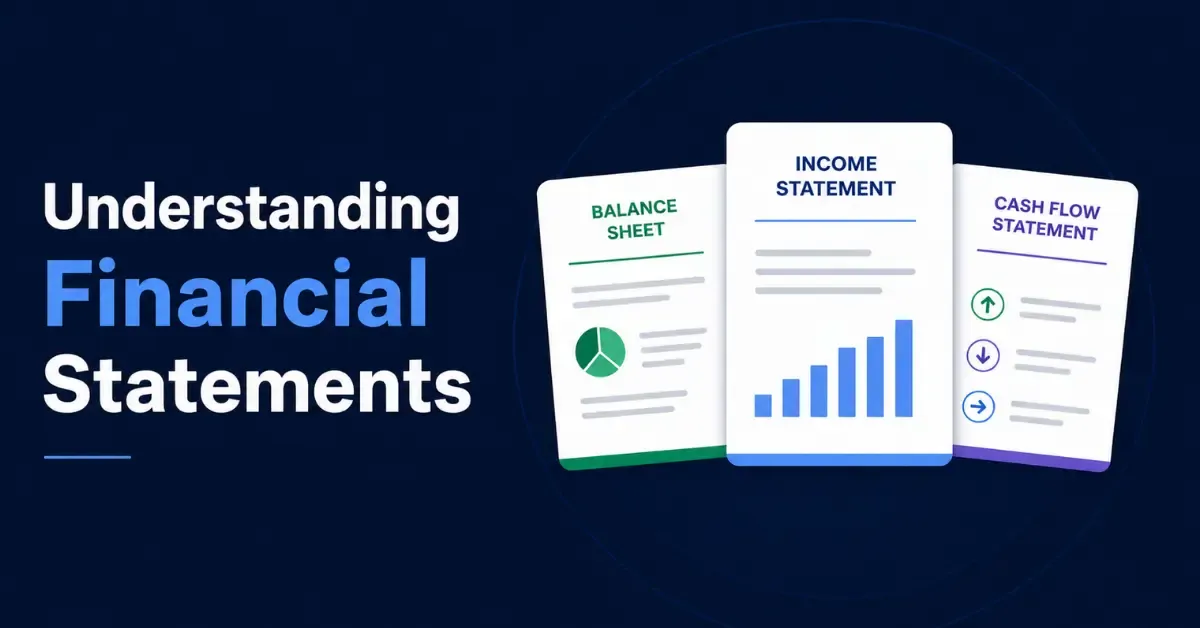
While researching any company, you are likely to come across a financial statement. It is a key document you can use to analyse the company’s historical performance. It is used to effectively measure the success of the company you want to invest in. There are different types of financial statements used to track things like income, cash flow, etc. It provides information that makes it possible to spot patterns and trends, supporting strategic decision-making. You can also modify your investment plans on the basis of this data.
Understanding Basic Financial Statements
Financial statements are the formal records companies use to document their financial health, covering everything from revenue and expenses to cash flow, asset and liabilities. Together, they give investors and stakeholders a clear picture of how a business is actually performing. If you're looking to invest in stocks or simply want to evaluate a company before making any decision, learning to read these documents isn't optional, it is foundational.
Different Types Of Financial Statements
To reflect different areas of financial performance and financial standing, companies usually prepare different types of financial statements.
1. Income Statement
An income statement, commonly called a Profit and Loss (P&L) statement, presents the company’s revenue alongside its expenses for a specific timeframe, generally a financial year. The statement makes it clear whether the business finished with profits or losses. Investors use it as well to evaluate how well the company manages day-to-day operations and spending.
2. Balance Sheet
The balance sheet gives a clear picture of what a company owns and what it owes at a particular date. Assets, liabilities, and equity follow the structure of the accounting equation, where Assets = Liabilities + Equity. Unlike statements prepared for a period of time, this one reflects the financial position only on that specific date, which is why it carries an “as on” date.
3. Cash Flow Statement
This statement records the actual movement of cash in and out of the company. It is divided into operating, investing and financing activities and shows if the company generates enough cash from its operations to cover its expenses.
4. Statement Of Changes In Equity
This statement, also known as the statement of shareholders equity, shows changes in a company’s equity during a specific period. It includes share capital, retained earnings and other changes resulting from profits, dividends or additional investments by shareholders.
Importance Of Financial Statements
There are many reasons why these statements are important to recognise past company performance:
-
Trend Analysis: It helps you to spot patterns and changes in revenue and expenses over time.
-
Benchmarking: You can compare a company’s performance with the industry averages or specific competitors.
-
Future Outlook: Past financial performance may be indicative of where the company may be headed.
-
Trustworthiness: When reporting remains open and transparent, investors usually respond with greater confidence, and stakeholders do too.
Knowing the importance of financial statements can help you make better financial decisions.
How To Read And Understand Financial Statements
Reading financial statements can feel like a lot when you're just starting out. Narrow your attention to a few specific areas at a time, follow a sequence, and the insights become much easier to identify.
Step 1: Start With The Income Statement
Before anything else, many investors look at whether the business continues to grow while remaining profitable. Those answers sit inside the income statement through sales figures, operating costs, and overall earnings. It also points to the moment higher costs start cutting into overall profit.
Step 2: Review The Balance Sheet
Look at the company’s asset mix, as a higher proportion of current assets generally indicates better liquidity. Comparing current assets with current liabilities can also help determine whether the company is capable of meeting its short-term obligations.
Step 3: Analyse Cash Flow Statement
A company may look profitable and still run short on cash. That is why cash flow from operating activities should be checked carefully.
Step 4: Compare Over Time
Financial statements become more useful when viewed over multiple years. Revenue trends, rising expenses, or profit movement often reflect where the company’s performance and direction are heading.
Step 5: Use Financial Ratios
Finally, zoom out. Run some ratios. Liquidity ratios show short-term resilience. Solvency ratios measure how much the business depends on borrowed money, and profitability ratios show you how well the business converts revenue into actual returns. Use them together to get the full picture.
Common Mistakes While Analysing Financial Statements
Investors often rely too heavily on one figure and miss the broader picture hidden in reports. That is exactly why are financial statements important when making smarter financial and investment decisions.
Ignoring Cash Flow: Ignoring cash flow in favour of profit numbers is probably the most common one. It feels counterintuitive, but profitable companies go under when they fail to manage their cash flow effectively.
Focusing Only On Profits: This can give a misleading view of a company’s financial health. A business may report higher profits while facing rising debt or weak cash flow. Investors should analyse revenue, debt, margins and cash flow together for a clearer understanding of overall performance.
Not Comparing Historical Data: One year’s financial data doesn’t tell us much. When you compare numbers from one year to the next, it’s easier to see growth, consistency and general business direction.
Overlooking Debt Levels: While rapid revenue growth can sound good, too much borrowing can get you in a bind down the road.
Relying On A Single Metric: You can’t rely on just one metric; it’s a limited view. Having a handful of indicators provides the context that a single number can’t.
Benefits Of Understanding Financial Statements For Investors
Understanding financial statements can help investors evaluate a company’s financial health, identify potential risks and make more informed investment decisions.
Better Investment Decisions: Financial statements help investors look beyond market trends and headlines by providing a clearer picture of a company’s financial performance. Analysing these statements can help identify financially strong companies and avoid businesses with weak fundamentals.
Risk Assessment: Normally, you will get some indications of trouble early. Increasing debt, falling profits or lower cash generation can all be signals of pressure building up inside the business before it becomes obvious to the public.
Identifying Strong Companies: Some companies can grow without taking on debt. Financial statements can help you identify these differences.
Long-term Wealth Creation: Investing is much less about reacting to short-term price moves if you know the business well. That mindset can lead to more disciplined and consistent decisions over time.
Conclusion
A company’s financial statements usually make more sense when they are read together rather than separately. The profit and loss statement shows how the business performed, the balance sheet gives a snapshot of what it owns and owes, while the cash flow statement tracks how money actually moved through the company.
Sources:
Kotak Neo
Financial Express
FAQs
The main financial statements used by companies are the balance sheet, statement of changes in equity, income statement and cash flow statement.
Most listed companies publish financial statements every quarter and a more detailed annual report at the end of the financial year.
The content in this blog is intended purely for educational purposes. Any securities or mutual funds referenced are illustrative in nature and do not constitute a recommendation or endorsement by Kotak Neo. Investors are encouraged to assess their own financial situation and seek professional advice before making any investment decisions. For compliance T&C and disclaimers, Visit https://www.kotakneo.com/disclaimer/
0 people liked this article.