What Is Liquidity Sweep In Trading? Meaning, Types & Strategy
- Updated: 10 Jun 2026, 4:56 PM IST
- | 4m
- 1,524
 Add Preferred News Source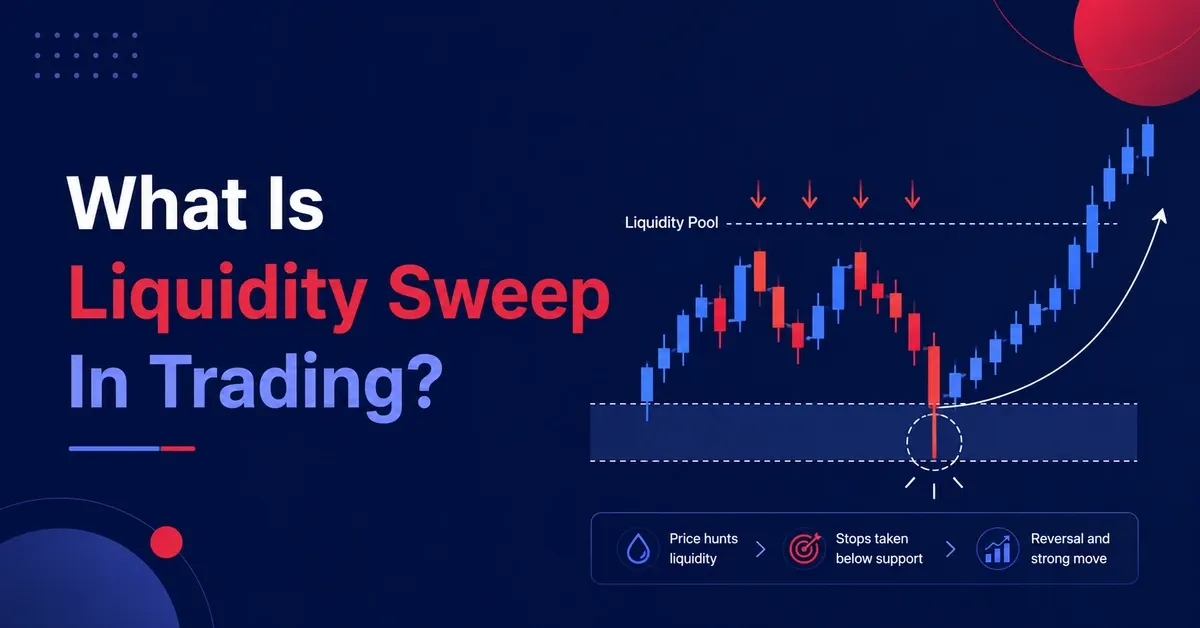
What Is Liquidity Sweep In Trading?
In trading, the market does not always move as cleanly as traders expect. A stock may look like it is nearing a breakout, only to reverse a few minutes later.
This type of move is known as a liquidity sweep.
Understanding what is liquidity sweep can make price action easier to read. It also reduces the chances of reacting too quickly to every breakout.
Liquidity Sweep Meaning
Before understanding liquidity sweep meaning, it helps to first understand what liquidity means in trading. Liquidity in the stock market simply refers to the availability of buyers and sellers in the market.
Sometimes, the market briefly moves above a recent high or below a recent low. The breakout looks convincing at this stage. But the move does not always last for long. Sometimes, the market suddenly turns the other way after attracting traders into the breakout. This type of move is called a liquidity sweep.
How Does Liquidity Sweep Work?
Liquidity sweeps usually develop around areas where a large number of traders are already focused. As the market nears these zones, new orders start building rapidly. Others place stop losses nearby to protect themselves. Over time, this increases liquidity around that zone.
This is also where the term “liquidity sweep” comes from.
When the market briefly moves through these areas, many stop losses and pending orders get triggered together. In simple terms, the liquidity in stock market resting around that level gets “swept” out before the market changes direction.
Since so many orders are activated within a short period, volatility can rise sharply for a few moments. This often creates the impression that a strong breakout is underway. If the market fails to sustain that momentum, the price may reverse quickly.
That is why liquidity sweeps are closely watched during breakout moves and volatile trading sessions.
Types Of Liquidity Sweep
Liquidity sweeps are not limited to one market direction. They can happen during upward moves as well as downward moves. Depending on where the sweep takes place, traders usually classify them into two types.
1. Buy-Side Liquidity Sweep
Picture a market trading just below resistance for a long time. Traders keep waiting for that breakout candle. Finally, the price pushes above the level.
At first, everything looks strong. Buyers step in aggressively, momentum picks up, and the breakout starts attracting attention across the market. As confidence around the breakout increases, fresh long positions start entering the market. Short sellers also begin exiting their trades because the move above resistance starts triggering their stop losses.
For a while, the momentum can look very strong. Then the market abruptly changes direction and slips back below resistance instead of moving higher. What looked like a strong breakout a few moments ago now begins losing strength as the market moves back below the same level.
This type of move is called a buy-side liquidity sweep.
2. Sell-Side Liquidity Sweep
A sell-side liquidity sweep works the other way around.
Here, the market falls below support or a recent low and creates the impression that a bigger breakdown is beginning. Sellers become more confident as prices move lower, and fresh short positions start entering the market. At the same time, stop losses placed below support also begin getting triggered.
For a brief period, the downside momentum can look very convincing. Then the reversal comes in. Instead of continuing lower, the price quickly climbs back above the same support area. Traders who entered short positions late during the breakdown often get caught off guard as the market suddenly moves in the opposite direction.
That kind of move is known as a sell-side liquidity sweep.
How To Identify Liquidity Sweep In Charts
Liquidity sweeps become easier to spot once traders know what to look for on the chart. In most cases, the setup develops around levels where market activity is already concentrated.
Watch Key Liquidity Zones
Start by marking recent highs and lows, support and resistance areas, or equal highs and equal lows on the chart. These are the zones where traders usually place breakout entries and stop losses.
Price has reacted there multiple times before. Hence, these points often stand out on charts. You may notice several candles failing to close above or below the same level.
Look For A Sharp Breakout Candle
Once price approaches these zones, the move can suddenly become aggressive. Sometimes, the market bursts above resistance with a large bullish candle. In other cases, a strong bearish candle quickly moves below support.
The candle often looks bigger than the previous few candles on the chart. Sometimes, it may also leave behind a long wick, showing that the breakout could not sustain momentum for long.
Notice The Reversal
One of the biggest signs of a liquidity sweep is how quickly the market starts reversing after the breakout. It moves back inside the same range again.
Traders often watch how the candle closes after a breakout. If it slips back into the earlier range, the market may be rejecting that move.
Check Volume
Volume can provide additional confirmation. A sudden rise in volume near a failed breakout often shows that a large number of orders were triggered around that level.
Wait Before Entering
Liquidity sweeps do not always look the same. This is why many traders avoid reacting to the very first breakout candle and wait for confirmation before entering a trade.
Trading Strategy Using Liquidity Sweep
One common strategy is to wait for the sweep to happen first and avoid entering during the initial breakout candle. Many traders prefer waiting for the market to show signs of rejection before planning a trade.
Some traders enter only after the candle closes back inside the earlier range. Others wait for the next candle to confirm the reversal before taking a position.
Traders usually place their stop losses just above the sweep high or below the sweep low. The idea is to give the trade enough space without taking unnecessary risk.
Profit targets are often planned around the next important level on the chart. Some traders exit part of their position there and let the remaining trade continue. Indicators like Relative Strength Index (RSI), moving averages, and volume are often used together with liquidity sweeps to confirm whether the setup looks reliable.
Since these setups can become volatile within minutes, position sizing and risk management remain an important part of the strategy.
Risks Of Trading Liquidity Sweeps
Liquidity sweeps can look exciting on the chart, but they are not always easy to trade.
-
These moves happen fast. By the time traders react, the market may already be reversing.
-
Not every failed breakout turns into a liquidity sweep. Sometimes, the market simply slows down for a while before moving in the same direction again.
-
Taking a trade before the setup fully confirms can become risky when volatility increases.
-
Taking every liquidity sweep setup can lead to overtrading. This risk is especially higher in sideways markets.
-
Risk management is important in these setups. Otherwise, sharp reversals can lead to bigger losses than expected.
Conclusion
Liquidity sweeps often show just how fast sentiment changes once the price reaches a key level. What looks random in the moment usually exposes trapped traders reacting emotionally to breakouts or breakdowns. Catching these changes early lets traders hold off for better entry points, rather than jumping on every surge. It’s also a smart way to keep risks in check. Even then, liquidity sweeps are far more reliable when paired with confirmation, discipline, and a structured trading plan.
Source:
Market Investopedia
FAQs
Honestly, it goes both ways. If price dips below support and bounces back fast, people call that bullish. But if it pushes past resistance and then drops, that’s seen as bearish.
With a normal breakout, price tends to keep climbing once it gets past a major level. A liquidity sweep, however, tends to reverse soon after the breakout happens.
Most traders watch how the price behaves around support and resistance zones. A sudden breakout candle, long wick, quick reversal, or price moving back inside the earlier range can all hint at a possible liquidity sweep.
The content in this blog is intended purely for educational purposes. Any securities or mutual funds referenced are illustrative in nature and do not constitute a recommendation or endorsement by Kotak Neo. Investors are encouraged to assess their own financial situation and seek professional advice before making any investment decisions. For compliance T&C and disclaimers, Visit www.kotakneo.com/disclaimer
0 people liked this article.