The Rain Nobody Is Watching Closely Enough
- Updated: 05 Jun 2026, 4:30 PM IST
- | 9 min read
- 1,003
 Add Preferred News Source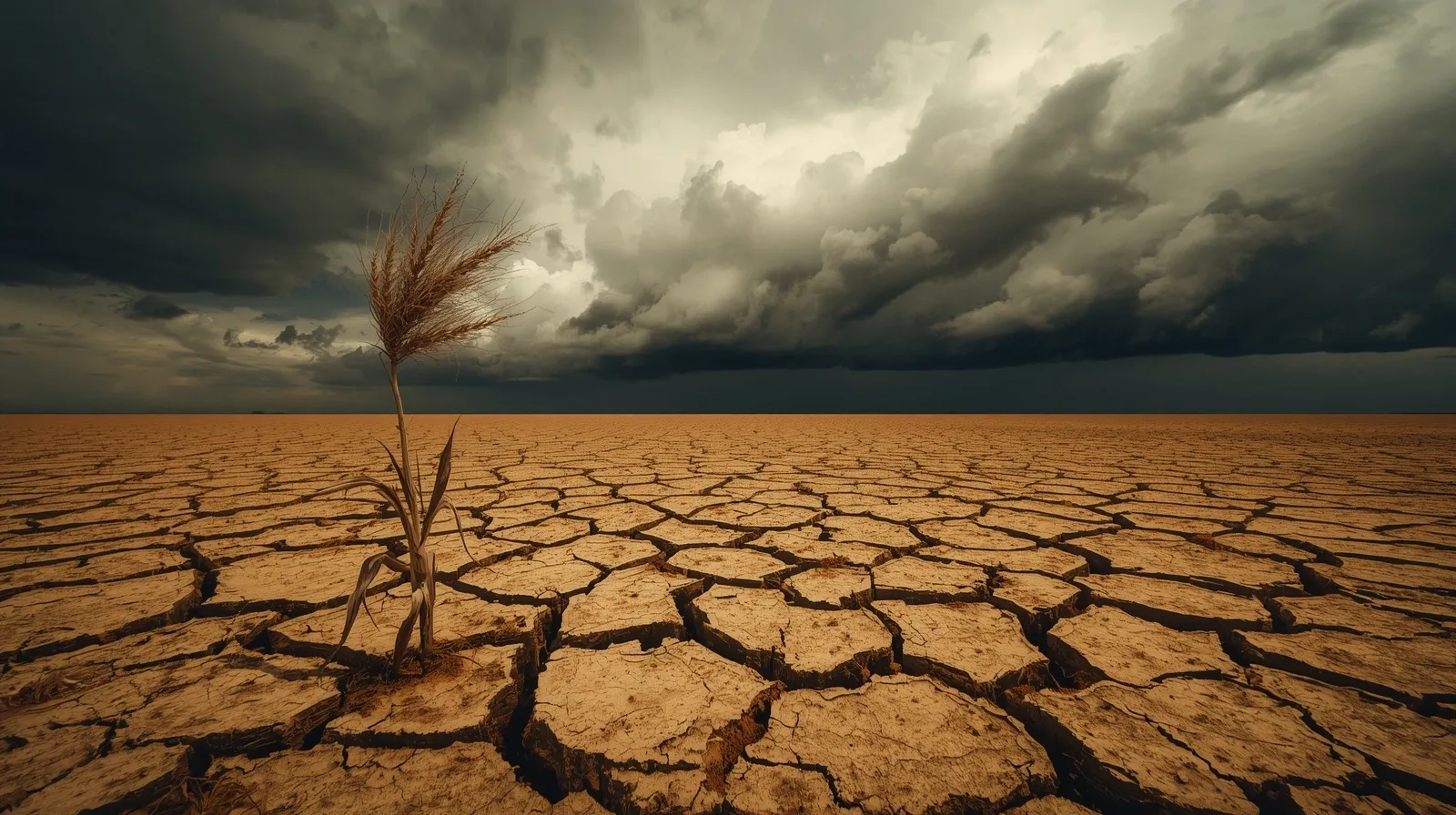
When Lagaan released, most people remembered the cricket match.
The drama, the stakes, the final over.
But the film begins somewhere quieter.
In a village with cracked and pale fields, waiting eagerly for the rains.
A headman walking to the well and finding it lower than it should be.
The monsoon has failed, and everyone already knows it.
Not from a forecast, but from the sky's silence.
That image has stayed in the national imagination because India has always understood, at some level, that rain is not merely weather.
It shapes incomes, consumption, inflation and growth.
Modern India may have stronger irrigation networks, larger reservoirs and better food security buffers than it once did.
The relationship has evolved.
Now, India's macro-level growth is less directly tied to the monsoon than it once was.
As for rural India, its incomes, consumption, discretionary spending remain closely coupled to the quality of the rains.
Which is why the IMD's latest downgrade of the 2026 monsoon forecast is worth pausing on.
Seasonal rainfall is now expected at 90% of the Long Period Average, down from 92% in April, while the probability of below-normal or deficient rainfall stands at 84%.
The monsoon onset, initially expected around 26 May, arrived on 4 June, three days after its normal onset date, with El Niño conditions very likely to emerge and persist through the rest of the year.
The forecast has arrived at a time when rural demand was beginning to recover and inflation had started easing.
A weaker monsoon raises questions about whether that trajectory can continue.
At the same time, some economists have flagged that retail inflation could approach 5.5% in a scenario where rainfall is deficient and food prices spike sharply, compared to 3.48% in April 2026.
Most commentary has focused on agriculture and inflation.
But the more consequential question for markets runs a few steps deeper.
A weak monsoon rarely affects markets when the forecast is announced.
It affects markets through a sequence of delayed effects that move from sowing decisions to rural incomes, from rural incomes to consumption, and from consumption to corporate earnings.
The Forecast Is Not The Warning
The forecast itself is not the risk.
The transmission mechanism that follows is.
June is expected to witness below-normal rainfall across large parts of the country, creating immediate uncertainty around kharif sowing.
Crops such as paddy and maize could face delays, while nearly 45% of India's net sown area still depends entirely on rainfall because it lacks irrigation coverage.
The farmer who delays sowing in June does not immediately appear in economic data.
The consequences emerge gradually.
Lower acreage or weaker yields affect farm incomes during harvest season.
Farm incomes influence rural wage growth and household spending.
Those spending patterns eventually show up in the sales volumes of consumer companies, tractor manufacturers and two-wheeler makers.
By the time management teams begin discussing softer rural demand during earnings calls, the monsoon itself has often disappeared from the headlines.
This is why monsoon forecasts matter to investors.
They are not weather reports; they are early indicators of potential earnings outcomes several quarters later.
India Has Built Buffers, But They Are Not Uniform
India enters the 2026 monsoon season with stronger agricultural defences than it had a decade ago.
The share of irrigated farmland has increased to 55% of total sown land in FY21 from 49.3% in FY16, reducing dependence on rainfall across large parts of the country.
Yet the picture is far from uniform.
Water storage levels are already showing signs of stress in several regions.
As of late May, storage in nearly two-thirds of India's major reservoirs was below 50% of capacity, while multiple river basins across the country recorded a rapid decline in water levels ahead of the monsoon.
The disparity highlights a reality that national averages often obscure: some regions enter the season with adequate buffers, while others remain heavily dependent on timely rainfall.
The Agriculture Ministry has pointed to record foodgrain production of 376.56 million tonnes and a reserve stock of 1.74 lakh quintals of seeds.
These are buffers that reduce the risk of an immediate food security shock.
But that protection is uneven.
It holds for irrigated staples such as rice and wheat.
It does not extend meaningfully to pulses, oilseeds and cotton, which remain heavily rainfall-dependent.
And those crops matter disproportionately; not just for rural incomes, but for food inflation.
Even before monsoon concerns intensified, edible oil prices were already experiencing double-digit inflation.
A weaker monsoon would add another layer of pressure to categories that are already vulnerable.
The RBI's own research suggests that the aggregate relationship between monsoon deficits and GDP growth has weakened over time.
This is a reflection of stronger buffers, better irrigation and a more diversified economy.
But that finding applies to the headline growth number.
It does not apply equally to rural incomes, which remain far more sensitive to where and when the rain falls than national averages suggest.
A 10% deficit spread evenly across the country is manageable.
A similar deficit concentrated in major rain-fed agricultural regions such as Maharashtra, Madhya Pradesh, Karnataka and Telangana can create far greater economic stress.
The Rural Demand Cycle: The Variable Most Likely to Move Markets
The most important transmission channel runs through rural demand.
The rural recovery narrative has been a major support for consumer-facing companies over the past two years.
Following favourable monsoons and stronger farm incomes, companies such as Godrej
Consumer Products, Marico and Tata Consumer Products benefited from improving rural consumption trends.
Rural demand became one of the key drivers behind volume growth expectations.
That backdrop may now face a test.
A weaker monsoon can affect farm incomes, rural wage growth and discretionary spending.
The impact is rarely immediate, but it eventually influences spending across categories ranging from personal care products and packaged foods to motorcycles, tractors and entry-level housing.
The sequence is straightforward.
What gets planted in June affects what gets harvested in October.
What gets harvested affects income generation.
Income generation affects consumption.
Consumption affects corporate earnings.
The lag between these events is precisely why monsoon-related risks are often underestimated when they first emerge.
Inflation Is Already Sending A Warning Signal
The Department of Economic Affairs highlighted another important risk in its latest monthly economic review.
Retail inflation remains relatively benign at 3.48%, comfortably below the RBI's target.
Wholesale inflation, however, accelerated sharply to 8.3% in April 2026.
The divergence between the two numbers is significant because wholesale inflation often reflects cost pressures building within the system before they are fully passed on to consumers.
The government has explicitly warned that a below-normal monsoon, elevated crude oil prices and tighter financial conditions could create a combination of food inflation, weaker rural demand and slower growth.
A deficient monsoon would add pressure to food prices at a time when upstream costs are already rising because of energy prices and currency-related factors.
For investors, the key implication is that today's inflation numbers may not fully capture the inflation pressures that could emerge later in the year.
The Cotton Decision Offers A Clue
Sometimes policy actions reveal concerns more clearly than official commentary.
Effective 1 June 2026, cotton imports have been fully exempted from customs duty and the Agriculture Infrastructure and Development Cess until 31 October.
The exemption covers almost exactly the kharif cotton-growing season.
Officially, the move is designed to support the textile sector.
At the same time, it serves as a signal that policymakers are taking supply-side risks seriously enough to prepare for them in advance.
The timing is difficult to ignore.
The exemption does not imply that domestic cotton production will necessarily disappoint. It does suggest that policymakers are creating safeguards against that possibility.
For textile companies, the decision reflects uncertainty around the domestic supply outlook.
For investors, it provides another indication that monsoon risks are already influencing policy decisions.
The Sectors Most Exposed
The effects of a weaker monsoon rarely appear everywhere at once.
They usually begin with household budgets.
If food prices rise, families have less room for discretionary spending.
If farm incomes weaken, purchases that can wait often do.
Those decisions may seem small in isolation. Across millions of households, they become economic trends.
FMCG companies face a particularly difficult combination of risks.
Rural demand could soften if agricultural incomes weaken, while input costs could simultaneously rise because of higher prices for edible oils, sugar, wheat and other agricultural commodities.
Margin pressure and volume pressure arriving together is a scenario that markets have not fully focused on yet.
Two-wheeler manufacturers with meaningful rural exposure may face slower demand growth if rural purchasing power weakens.
Tractor manufacturers remain closely tied to agricultural conditions and are therefore directly exposed to the quality of the kharif season.
Agrochemical and fertiliser companies may also experience shifts in demand depending on sowing patterns and crop choices across affected regions.
Thinking In Quarters, Not Seasons
The most useful way to understand a weak monsoon is not as a seasonal event but as a quarterly sequence.
June and July are about delayed sowing and lower sown area in rain-fed crops such as pulses, oilseeds and cotton.
August and September are when food inflation pressures begin appearing more visibly, while edible oil imports may rise if domestic supply expectations weaken.
October and November bring the first meaningful signals about kharif output and rural incomes.
Consumer companies begin assessing whether rural demand assumptions need to change.
December through February is when earnings start reflecting the cumulative effects of decisions made months earlier in the fields.
That sequence is what investors could focus on.
What begins as a weather forecast today could evolve into something much larger over the coming quarters: an inflation story, a rural consumption story and eventually an earnings story.
India is far better equipped to handle rainfall shocks than it was a generation ago.
Irrigation networks are larger. Foodgrain production is stronger. Buffer stocks are healthier.
Yet some things remain difficult to insulate.
Rural incomes still depend on what happens in the fields.
Rural spending still shapes demand across large parts of the economy.
Every year, India waits for the monsoon.
Not because rain alone determines economic outcomes, but because it influences millions of decisions that follow.
And by the time those decisions begin showing up in quarterly earnings, the clouds that started the story are usually long gone.
Sources and References:
- REUTERS
- THEHINDU
- MONEYCONTROL
- BUSINESSTODAY
- PIB
- DOWNTOEARTH
- NEWSONAIR
- OPENTHEMAGAZINE
- NIELSENIQ
This article is for informational purposes only and does not constitute financial advice. It is not produced by the desk of the Kotak Securities Research Team, nor is it a report published by the Kotak Securities Research Team. The information presented is compiled from several secondary sources available on the internet and may change over time. Investors should conduct their own research and consult with financial professionals before making any investment decisions. The above images were generated using AI. Read the full disclaimer here.
Investments in securities market are subject to market risks, read all the related documents carefully before investing. Brokerage will not exceed SEBI prescribed limit. The securities are quoted as an example and not as a recommendation. SEBI Registration No-INZ000200137 Member Id NSE-08081; BSE-673; MSE-1024, MCX-56285, NCDEX-1262.
0 people liked this article.

Kotak Neo (Kotak Neo) is India's venerable stockbroking company with a rich legacy. It offers comprehensive investment services across asset classes, prioritising a technology-first approach for a seamless experience. Trusted by 5 million+ customers, it guides you toward financial success with ease of investment and speed of trade.
Note: The opinions expressed in this blog are personal viewpoints and should not be construed as recommendations.