The Insurance India Buys Is Not the Insurance India Needs
- Posted: 31 Jul 2026, 2:37 PM IST
- | 5 min read
- 1,001
 Add Preferred News Source
In most Indian homes there is a steel almirah, and somewhere inside it a plastic folder holding the papers nobody reads.
The house documents. An old fixed deposit receipt.
And an insurance policy, bought one March in a hurry, usually on the advice of an uncle who happened to be an agent.
Nobody in the family remembers the sum assured. Everybody remembers that it saved tax.
The irony is that, for decades, Indians have rarely bought life insurance for protection.
They bought it for tax savings, disciplined investing, maturity benefits or because it felt safer than putting money in the stock market.
Insurance became an investment product that happened to include life cover. That habit built India’s life insurance industry.
It also explains one of the market’s more curious contradictions today.
A Good Quarter Nobody Applauded
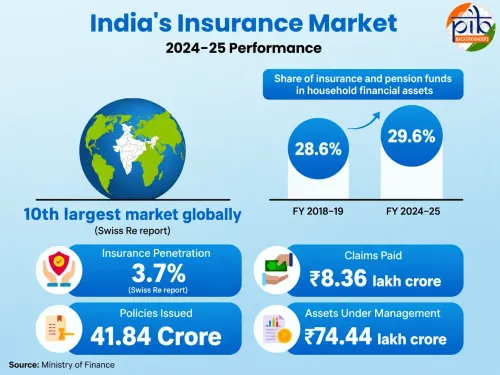
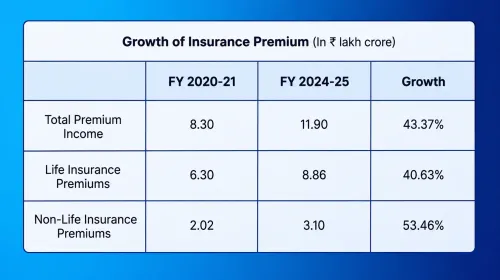
Source: Press Information Bureau
The June quarter was, by most measures, a good one.
Premiums rose across the large private insurers, and the value insurers assign to newly written policies grew faster still, by roughly a quarter at both SBI Life and ICICI Prudential Life.
The detail worth pausing on is smaller and easier to miss.
At ICICI Prudential Life, retail protection business grew 60.4 per cent, its third consecutive quarter of growth above 40 per cent.
At HDFC Life, retail protection grew 42 per cent. These are term plans.
Pure cover, no maturity cheque, the product Indians have historically been least willing to buy.
Yet the market remains unconvinced.
Over the past five years, LIC has fallen 6.43%, HDFC Life 16.59%, and ICICI Prudential Life 16.23%.
Only SBI Life, up 82.56%, has significantly outperformed.
The usual explanation is regulation.
Frequent changes to commissions, taxation, surrender norms and product rules have made the sector harder to value.
Macquarie’s financial services research team has even called regulation the industry’s singular issue.
That is true; it just isn’t the whole story.
The Great Pivot
Businesses rarely change their engines while still moving.
India's insurers are trying to do exactly that.
The engine that powered two decades of growth is beginning to slow.
The one replacing it is only just gathering speed.
Markets are still trying to decide how powerful that new engine will be.
For years, the industry's most successful products had something in common.
They promised protection on paper, but most customers bought them for entirely different reasons.
ULIPs, endowment plans and participating policies all came with life cover.
But what people really paid for was market participation, the tax benefit or the maturity cheque waiting at the end.
Agents preferred selling them because commissions were higher, customers liked them because they felt like investments, and insurers benefited from large, long-duration premium inflows.
Looking back, the industry wasn't really selling protection. It was selling savings that happened to include life cover.
That model is now changing.
In September 2025, GST on individual life and health premiums was cut from 18 per cent to zero.
The intention was to make insurance more affordable. What followed was something more interesting.
A term plan is the most price-sensitive product an insurer sells, because it offers nothing back except a promise.
Take 18 per cent off the sticker price of a promise and, it turns out, a great many more people are willing to buy one.
Every large insurer has now credited the same tax change for the same surge in term cover.
The same change also removed insurers' input tax credit, which means they are selling more of the right product on slightly thinner economics.
At the same time, product mix is shifting.
SBI Life’s ULIP contribution to APE fell to 46% from 57% in a year, while non- participating products increased to 49% from 38%.
Its bancassurance share also declined to 47% from 58%, signalling a broader distribution mix.
ICICI Prudential’s protection business has now grown more than 40% for three consecutive quarters.
HDFC Life is also seeing healthy traction in protection and annuity products.
The industry is slowly moving away from selling investments wrapped in insurance towards selling insurance itself.
What the Market Is Pricing
That transition is healthier, but it is also more challenging.
The products losing ground, ULIPs and traditional savings plans, were also the industry's biggest volume drivers.
Protection and annuity products deliver stronger economics but are more competitive, harder to sell and typically generate lower premium volumes.
The industry is replacing its largest growth engine with a narrower one, and not always a more profitable one in the short term.
SBI Life's new business margin slipped this quarter even as its protection volumes rose, because much of that new protection business came from lower-margin group cover.
Markets are trying to work out how long that replacement will take.
The de-rating, therefore, is not a vote against insurance.
It is a repricing of an industry moving from selling savings to selling protection, and that transition is likely to define the next phase of growth.
The Protection Gap
Source: The Statesman
The industry’s biggest opportunity is also its biggest failure.
India remains one of the world’s most under-protected insurance markets.
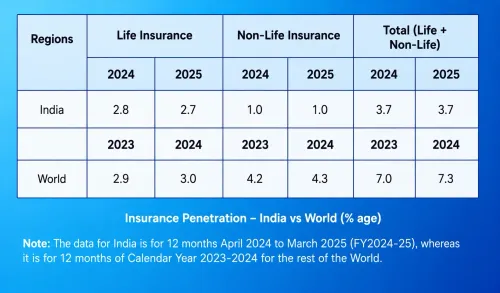
According to the Swiss Re Institute, the country’s mortality protection gap stood at around USD 16.5 trillion in 2019.
Meanwhile, IRDAI data reveals life insurance density is just USD 72 per person, far below the global average of USD 388.
The contradiction becomes even clearer in the latest industry data.
In FY25, life insurance premiums grew 6.73 per cent, while the number of new individual policies issued fell 7.4 per cent.
Almost all of that decline came from LIC.
Private insurers actually sold more policies.
Yet every additional policy sold to someone who already owns several does little for the family that still has no financial protection at all.
It isn’t bringing enough new families under the protection umbrella.
For years, insurers became better at selling bigger policies to existing customers than expanding genuine insurance coverage.
India didn’t buy too little insurance.
It bought too much savings and too little protection.
That gap is no longer just a social issue.
It is becoming the industry’s biggest commercial opportunity.
What Investors May Watch
The headline premium figure tells you how much business an insurer writes.
It tells you surprisingly little about the business it is becoming.
Three quieter questions reveal far more.
Whether protection is taking a larger share of what an insurer sells.
Whether the insurer still depends on a single bank counter to sell it.
And whether the customer is still paying five years later.
SBI Life’s results illustrate all three trends.
The company is gradually diversifying beyond bancassurance, shifting its product mix towards non-participating plans.
At the same time, its 61st-month persistency ratio declined to 58.4% from 63.6%, reminding investors that retaining long-duration policies remains just as important as selling them.
The premium number tells you how much business an insurer writes.
The product mix tells you what kind of insurer it is becoming.
The Real Re-rating
The market is not questioning whether Indians need insurance.
It is questioning whether insurers can successfully reinvent themselves as protection businesses after decades of selling savings products.
That is why companies such as SBI Life, HDFC Life, ICICI Prudential Life, LIC and Max Financial Services deserve to be viewed as different stages of the same structural transition rather than isolated stories.
The irony is difficult to ignore.
India’s insurers are finally being pushed towards selling the product the country actually needs.
The market has responded with a de-rating.
Yet the very gap that explains today's caution may define the industry's next decade.
The plastic folder inside the steel almirah may not disappear anytime soon.
But what sits inside it could gradually change. Less of a savings certificate.
More of a promise that does exactly what insurance was always meant to do.
The next chapter for life insurance may not be about selling more policies.
It may simply be about selling the right ones.
Sources and References:
- PIB
- BUSINESSSTANDARD
- FINANCIALSERVICES
- THESTATESMAN
- ALGATEINSURANCE
This article is for informational purposes only and does not constitute financial advice. It is not produced by the desk of the Kotak Securities Research Team, nor is it a report published by the Kotak Securities Research Team. The information presented is compiled from several secondary sources available on the internet and may change over time. Investors should conduct their own research and consult with financial professionals before making any investment decisions. The above images were generated using AI. Read the full disclaimer here.
Investments in securities market are subject to market risks, read all the related documents carefully before investing. Brokerage will not exceed SEBI prescribed limit. The securities are quoted as an example and not as a recommendation. SEBI Registration No-INZ000200137 Member Id NSE-08081; BSE-673; MSE-1024, MCX-56285, NCDEX-1262.
0 people liked this article.

Kotak Neo (Kotak Neo) is India's venerable stockbroking company with a rich legacy. It offers comprehensive investment services across asset classes, prioritising a technology-first approach for a seamless experience. Trusted by 5 million+ customers, it guides you toward financial success with ease of investment and speed of trade.
Note: The opinions expressed in this blog are personal viewpoints and should not be construed as recommendations.