Options Contracts: Types, How They Work, And Advantages
- Updated: 11 Jun 2026, 4:30 PM IST
- | 4m
- 1,271
 Add Preferred News Source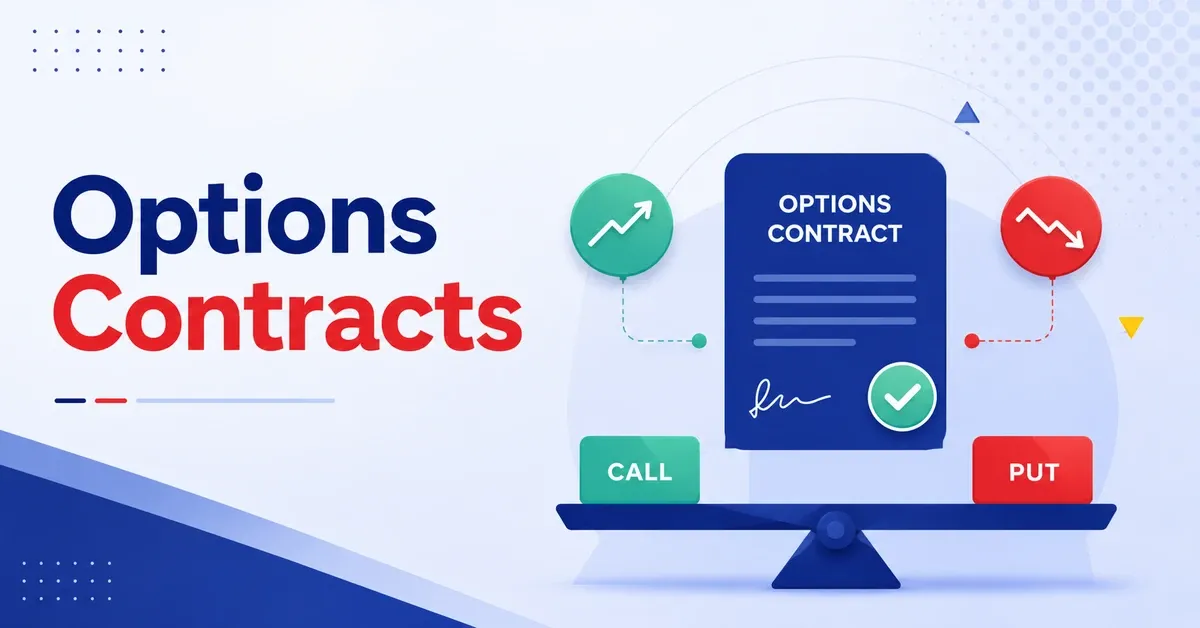
What Is An Option Contract?
Imagine this. Your best friend is all set to tie the knot within the next few months, and you want to give them gold as a wedding gift. However, there are two deterrents. One, you do not have the required funds to purchase gold right away. Secondly, you are not sure where gold prices will go in the future.
You, however, strike a deal with the jeweller by paying a small advance to lock in gold prices for a future purchase. If gold prices rise by the time your friend marries, you save money.
On the other hand, if prices fall, you may end up forfeiting your advance, but avoid overpaying. In the world of derivatives trading, this arrangement is akin to an options contract. Read on to know what is an option contract, and its various aspects.
Option Contract Meaning
An option contract is a type of financial agreement. This agreement gives you the right to buy or sell an underlying asset, like stocks or commodities, at a set price before the expiry date. This set price is called the strike price.
When you buy an option contract, you pay an amount called the premium. If you let the contract expire, the premium is the most that you would lose.
Types Of Option Contracts
There are two types of option contracts, namely:
Call Option
A call option gives you the right to buy an asset at a fixed price within a specific time. However, there is no obligation to do so. Generally, traders exercise a call option when they feel that the price of a stock will go up in the future. If it happens, the buyer buys the stock at a lower agreed price and thus makes a profit.
Put Option
A put option gives you the right to sell an asset at a fixed price within a specific time. Traders exercise the put option when they feel the price of an asset will go down in the future.
How Does An Option Contract Work?
Let us understand the working of options contracts (call and put) with the help of examples.
Working Of A Call Option
A company's stock is trading at ₹100. You feel its price will go up. You buy a call option that allows you to buy the stock at ₹100 within one month. You pay ₹5 as a premium.
The price jumps to ₹130. As you have the call option, you can still buy it for ₹100. Your gains stand at ₹25 per share (minus the premium fee). However, if the stock's price falls to ₹90, you will not use the option, as buying at ₹100 would be expensive for you. In this case, your loss is limited to the ₹5 premium you paid.
Working Of A Put Option
Suppose a stock is currently trading at ₹250. You feel its price will go down. You buy a put option that allows you to sell the stock at ₹200 in the next month. You pay a premium of ₹10 for the put option. In the next couple of weeks, the stock's price drops to ₹150.
However, since you have a put option, you can still sell the stock at ₹200. Deducting the premium amount, your profit stands at ₹40. However, if the stock price rises to ₹300, you do not exercise the option. In this case, your losses are limited to the premium amount you paid, i.e., ₹10.
Key Features Of Option Contracts
Here are the key features of an options contract:
Leverage
An option contract allows you to buy a large number of shares with a small amount. For instance, suppose one share of the company costs ₹1,000, and you want to purchase 100 shares. If you buy them directly, you need to pay ₹1 lakh. However, an options contract for those 100 shares may cost you less.
Limited Loss For Buyers
An option contract limits the loss for buyers. When you buy it, the maximum amount that you can lose is the premium you pay for the contract if you do not exercise the contract. This prevents major losses in case the trade goes wrong.
Expiry Date
Every contract comes with an expiry date. You need to use the contract by this date. If you do not, the options contract becomes worthless. Due to this, timing is essential in an options contract.
Flexibility
You can use options contracts in several ways. You can use them to hedge against volatility, make gains or limit your losses. You can combine them with different trading strategies to derive maximum benefit.
Advantages Of Option Contracts
An options contract gives you the following advantages:
Hedging Risk
You can use options contracts to protect against losses in the stock market. For instance, you can use a put option to reduce the risk of loss in case of a market fall. When there is significant capital involved, the put option can help you limit your losses to a great extent.
Profit From Volatility
With options contracts, you can take advantage of volatility. This, even if you are not sure whether prices will go up or down. For instance, suppose a company is about to announce its quarterly results, and you expect the price of its stock to move sharply post announcement.
The stock is currently trading at ₹1,000. You buy both the call and put options at the same strike price of ₹1,000. If the stock price rises, the call option gains value. On the other hand, if it falls, the put option assumes significance.
Lower Capital Requirement
An options contract warrants a lower capital requirement. Direct stock purchase requires you to pay up front an amount that can be quite high.
For blue-chip stocks, the amount can run into lakhs of rupees, depending on the stock price and the number of stocks you want to buy. However, the amount can be low with options contracts.
Risks Of Option Trading
Trading with options contracts entails certain risks. These include:
Time Decay
Options contracts lose value as they approach their expiry date. For example, you buy a call option for a stock at ₹100 expiring in a month.
You expect the price of the stock to rise soon. If it does not happen as the expiry date approaches, the option’s value may fall to ₹80 and even more, as there are fewer chances of a big price movement before expiry.
Complexity
Understanding what is an option contract can be difficult for beginners. Different option contract strategies, like covered call, straddle, bull call spread, etc., also have different levels of risk involved. To make the most of it, it is vital to understand the finer aspects that can take time to grasp and implement.
Potential Losses For Sellers
If you are an option seller you receive a premium from the buyer. In return, you take the obligation to fulfil the contract if the buyer decides to use the option. In case markets move sharply, as a seller, it can lead to losses.
Conclusion
The right usage of options contracts can help you navigate market volatility and hedge against losses. However, before proceeding, you need to understand what is an option contract in stock market and the specifics of options trading and contracts.
Sources:
Investopedia
IG
The content in this blog is intended purely for educational purposes. Any securities or mutual funds referenced are illustrative in nature and do not constitute a recommendation or endorsement by Kotak Neo. Investors are encouraged to assess their own financial situation and seek professional advice before making any investment decisions. For compliance T&C and disclaimers, visit https://www.kotakneo.com/disclaimer/
0 people liked this article.

Kotak Neo (Kotak Neo) is India's venerable stockbroking company with a rich legacy. It offers comprehensive investment services across asset classes, prioritising a technology-first approach for a seamless experience. Trusted by 5 million+ customers, it guides you toward financial success with ease of investment and speed of trade.
Note: The opinions expressed in this blog are personal viewpoints and should not be construed as recommendations.