What is Algo Trading? Meaning, How it Works, Benefits & Examples
- Updated: 16 Oct 2026, 10:46 AM IST
- | 8 min
- 2,630
 Add Preferred News Source
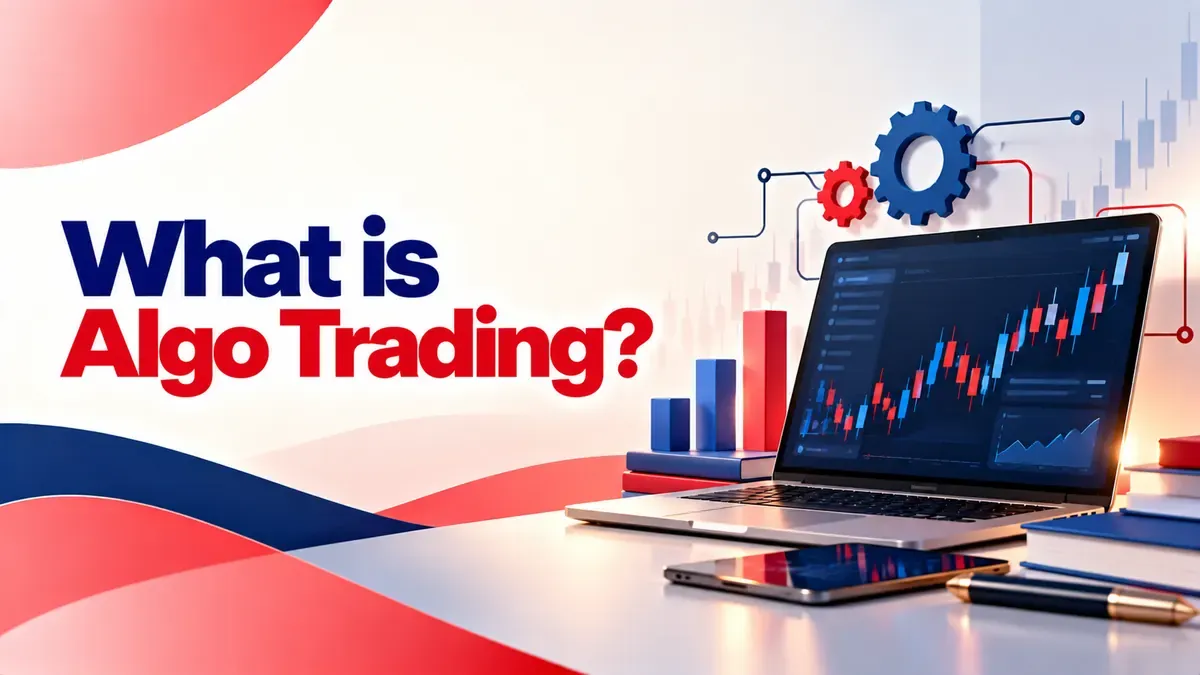
Algo trading is now within reach of everyday retail traders, not just institutions. It was once a tool reserved for institutional investors, but broker Application Programming Interfaces (APIs), ready-made strategies and no-code platforms have opened it up. Today, retail traders can automate their trades on the broker’s terminals by setting rules once and letting software execute them, without writing complex code or placing every order by hand.
The growing interest in algo trading has also raised a few common questions. Does it place trades on its own? Do you need to know coding? Can beginners try it out?
This article explains what algo trading means, how it works, its different types, benefits, risks and the key things to know before getting started.
What is Algo Trading?
Algo trading (algorithmic trading) means using a computer program to buy and sell automatically, based on rules you set in advance. Instead of placing each trade yourself, you define the conditions, such as price levels or indicators. The software watches the market and places the order the moment those conditions are met. This set of rules is called an algorithm, which is where the name comes from.
These instructions can be based on price movements, trading volume, technical indicators, time or a combination of different market signals. When the market matches those instructions, the system places the order automatically.
The strategy still comes from the trader. The system simply follows the instructions built into it. In simple terms, the algo trading meaning is using an algorithm to execute trades based on a strategy defined by the trader.
How Does Algo Trading Work?
Algo trading in simple words follows the following process:
-
A trading strategy with clearly defined entry and exit conditions
-
Converting those rules into an algorithm or selecting a ready-made strategy
-
Linking the algorithm to the broker's trading platform
-
Continuous tracking of live market prices and other inputs
-
Automatic execution whenever all predefined conditions are met
Let us understand this process with a simple example. Suppose the share price of XYZ Ltd. is ₹995. A trader is interested in buying it, but only if two things happen together. The price must move above ₹1,000, and trading volume must cross 50,000 shares.
Instead of sitting in front of the screen waiting for that moment, the trader enters these instructions into an algorithmic trading system before the market opens.
The software keeps watching the market. Every price update and every change in trading volume is checked against the rules that were entered. If both conditions become true, the order is sent to the exchange automatically. Even if one condition is missing, the trade is skipped.
How to Start Algo Trading in India
Getting started with algo trading is easier today than it was a few years ago. Many stock-brokers now offer APIs, built-in algo trading features and no-code platforms, giving traders more than one way to automate their strategies. The choice usually depends on your trading experience, technical knowledge and the type of strategy you want to follow.
Starting algorithmic trading in India follows some simple steps.
-
Open a trading and Demat account with a broker that supports algo trading.
-
Decide your strategy. Some traders build their own algorithms. Others prefer ready-made ones.
-
Connect the algorithm to the broker’s platform.
-
Test your strategy on historical data. You could also explore it in a paper trading environment.
-
Tweak your strategy, if necessary, then use it in live markets. Monitor the performance consistently.
Requirements for Algo Trading
The setup for algo trading may be different for each trader. Someone using a no-code platform, for example, will not need the same setup as someone building an algorithm from scratch.
That said, most traders will need a few basic things before they begin.
-
A trading and Demat account with an algo-enabled broker.
-
Access to the broker's API, no-code platform or another supported automation tool.
-
A strategy with clear entry, exit and risk management rules.
-
Basic knowledge of coding if you want to build your own algorithms.
-
Computer or laptop with a reliable internet connection.
Who can use Algo Trading?
For many years, algo trading was largely associated with institutional investors. However, things have changed now. Today, retail traders also have access to APIs, no-code platforms and ready-made strategies. As a result, algo trading is no longer limited to a particular group of market participants.
It is commonly used by:
-
A day trader trying to avoid placing the same orders manually throughout the trading session
-
Investors who prefer sticking to predefined trading rules
-
Traders dealing with several stocks instead of monitoring just one or two
-
Anyone interested in testing rule-based strategies before using real money
-
Large institutions executing a high volume of trades every day
Types of Algo Trading
Different strategies are designed for different market conditions and trading styles. Some focus on identifying trends. Others look for pricing differences or short-term reversals.
Trend-Following Strategy
A stock does not always change direction after every rise or fall. Sometimes the move continues for longer than expected. Trend-following strategies are built around this behaviour. Technical indicators like moving averages or momentum signals often help confirm the trade direction before an entry is made.
Arbitrage Strategy
At times, you may notice the same asset trading at different prices across markets. The difference is often small and disappears quickly. Arbitrage is all about finding these small price differences. An algorithm can spot them and place trades before the prices line up again.
Mean Reversion Strategy
Large price swings can sometimes be followed by a reversal. Mean reversion strategies are designed to identify these situations. The algorithm looks for stocks that may have moved too far in one direction and enters a trade only when there are signs of a possible pullback.
Breakout Strategy
Markets may trade within a narrow range for some time. A breakout strategy waits for the price to move above or below this range before entering a trade. Such moves often attract attention when trading activity starts picking up.
High-Frequency Trading (HFT)
High-frequency trading works on an entirely different scale. It involves placing a large number of orders within fractions of a second. The strategy depends on powerful systems, low-latency infrastructure and automated execution. Because of the technology involved, HFT is generally used by institutional investors and specialised trading firms rather than individual traders.
Benefits of Algo Trading
Algo trading has become increasingly popular because it can make trading more efficient without changing the underlying strategy. Some of its key benefits are as follows:
-
Faster Execution: Trades happen without delay. The system places the order the moment the conditions are met. That can make a difference when prices are changing rapidly.
-
No Emotional Decisions: Emotions stay out of the process. Every trade follows the same predefined rules. Hence, the algorithm avoids impulsive decisions influenced by sudden market movements.
-
Multi-Stock Monitoring: It is easier to track multiple stocks at once. The algorithm can monitor several trading opportunities at the same time.
-
Disciplined Strategy Execution: The strategy is followed as planned. This leaves little room for inconsistencies.
-
Less Routine Work: Routine work becomes lighter. The algorithm handles most of it. Traders can start giving more time and focus to strategising their trades.
Risks of Algo Trading
Algo trading can improve execution, but it does not eliminate trading risk. The strategy, the technology and changing market conditions all play a role in the final outcome. The following are some common risks in algo trading.
-
Technology failures: Internet or system issues can stop trades halfway. Such problems can cause delays and hence lead to missed opportunities.
-
The strategy itself: An algorithm cannot judge whether a trade is good or bad. The strategies are simply followed even if there are gaps.
-
Market conditions: Markets change. A strategy that worked last month may not work the same way next month.
-
Configuration mistakes: Every setting matters. A wrong value can be enough to trigger trades that were never intended.
-
Limited ability to cancel: The algorithm acts quickly. Stopping an order may not be straightforward.
Algo Trading vs Manual Trading
Whether you trade manually or use an algorithm, you still need a strategy. What changes is the way your trades are placed.
Basis | Algo Trading | Manual Trading |
|---|---|---|
Trade execution | Automated | Manual |
Trigger | When predefined conditions are met | When the trader decides to place an order |
Consistency | The same instructions are followed without bias | May differ from one trade to another |
Trader involvement | Involved in strategising and monitoring | Must be present throughout the process |
Algo Trading vs Automated Trading
The terms algo trading and automated trading are often used interchangeably, but they are not exactly the same. Algo trading always follows a predefined algorithm. Automated trading is a broader term that includes any system capable of placing trades automatically, including algorithm-based strategies.
Basis | Algo Trading | Automated Trading |
|---|---|---|
Meaning | Uses algorithms to execute trades | Refers to any automated trade execution system |
Trading rules | Always algorithm-based | May or may not use complex algorithms |
Level of complexity | Often involves structured trading logic | Can range from simple automation to complex algorithms |
Relationship | A type of automated trading | A broader category that includes algo trading |
Algo Trading vs High-Frequency Trading
High-frequency trading (HFT) is a specialised form of algo trading. While both rely on algorithms, HFT focuses on executing a substantial number of orders within fractions of a second. Algo trading, on the other hand, covers a much wider range of trading strategies.
Basis | Algo Trading | High-Frequency Trading |
|---|---|---|
Scope | Different algorithm-based strategies | One type of algo trading |
Speed | Execution is quick | Extremely high-speed execution |
Order volume | Varies by strategy | Very high |
Users | Retail and institutional traders | Primarily institutional traders |
Systems required | Standard trading platforms or APIs | Real-time high-end systems |
Is Algo Trading Legal in India?
Yes. Retail investors can use algo trading in India. The service is available through brokers that offer exchange-approved APIs and trading platforms. The Securities And Exchange Board OF India (SEBI) has also introduced rules for retail algo trading. Every algo order now carries a unique Algo ID. This helps identify and audit the order.
Key Considerations Before Starting Algo Trading
A good algorithm cannot compensate for a weak trading strategy. Hence, planning and testing are part of the process.
-
A few simple checks can help before you get started.
-
Stick to one strategy until you are comfortable with how it works
-
Choose a broker that supports the type of algo trading you plan to use
-
Spend some time testing the strategy before using it in live markets
-
Set your position size and risk management rules in advance
-
Revisit the strategy from time to time because market conditions do not stay the same
is Algo Trading Good for Beginners?
Yes. You do not need to be an expert to start learning algo trading. Many platforms now offer ready-made strategies that are easy to use. Still, avoid using them blindly. Learn how they work, test them properly and only then move to live trading.
Can you do Algo Trading without Coding?
Yes. Many traders begin without writing a single line of code. No-code and low-code platforms offered by brokers make that possible. However, knowledge of coding can provide greater flexibility. Customising strategies and making advanced modifications become easier.
Skills Required for Algo Trading
Algo trading is not only about using the right platform. A good understanding of financial markets is equally important. Traders should also understand how different strategies work. Knowing how to manage risk is an essential skill, too.
Coding helps if you want to build your own algorithms or customise existing ones. But not everyone needs it. Many traders get started with ready-made strategies or no-code platforms.
It also helps to know how to analyse previous trades. Over time, those reviews make it easier to spot gaps and improve the strategy.
Best Practices for Successful Algo Trading
No trading strategy works forever. Markets change, and strategies often need changes too. A few simple habits can make a noticeable difference over time.
-
Keep the strategy simple: Complex rules are often harder to test and manage.
-
Test your strategy: Try your strategy on historical data first. Do not rush into live trading.
-
Think about risk from the beginning: Decide your position size, stop-loss and overall risk limits before placing a trade.
-
Review the performance: Spotting patterns becomes easier when you review your strategy regularly.
-
Stick to the plan: Avoid changing the strategy every time the market makes a short-term move.
Common Mistakes to Avoid in Algo Trading
The algorithm is not always the problem. Many mistakes happen much earlier while setting up the strategy. Some common mistakes are as follows.
-
Ignoring risk limits: Running a strategy without deciding how much you are willing to risk
-
Going live too early: Using a strategy before testing it properly
-
Trying to fit the past perfectly: A strategy that looks great on historical data may not perform the same way in live markets
-
Leaving everything on autopilot: Even automated strategies need regular reviews
Common Algo Trading Terms
If you are new to algo trading, you will come across a few technical terms quite often.
-
Algorithm: The trading rules that tell the system when to enter or exit a trade.
-
API (Application Programming Interface): The connection that lets trading software communicate with the broker.
-
Backtesting: Looking at how a strategy would have behaved using past market data.
-
Paper Trading: Practising a strategy in simulated market conditions before using real money.
-
Latency: The delay involved in sending or receiving market data and orders.
-
Slippage: When the final trade happens at a different price from the one you expected.
-
Stop-loss: A preset exit level used to cap losses on a trade.
-
Technical indicators: Calculations based on price, volume or open interest that help analyse the market.
Conclusion
Algo trading has opened the door to automated trading for many retail investors. The technology, however, is only one part of the process. A strong strategy still matters. So does risk management. Spend some time understanding how algo trading works before using it in live markets. It will help you decide whether algo trading suits your style.
The content in this blog is intended purely for educational purposes. Any securities or mutual funds referenced are illustrative in nature and do not constitute a recommendation or endorsement by Kotak Neo. Investors are encouraged to assess their own financial situation and seek professional advice before making any investment decisions. For compliance T&C and disclaimers, Visit https://www.kotakneo.com/disclaimer/
0 people liked this article.

Vishwa has spent 10+ years across fintech and FMCG doing what most people miss, connecting the dots, catching trends before they trend, and finding the angle nobody else thought to ask about.
At Kotak Neo, she drives content strategy for neoshorts, Kotak News Desk, and Investing Guide, turning market noise into something worth reading.
When she's not decoding markets, she trades charts for canvases, chasing art, painting, and architecture across cities she's yet to explore.