Understanding tail risk and if it can impact your portfolio
- Updated: 22 May 2026, 5:12 PM IST
- | 5 min read
- 1,561
 Add Preferred News Source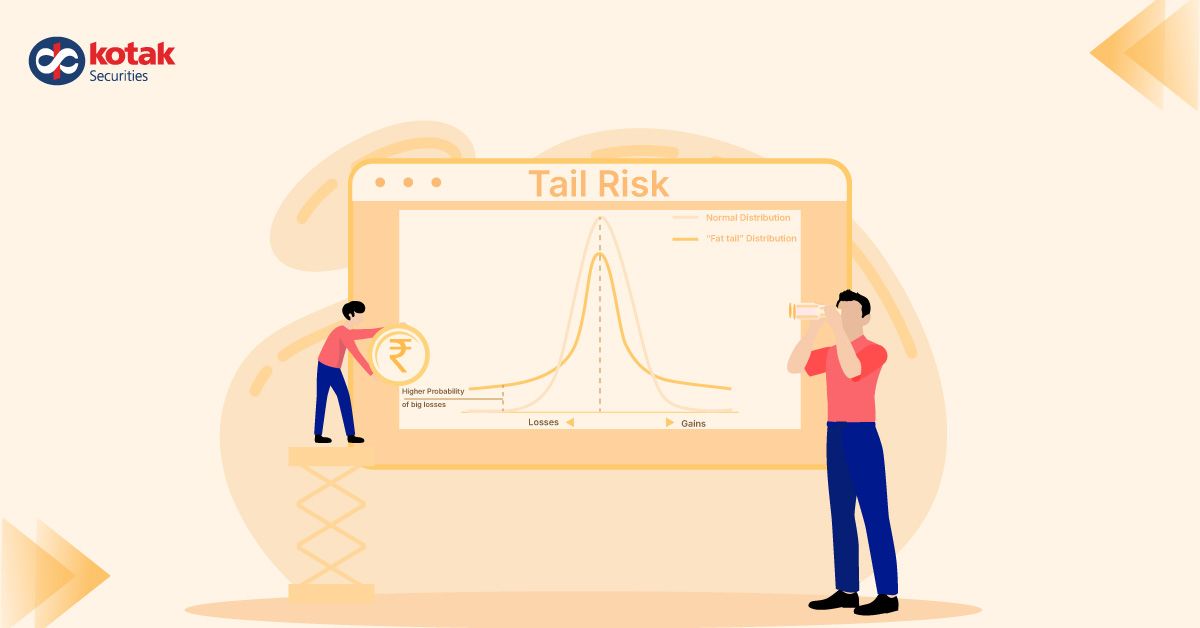
In investing, tail risks refer to unlikely events that have an outsized impact if they occur. Tail risks are found at the tails of a probability distribution - events with low probabilities but very high severity. Understanding tail risks is crucial for portfolio management, as such risks can significantly threaten returns even if unlikely.
Read on for an in-depth exploration of tail risks - what they are, where they come from, and how to manage exposure. You will learn techniques to gauge tail risks, approaches to reduce their portfolio impacts, and when tail risk hedging is appropriate. Let’s get started on building tail risk resilience.
Defining tail risk
Tail risks reside at the extremes of a probability distribution of outcomes. They have very low probabilities of occurring, but huge impacts if realised.
Some examples
- Stock market flash crash - Equities drop 20%+ intraday before rebounding.
- Debt default - A major institution fails to meet debt obligations.
- Currency collapse - A currency rapidly loses most of its value.
- Pandemic - A novel virus spreads globally, causing immense economic damage.
These events are rare, but beyond regular market volatility. Typical portfolio diversification often fails in cushioning their impacts. Thus, tail risks require special consideration in portfolio construction.
Tail risks emerge from correlations rising during turmoil. Assets that behave independently under normal conditions become highly correlated when tail events strike. Diversification evaporates just when it's needed most. Furthermore, some tail risks like pandemics may impact all asset classes.
Tail risk probability distributions have "fat tails" - reflecting a higher likelihood of extreme outliers compared to a normal distribution. This makes tail events rarer in absolute terms but still impactful. Managing exposure is key.
Measuring tail risks
While tail risks have low probabilities by definition, investors like you can still measure potential tail exposures. Some methods include the below:
- Historic drawdowns: Reviewing history provides insight on possible tail risks. What severe events have occurred in the past? This guides which hazards may emerge again in the future.
- Stress testing: Evaluating how current portfolios would fare under past tail events offers a sense of vulnerability. Repeated stress tests build an understanding of drawdown risks.
- Risk models: Advanced statistical models estimate the probabilities and correlations of major tail risks. These quantify scenarios not observed historically.
- Insurance pricing: Insurance costs against tail events reveal their implied probabilities. For example, pandemic insurance premiums indicate expected likelihoods.
- Financial innovation: New instruments like CBOEs indicate how pros are hedging tail risks and their perceived severity.
No perfect tail risk metric exists. A mosaic of measures provides the best estimate of exposures. Rigorous stress testing is particularly important for gauging vulnerabilities.
Reducing tail risk exposures
Once tail risk exposures are measured, as an investor, you can take the following steps to control them:
- Diversify broadly: Spreading investments across many assets and markets helps ensure no single tail event threatens the entire portfolio.
- Minimize leverage: Using less debt financing reduces the risk of margin calls or liquidations during tail events.
- Hold liquid assets: Allocations to cash and equivalent instruments provide cushion and flexibility during crises.
- Hedge exposures: Taking positions specifically designed to offset tail risks directly lowers the impacts. Purchasing deep out-of-the-money put options on equities limits potential drawdowns as an example.
No approach completely eliminates tail risks given their severe nature. But combining sensible diversification, moderate leverage, and selective hedging produces a robust portfolio design. The goal is to manage losses during tail events, not avoid them entirely.
Evaluating tail risk hedging
Since most tail risks have low probabilities, continuously hedging against them is expensive and could reduce expected returns. Therefore, explicit tail risk hedging is only warranted at certain times.
- When probability rises: If indicators suggest tail risks are more likely (e.g. overvalued markets), hedging becomes appealing.
- After large gains: If markets have risen significantly, locking in gains via hedges takes priority.
- For major exposures: Outsized asset exposures justify protection given the magnitude of potential loss.
- Near retirement: Those nearing retirement have little time to recover, so mitigating tail risks takes precedence.
Read More: Best Investment Plans for Retirement
In these cases, the cost of hedging is worthwhile versus the consequences of an untimed tail event. As an investor, you must weigh the trade-offs in your specific situation. An adaptive, data-driven approach is best to optimise hedging costs and benefits.
Conclusion
Tail risks are low probability, but high impact events found in the extremes of asset distributions. While rare in absolute terms, their severe portfolio impacts warrant attention. Careful measurement, diversification, position sizing, and selective hedging helps manage tail risk exposures.
With diligence and rigour, tail risks can be accounted for without detracting expected returns. A prudent balance of risk management and return optimisation is achievable. Mastering the nuances of tail risk empowers you to invest confidently despite market uncertainties.
Frequently asked questions (FAQs)
Tail risk in options refers to the chance of rare and extreme market events that lead to significant losses. In simple terms, it is the risk of something highly unlikely but impactful happening, like a sudden market crash or a massive rally.
You can manage tail risk by focusing on diversification, investing in low-risk assets like government bonds, and using financial instruments such as options or insurance to hedge against extreme market events. Keep a portion of your portfolio in cash or liquid assets to handle emergencies. Regularly review your investments and assess their exposure to unlikely but impactful events. Avoid over-leveraging and ensure proper asset allocation to balance risk and return. Consider consulting a financial advisor for strategies tailored to your goals.
Left tail risk refers to extreme negative events, like market crashes, which can lead to significant losses. Right tail risk, on the other hand, relates to unexpected positive outcomes, such as sudden market booms, which can result in high profits.
For investors, managing left tail risk is crucial as it protects their portfolio during downturns. While right tail risk offers potential gains, avoiding severe losses ensures financial stability. A balanced approach, with diversification and risk management, can help you handle both effectively.
The content in this blog is intended purely for educational purposes. Any securities or mutual funds referenced are illustrative in nature and do not constitute a recommendation or endorsement by Kotak Neo. Investors are encouraged to assess their own financial situation and seek professional advice before making any investment decisions. For compliance T&C and disclaimers, Visit https://www.kotakneo.com/disclaimer/
0 people liked this article.

Kotak Neo (Kotak Neo) is India's venerable stockbroking company with a rich legacy. It offers comprehensive investment services across asset classes, prioritising a technology-first approach for a seamless experience. Trusted by 5 million+ customers, it guides you toward financial success with ease of investment and speed of trade.
Note: The opinions expressed in this blog are personal viewpoints and should not be construed as recommendations.