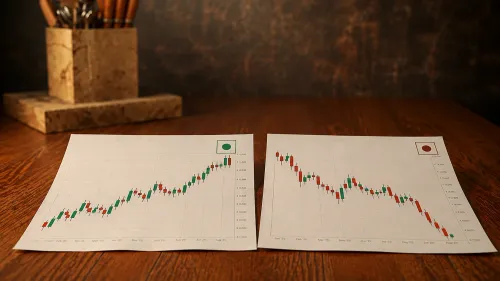
5 Things To Know About Derivatives Expiry
- Updated: 22 May 2026, 5:10 PM IST
- | 4m
- 4,042
 Add Preferred News Source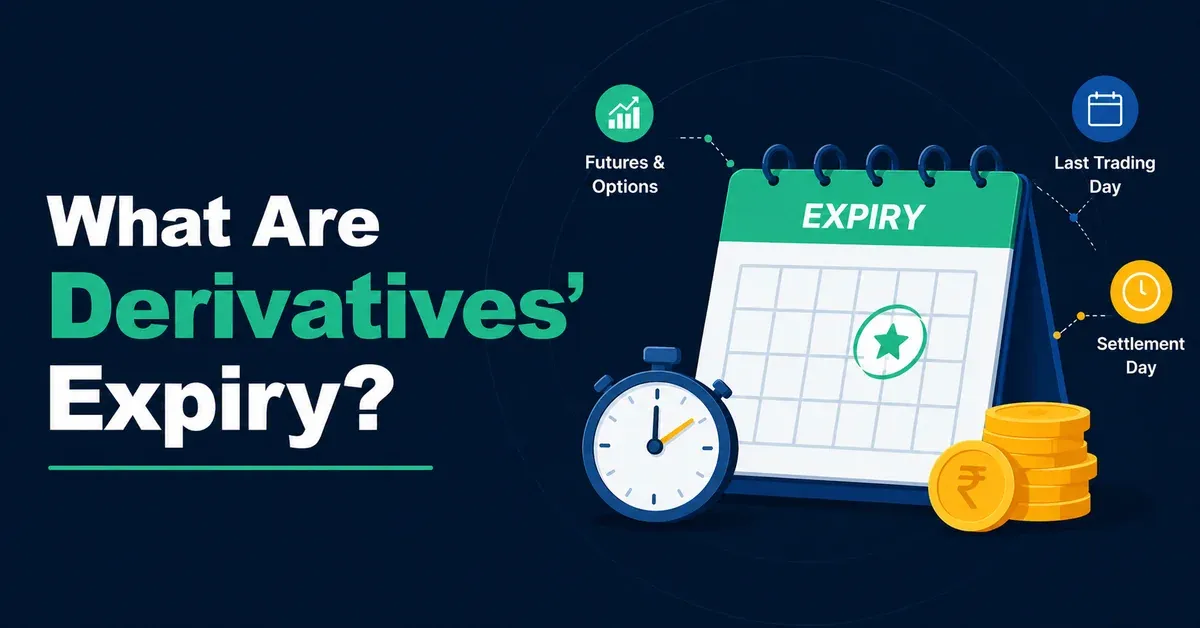
If you trade in stock market derivatives, expiry is not just another date on the calendar. It is when contracts come to an end, positions get settled, and traders are forced to act.
That shift shows up in the market. Volumes tend to rise. Price moves can get sharper. At times, stocks and indices start reacting more to positioning than fresh news.
A lot depends on what traders choose to do. Some close positions; others roll them over. Options start losing value faster as time runs out. All of this plays out in a short window, which is why expiry week often feels different from the rest.
Understanding derivatives' expiry, including how to track the F&O expiry date, is about seeing how these patterns play out in the market. That is what we will look at next.
What Are Derivatives' Expiry?
Before getting into expiry, it helps to quickly understand what derivatives are.
In simple terms, derivatives are financial contracts. The value of such contracts are derived from an underlying asset. It could be a stock, an index, or even a commodity.
So, what you are trading is the contract linked to that asset.
Each contract has a fixed duration. On expiry the contract comes to an end. After this, the contract is settled and cannot be traded further. The concept of expiry applies to both futures and options contracts.
There has been a recent change here. The Securities and Exchange Board of India (SEBI) has brought in more structure to F&O expiry dates.
-
National Stock Exchange of India (NSE): Tuesday expiry
-
BSE Limited (Indian stock exchange): Thursday expiry
Monthly expiry continues to fall in the last week, aligned with these days.
For traders, this makes expiry more predictable. Positions now need to be planned around fixed days rather than shifting schedules.
How Derivatives Expiry Impacts The Market
Expiry tends to bring some short-term shifts in how prices move. Actively traded stocks and indices are particularly impacted by this. In many cases, it is the positioning and settlement at play, not new news or triggers.
A few key factors drive this. Let us look at them one by one.
Closing Or Rolling Positions
Traders either close positions or carry them forward at the time of expiry. Closing simply means squaring off before the contract ends.
In case of rolling over, the current contract is closed, and a new one is opened. The new contract usually comes with a later expiry. This is done when the market view remains the same.
Moving to the next contract can mean a different price. That usually comes down to cost of carry, interest rates, and demand. You may also see changes in things like expiry, margins, and liquidity.
That is why rolling over is not always as easy as it seems. The new contract can lead traders to adjust their approach.
If many decide to close contracts instead of carrying them forward, you can see prices tilt in one direction. If positions are carried forward, it can support the existing trend for a bit longer.
Cash Vs Physical Settlement
Settlement at expiry can happen in two ways. In a cash settlement, only the price difference between the contract and the market is adjusted. The position is closed without any transfer of shares.
In physical settlement, shares are actually delivered at expiry, depending on the position. You will see this more in stock derivatives. As expiry gets closer, traders start making adjustments. Some exit their positions, while others get ready for delivery.
This choice can influence prices. If many traders rush to square off positions to avoid delivery, it can create short-term selling or buying pressure of that stock.
Options Premium Decay
An option’s premium has two parts. One depends on the difference between the strike price and the market price. The other depends on how much time is left before expiry.
As that time reduces, the option becomes less valuable. Think of it this way. With fewer days left, there is less chance for the price to move in your favour. So, the premium starts dropping, even if the market is not doing much.
This effect has become sharper in the last few days. Buyers who are sitting on losses may choose to exit instead of waiting for a longer time. At the same time, sellers who have benefited from this drop may be in close positions to lock in profits. When both sides are active like this, it can add to short-term price movement during expiry.
Futures Convergence
Futures prices and actual market prices do not usually match. At times, futures are priced higher than the spot prices. Such premiums are called 'contango'. If they are lower, it is backwardation.
Many traders work around this gap. Some use it to hedge, and others look for arbitrage opportunities. As expiry approaches, the two prices tend to come together. This will help you get a clear sense of the asset's true value.
If it does not fully close, settlement still happens at a final price set by the exchange. You may see some short-term price movement because of these adjustments.
Expiry Week Strategies
Expiry week often changes how traders think. Shorter time frames start to matter more, and attention moves to key price levels. Positioning comes into play as well.
If the market looks range-bound, some common strategies include iron condor, max pain theory, and short strangle. The idea is simple. Prices do not move much in either direction, and as time passes, option premiums keep reducing.
When there is a clearer directional view, the approach changes. You will see traders using structured options expiry strategies like bull call spreads or bear put spreads. They keep risk under control without completely missing out on short-term moves.
Some traders choose to stay out. With faster moves and very little time, sometimes the better choice is to stay out.
This mix of behaviour is reflected in the market. Sometimes prices stay within a range. At other times, quick position changes lead to sharp moves near expiry.
Common Mistakes To Avoid During Expiry
Expiry week tends to move faster than usual. Things can change quickly, and even small gaps in planning can show up in your trades.
-
Ignoring margin requirements - On expiry day, if one part of your position ends while the other stays open, you need to keep full margins for what remains. This can mean arranging extra funds at short notice.
-
Leaving decisions too late - Waiting till the last moment sounds simple. But that is often when moves get sharper. Exits can get rushed.
-
No clear plan going in - It is easy to get pulled into quick trades during expiry. You may end up with impulsive decisions without a proper plan.
-
Not paying attention during rollover - The next contract does not always match the current one in price. That difference can be reflected in your returns.
-
Liquidity can dry up - Some contracts see reduced activity as they go towards expiry. Entries and exits can get a bit tricky in such cases.
-
Costs add up quietly - Being aware of costs like brokerage and taxes is essential. They accumulate up quietly, especially in short windows like this.
Conclusion
Derivatives expiry week has its own rhythm. Things can shift quickly. A lot of it comes down to positioning, settlement, and how traders adjust along the way. Once you start noticing these patterns, short-term moves begin to make more sense. You start becoming more prepared for market fluctuations.
Sources:
The Economic Times
Moneycontrol
FAQs
Depending on the contract and exchange, derivatives can have weekly, monthly or quarterly expiries. As per the Securities and Exchange Board of India, only one benchmark index per exchange can have weekly contracts. So, Nifty 50 on the National Stock Exchange of India and Sensex on the BSE Limited expire weekly. The rest usually expire on a monthly or a quarterly basis.
They can. As expiry gets closer, traders start adjusting positions. That activity, along with settlement and changes in option premiums, can move prices in the short term. You will notice it more in actively traded stocks.
Some look at short-term opportunities. Time decay in options is one. Price movement near key levels is another. Strategies like spreads or range-based setups are common. But risk management is the key here.
The content in this blog is intended purely for educational purposes. Any securities or mutual funds referenced are illustrative in nature and do not constitute a recommendation or endorsement by Kotak Neo. Investors are encouraged to assess their own financial situation and seek professional advice before making any investment decisions. For compliance T&C and disclaimers, Visit https://www.kotakneo.com/disclaimer/
0 people liked this article.

Kotak Neo (Kotak Neo) is India's venerable stockbroking company with a rich legacy. It offers comprehensive investment services across asset classes, prioritising a technology-first approach for a seamless experience. Trusted by 5 million+ customers, it guides you toward financial success with ease of investment and speed of trade.
Note: The opinions expressed in this blog are personal viewpoints and should not be construed as recommendations.