Centre Weighs New Ownership Rules For Airlines And Airport Operators
 Add Preferred News Source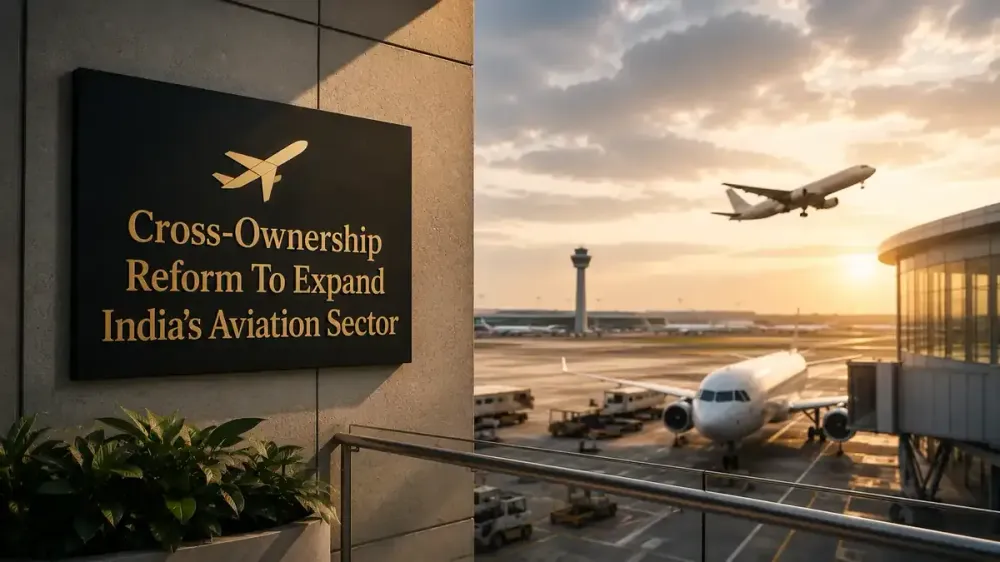
The Centre is weighing changes to airline-airport ownership rules that could benefit Air India, Adani and GMR while boosting competition. Read more about the proposed policy changes.
The centre is working on a proposal to ease airline airport ownership rules, a move that could allow carriers such as Air India to buy stakes in airports and let airport companies launch or acquire airlines.
The Ministry of Civil Aviation is preparing a concept note for discussions with NITI Aayog and other ministries before the proposal is sent to the Union Cabinet for approval, according to people familiar with the matter.
The proposal comes as the government pushes ahead with the next phase of airport privatisation and looks to expand aviation infrastructure to meet rising passenger demand. If approved, the changes could allow companies such as the Tata Group and airport operators, including Adani Group and GMR Airports, to expand into businesses that are currently restricted under existing ownership rules.
Why Is The Government Considering The Change?
The Ministry of Civil Aviation has started work on a concept note, which will be shared with NITI Aayog and other ministries as discussions move forward. Any change to the existing rules will eventually require Cabinet approval.
The proposal has also sparked discussion around an Air India airport stake, as the Tata Group-owned carrier explores opportunities in the airport business. If the rules are relaxed, Air India could invest in airport infrastructure for the first time.
At present, concession agreements for airports such as Noida International Airport and Navi Mumbai International Airport limit airlines and their associates to a maximum 26% stake in airport operating companies. Ownership restrictions are stricter at Delhi and Mumbai airports, where Indian scheduled airlines are collectively capped at 10%, while foreign airlines are barred from holding equity.
The discussions also come alongside the next phase of airport privatisation in India, with the government preparing to privatise 11 more airports and its review of the Airports Authority of India's proposed exit from its stakes in Delhi and Mumbai airports.
What Could Change For India's Aviation Sector?
If approved, the policy could encourage new competition in a market where IndiGo and Air India together account for nearly 90% of domestic capacity. Airport operators could launch or acquire airlines, while airline groups could invest in airport infrastructure.
However, aviation experts have raised concerns over possible conflicts of interest. They argue that airport operators with airline businesses could favour their own carriers when allocating slots, gates, parking bays and other operational facilities.
The proposal also comes as India's aviation sector faces aircraft delivery delays from Airbus and Boeing, which continue to limit expansion plans. Even so, long-term demand remains strong. The International Air Transport Association expects India to add 425 million passengers by 2044 compared with 2024 levels, while the government aims to increase the number of airports across the country to 350 by 2047.
Also Read - Stock Market Update 23 July 2026: Sensex Falls Over 300 Pts; Nifty 50 Below 24,000
This article is for informational purposes only and should not be considered investment advice from Kotak Neo. For compliance T&C and disclaimers, Visit www.kotakneo.com/disclaimer
Right Tools, Rich Insights