Scalping Strategy: A Complete Guide For Traders
- Updated: 17 Jun 2026, 9:44 PM IST
- | 4m
- 1,203
 Add Preferred News Source
Catching quick market moves requires sharp focus, steady discipline, and a very structured approach to charts. Among the different paths a trader can take, a scalping strategy is the fastest way to pull small profits from tiny price changes in high-volume financial markets.
What Is Scalping Strategy?
Scalping is a quick trading method where one tries to make small profits from several fast trades done in one day. A trader doing scalping will not keep the stock for days or hours; rather, they will buy and sell in a few minutes or even seconds.
The main aim is that small price changes occur all the time, and by scalping it is easier to capture these than big market trends.
Here are a few features of scalping:
-
Short holding times: Trades are held for only a few seconds or minutes, which protects them from any overnight bad news.
-
Huge trade volume: It is normal to open dozens of positions a day to reach a cumulative profit goal.
-
Focus on small gains: Traders seek small price ticks instead of huge market rallies.
-
Heavy chart reliance: Decisions come down to price action patterns and short-term candlesticks rather than corporate balance sheets.
How Does Scalp Trading Strategy Work
The true mechanics of a scalping trading strategy involve taking advantage of the difference between the purchase and sale prices, called the bid-ask spread. Upon seeing a rapid increase or decrease in prices, a trader immediately makes an entry into the market and places a closing order only slightly above the purchase price.
Scalpers generally use specialised charting platforms where they can set charts to very short timeframes, with one-minute charts, or even tick charts, which change after every completed transaction, being common. The earnings on each trade are small, so traders often use larger position sizes or leverage to make the return meaningful.
-
Capturing the spread: Buying at the lowest available selling price and selling at the highest buying price.
-
Riding momentum bursts: Jumping into a trade the second a spike in volume pushes the price rapidly in one direction.
-
Instant execution: Using direct market orders to avoid delays that can ruin your entry price.
Why Do Traders Use Scalping Strategy?
Some traders actually like scalping because it drastically reduces the possibility of them facing the risks that swing traders or long-term investors face. Since the trader's money is only tied up in an active trade for a few minutes, the chance of getting hit by an unexpected market crash is very low. Small price fluctuations happen all day long, meaning it is easy to find setups whether the broader index is going up, down, or sideways.
This method also suits people who want to trade immediately and not hold trades for longer.
Here are some reasons why you may want to consider scalping strategies:
-
Less time in the market: Spending less time in active trades shields your capital from unexpected macro news shocks.
-
Endless daily setups: Tiny fluctuations in prices happen several times each day, which means you are always finding new opportunities.
-
Works in flat markets: You do not need a massive bull run to make money; small bumps are plenty.
-
No overnight gaps: You never have to worry about global events damaging your positions while you sleep.
Key Characteristics Of A Successful Scalping Strategy
A good scalping strategy cannot be based on guesswork or gut feeling. It requires a highly mechanical system where you never hesitate. Also, you must trade an asset that has heavy volume and incredibly tight spreads. If you choose an illiquid stock, the broker commissions and transaction costs will eat up all your profits before you even clear the trade.
-
Tight bid-ask spreads: Only trading the most liquid assets, such as major currency pairs or the best stocks.
-
Severe loss cutting: Having the discipline to exit a losing trade the moment it hits your set risk point.
-
Fast technical setup: Using hotkeys and direct platform routing to place orders in a fraction of a second.
-
Operating peak hours: Only working during the busiest periods of the markets and when there is the highest volume.
Best Scalping Strategy For Beginners
If you are new to scalping, building a simple, rule-based layout is the safest way to protect your capital. Trying to trade pure tick charts immediately may cause confusion and quick losses. Instead, beginners should use standard moving averages to show them the direction of the immediate trend before they risk any money.
Moving Average Ribbon Approach
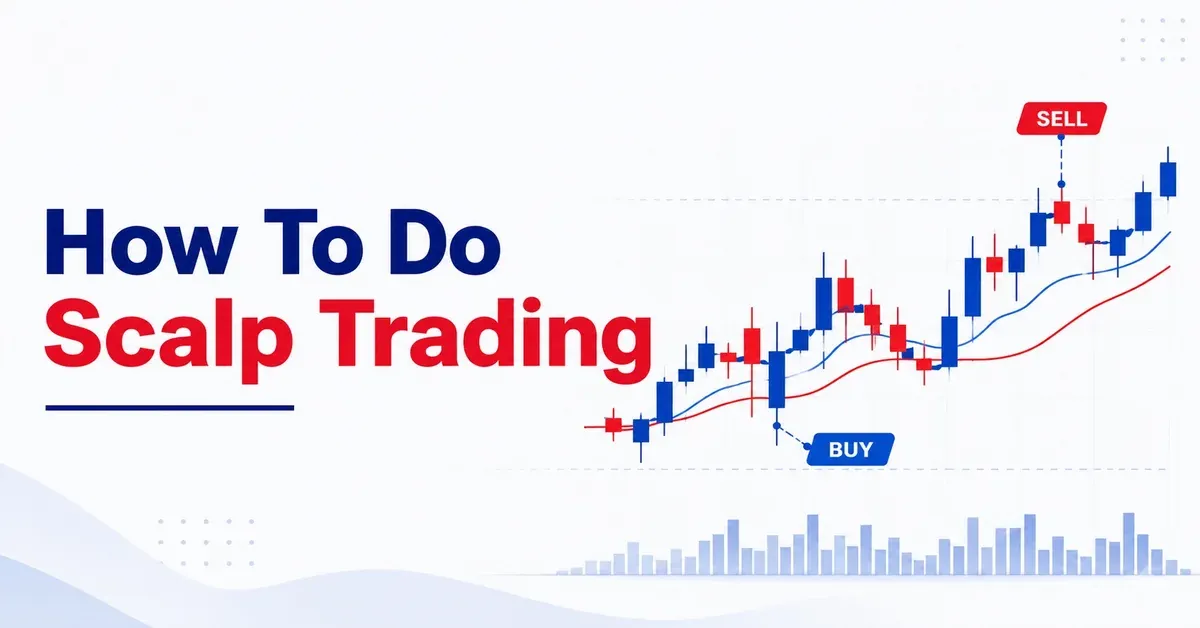
The best scalping strategy for beginners often uses exponential moving averages (EMAs) to spot clean micro-trends on short-term charts. By looking at a fast EMA and a slow EMA together, a new trader can easily see when momentum is shifting, which marks a safer entry point.
-
Follow the trend: Only take buy orders when the live price stays safely above your moving average lines.
-
Wait for pullbacks: Wait for the price to drop back and touch the moving average line before you buy.
-
Simple visual rules: Clear line crossings take the emotion out of your trading day.
-
Filter out chart noise: Allow the averages to smooth out random price bounces, thus allowing you to see the real trend.
5 Minute Scalping Strategy Explained
The 5-minute scalping strategy is popular because it gives traders a bit more time to think while still capturing fast intraday moves. Operating on a 5-minute chart provides enough data to see reliable support and resistance levels, but still offers plenty of setups during a single session. This system frequently combines a momentum tool with basic price levels.
To run a 5-minute scalping strategy, watch for the price to break out of a tight consolidation box on the 5-minute candle interval. The goal is to catch the initial wave of volume that follows that breakout.
Trend Confirmation and Breakout Execution
Traders using this timeframe look for multiple clues to line up at once. By waiting for the 5-minute candle to close completely, they avoid many of the false breakouts that happen on hyper-fast one-minute charts.
-
Improved chart stability: It offers more distinct structural levels than ultra-fast timeframes, making analysis easier.
-
Indicator confirmation: Wanting to see a tool such as the Relative Strength Index (RSI) to confirm the breakout of the price.
-
Clear profit goals: Setting your target based on the size of the recent 5-minute candles.
-
Calmer pace: Gives you enough time to calculate your position size manually without panic.
Top Scalping Indicators Used By Professional Traders
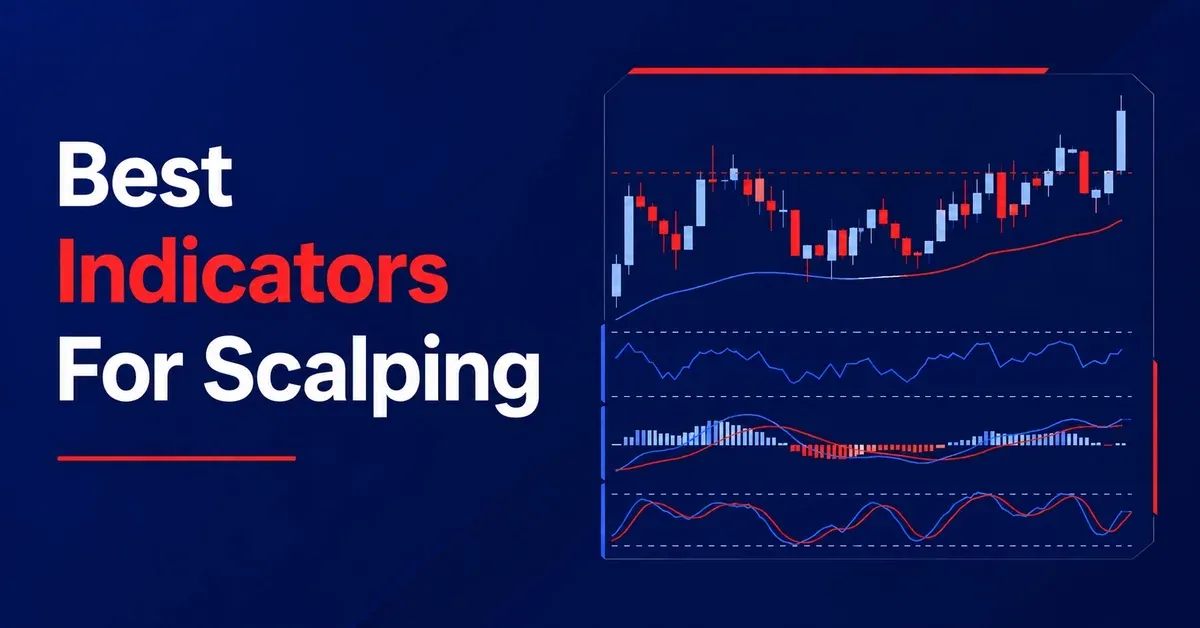
Professional short-term traders use specific indicators to clear away market confusion and highlight real speed in the order book. These tools are tuned specifically to track volume and velocity over compressed periods.
The table below outlines the primary indicators used to build the best scalping trading strategy, along with how they work.
Exponential Moving Average (EMA) | Tracks average price while favouring recent data points. | Shows the micro-trend direction and acts as a dynamic floor or ceiling. |
Stochastic Oscillator | Compares a closing price to its recent trading range. | Highlights overbought or oversold moments during sideways trends. |
Moving Average Convergence Divergence (MACD) | Shows the connection between two different moving averages. | Spots sudden accelerations in price, speed and trend flips. |
Bollinger Bands | Measures volatility using standard deviation lines. | Defines how far a price can stretch before it snaps back to the average. |
Volume-Weighted Average Price (VWAP) | Calculates the true average price based on intraday volume. | Acts as a baseline value guide for institutional trend trading. |
Common Entry And Exit Rules In A Scalping Strategy
A scalping system fails completely without strict rules for when to get in and out. Because things change in seconds, your choices must be automatic. A common entry signal occurs when a price breaks through a key structural level on high trading volume.
Exits require the exact same precision. You have to decide what your profit goals are ahead of time and use an automated limit order to leave the position. Simply waiting and wishing for additional profit is a strategy that will actually lead to a loss of whatever profit you were able to secure initially.
-
Volume validation: Entering a position only when a price breakout is accompanied by a visible spike in market volume.
-
Pre-set take profits: Setting an automatic exit order just a few ticks away from your entry price immediately.
-
Tight stop losses: Placing a protective stop order right under the latest low point to protect your account balance.
-
Time cutoffs: Closing a position manually if the price goes completely flat and stalls out for a few minutes.
Risk Management Tips For Scalping Traders
Because scalping involves a high number of trades, smart risk management is the only thing keeping one bad mistake from destroying a whole day of wins. The main rule is to keep your losses tiny. A common beginner trap is holding onto a losing trade and hoping it comes back, which turns a quick scalp into a massive long-term loss.
You also need to establish a strict daily loss limit. If you hit that amount, you must close your platform and walk away for the day.
-
Mandatory stop orders: Never open a single position without a firm, automated stop-loss attached to it.
-
Small position sizing: Risk only a tiny fraction of your account, like 0.5% or 1%, on any individual trade.
-
Daily drawdown ceilings: Have a fixed loss limit where you turn off your monitors to prevent emotional revenge trading.
Advantages And Disadvantages Of Scalping Strategies
While scalping can be highly profitable, it places heavy mental demands on a person. You must look closely at both sides before risking your capital with this style.
The table below presents a direct look at the main pros and cons of using a short-term trading framework.
You face zero overnight risk from global news events. | High transaction fees and commissions can drain your profits quickly. |
Endless trading opportunities occur throughout every session. | Requires intense mental focus and hours of continuous screen time. |
Small price steps are much easier to forecast than macro trends. | A sudden change in market price due to news events may lead to unexpected loss. |
Compounding small wins can grow a trading account steadily. | One single unmanaged loss can wipe out dozens of previous small wins. |
Who Should Use A Scalping Strategy?
An active scalping system is not a good fit for every personality or financial situation. This style belongs to traders who can make fast decisions, control their emotions perfectly, and sit patiently in front of screens for hours. If you feel anxious the moment a trade moves against you by a few rupees, the speed of scalping will lead to mistakes.
It also requires a schedule that lets you focus completely during your trading windows. You cannot safely scalp while managing another job or dealing with distractions.
-
Highly disciplined people: Traders who can take a loss immediately without any feeling of regret or anger.
-
Rule-following thinkers: Traders who work the numbers and stick to the strategy they have prepared.
-
Attentive screen traders: Those who love a high-speed environment and can devote time to watching very active markets.
-
Platform masters: Traders who confidently operate complex order types, hotkeys, and rapid data feeds.
How To Choose The Best Scalping Strategy For Your Trading Style?
Finding the right scalping model comes down to an honest look at your personal reaction speed, your schedule, and your risk tolerance. A beginner should always test a new strategy on historical data and practice with a demo or dummy account before using real money.
Watch how your strategy handles broker fees and fast market shifts. The best system is simply the one that fits your personality and allows you to execute trades cleanly without hesitation.
The content in this blog is intended purely for educational purposes. Any securities or mutual funds referenced are illustrative in nature and do not constitute a recommendation or endorsement by Kotak Neo. Investors are encouraged to assess their own financial situation and seek professional advice before making any investment decisions. For compliance T&C and disclaimers, visit https://www.kotakneo.com/disclaimer/
0 people liked this article.