1 Minute Scalping Strategy: A Complete Guide For Intraday Traders
- Updated: 20 Jun 2026, 1:21 PM IST
- | 4m
- 1,525
 Add Preferred News Source
The stock market creates opportunities of all sizes. Some traders wait for large moves. Other traders, scalpers for instance, focus on smaller price swings. The 1 minute scalping strategy is popular among such traders.
Trades under this strategy are usually opened and closed within minutes. Timing matters here. So does discipline. In this article, let us break down the 1 minute trading strategy step by step.
What Is A 1 Minute Scalping Strategy?
The 1 minute scalping strategy is built for quick trades. It uses a timeframe of 1 minute to capture very small price movements. The focus remains on opportunities that may appear within minutes.
Unlike swing trading, positions are not held for days. Unlike investing, the focus is not on long-term growth either. The idea is to take advantage of short-lived opportunities that appear during the trading session.
Scalpers should usually possess the following traits.
-
They keep a constant watch on markets
-
They must be able to react quickly when needed
-
They patiently wait for the right setups
-
They stick to predefined entry and exit rules
-
They must stay calm during volatility
Example of a 1 Minute Scalping Trade
Let’s say a stock is trading at ₹500. A trader buys it for that price. Within a minute, the price jumps to ₹500.5. The trader closes the position and books the profit.
The price difference may be just ₹0.50 per share. However, scalpers often trade larger quantities. If a trader buys 10,000 shares, a ₹0.50 move works out to ₹5,000 before charges and taxes.
How Does A 1 Minute Trading Strategy Work?
The first step is for traders to identify the right stock. A stock with high liquidity and trading volume is generally considered. The goal is to benefit from small moves. This is usually possible only if the stock is active.
Once the stock is chosen, they monitor price movements on a 1 minute timeframe. Technical indicators may also be used for additional confirmation.
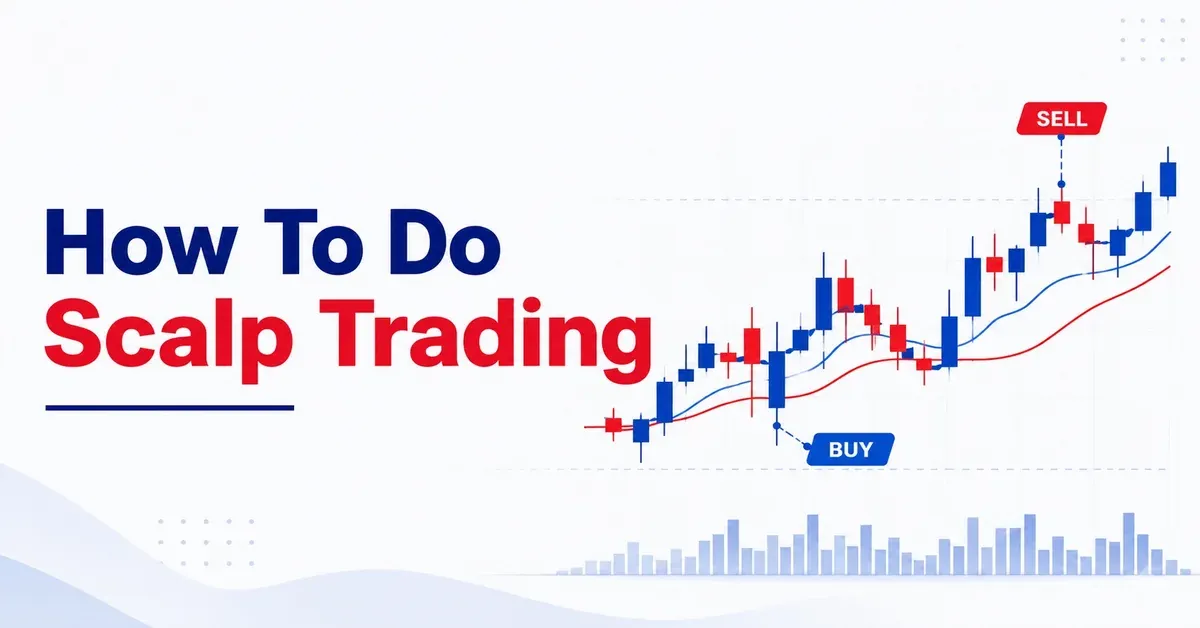
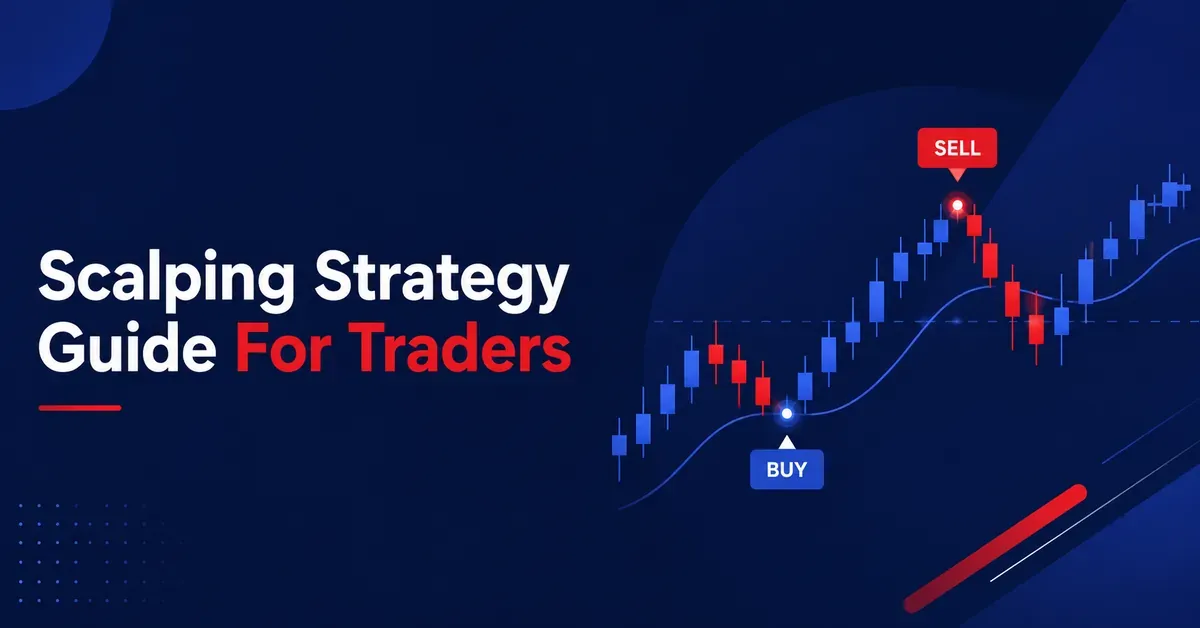
When a trading opportunity appears, the trader enters the position. A target and stop-loss are usually decided in advance. The position is then watched closely. Sometimes the target is reached within minutes. At other times, the stop-loss may be hit first.
New opportunities may appear throughout the day. The same process can then be repeated.
Key Features Of A 1Min Scalping Strategy
A scalping strategy is different from long-term approaches. It stands apart in a few ways.
-
Modest price moves: A movement of even a few paisa per share may be enough incentive to enter a trade.
-
Frequent set-ups: The next small move may only be a minute away. So, traders get opportunities to trade more often.
-
Liquid stocks: Traders normally prefer actively traded stocks as trading becomes smoother with such stocks.
-
Same-day closure: Positions are usually closed on the same trading day, usually within minutes.
Who Should Use A 1 Minute Scalping Strategy?
The 1 minute scalping strategy may seem overwhelming. The pace can be demanding. Trades may be opened and closed within minutes. So, traders may need to be active throughout the session.
The strategy is generally more suitable for the following category of traders:
-
Intraday traders whose routine is built around trading hours
-
Traders of futures and options having exposure to fast-paced markets
-
Experienced traders who have seen and who understand market cycles
-
Active participants who spend hours tracking prices
-
Technical traders whose strategies involve charts and indicators
Benefits And Risks Of 1 Minute Scalping
Some traders enjoy the fast pace of 1 minute scalping. Others find it difficult to keep up. The table below highlights some potential benefits and risks.
A new setup may just be around the corner | The market noise is very high |
Money does not stay locked in a position for long | Brokerage and other charges can pile up over multiple trades |
Overnight events are usually not a concern | A few bad trades can undo earlier gains |
Traders receive feedback on their decisions quickly | Markets may move before there is time to react |
Volatile days often bring more setups | Watching markets for hours can feel exhausting |
Essential Indicators For A 1 Minute Scalping Strategy
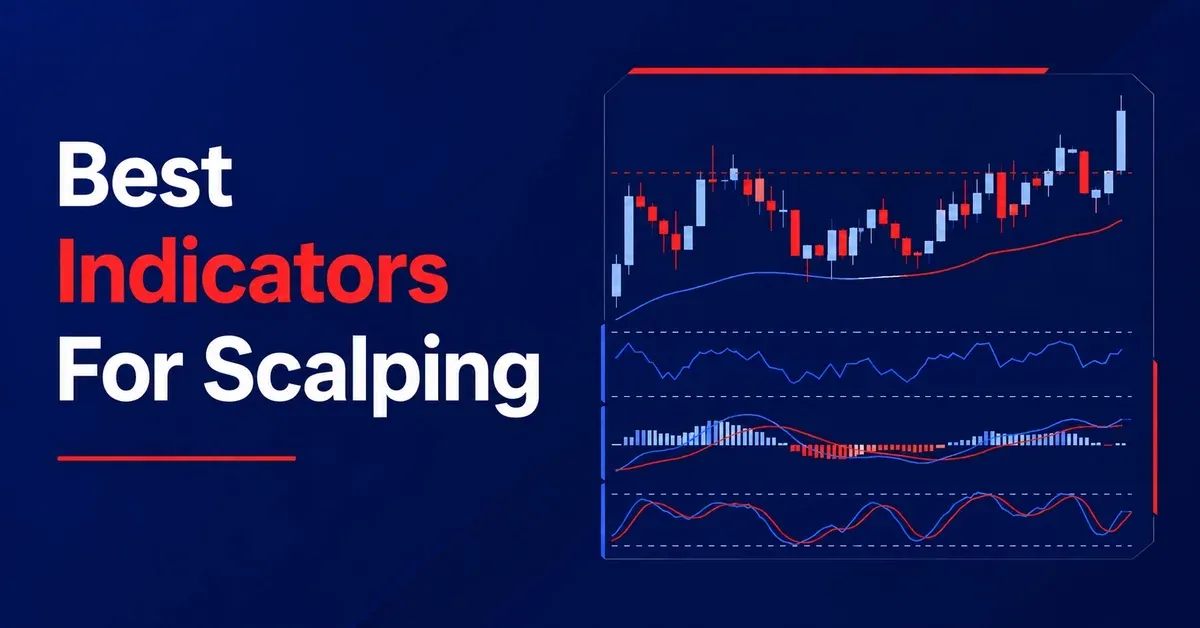
Many traders use technical indicators to analyse short-term market movements. Rather than relying on a single indicator, they often use a combination of indicators for additional confirmation. For example, one indicator may help identify the trend, while another may provide insights into momentum.
The indicators below are among the commonly used ones.
Exponential Moving Average (EMA) | Recent price movements are tracked. It can offer a quick view of the current trend and reversals. |
Volume Weighted Average Price (VWAP) | The day's average traded price is shown. Gives an idea of market performance when compared with the current price. |
Relative Strength Index (RSI) | Recent gains and losses are compared. Shows overbought and oversold conditions. |
Moving Average Convergence Divergence (MACD) | Two moving averages are compared. Changes between them are closely watched. |
Volume Indicator | Trading activity remains the focus. Busy periods are easier to spot. |
Step-by-Step 1 Minute Scalping Strategy Setup
The setup process can vary from one trader to another. However, a few steps are commonly followed before a trade is placed.
Step 1: Pick a stock that is traded actively.
Step 2: Open a 1-minute chart. This becomes the primary timeframe.
Step 3: Add indicators that fit the trading approach. You could use more than one indicator.
Step 4: Mark your support and resistance levels.
Step 5: Look for setups that match your levels. It is important to be patient until the right setup comes up.
Step 6: Fix your target and stop-loss levels beforehand. It helps you plan your exit better.
Step 7: Place your trade after trends are confirmed. Some traders wait for multiple signals.
Best Entry Rules For 1 Minute Scalping
Scalping is not about firing off trades whenever the market moves. Most traders wait for certain conditions to show up before getting involved. What those conditions look like depends on the approach, although a few things tend to come up again and again.
-
A clear trend is already visible.
-
Trading activity begins to increase.
-
More than one indicator supports the idea.
-
Price reacts near a support or resistance level.
-
The possible reward is larger than the possible loss.
Best Exit Rules And Stop-Loss Placement
An exit plan is often decided before the trade begins. This helps reduce emotional decisions during a fast-moving session. Targets and stop-loss levels may vary from one trader to another. But most of them consider the following factors:
-
The expected move has already taken place.
-
Price moves beyond the predefined risk level.
-
A key price zone comes into focus.
-
The setup begins to look different from the original plan.
-
Buying or selling interest starts fading.
Best Stocks And Markets For 1 Minute Scalping
Not every stock is suitable for 1 minute scalping. The correct selection largely depends on the trader’s goal. Preferred market segments and individual trading styles are just as likely to influence the decision as the stock itself. In addition to general market conditions, factors such as liquidity, price action and even company-specific developments are often taken into account.
However, the stock categories below are generally associated with 1 minute scalping.
Large-cap stocks | These stocks rarely go unnoticed during market hours. |
Index-based instruments | Activity is often spread across the entire session. |
Stocks with high trading volume | Orders are usually matched more quickly. This makes entry and exits easier. |
Derivatives market | Short-term price swings are part of the landscape. |
Common Mistakes To Avoid When Using A 1Min Scalping Strategy
The speed of the strategy can sometimes lead to mistakes. Small errors may have a larger impact when trades are placed frequently. A few common issues are listed below.
-
A strong price move may be difficult to ignore. However, not every move matches your setup.
-
Traders sometimes enter after most of the move has already happened. The remaining profit potential may be limited.
-
Transaction costs may be ignored. But when several trades are placed in a day, they quickly add up.
-
Some traders focus on stocks with very little trading activity. Entering and exiting positions may then become difficult.
-
A larger trade may be placed after a loss in an attempt to recover quickly. The next loss can become even more expensive.
-
Trading decisions may be based on a single indicator. Important information from other signals may then be missed.
-
Every price movement may start looking like an opportunity. This can result in more trades than originally planned.
Risk Management Tips For 1 Minute Trading
Risk management deserves just as much focus as finding the right trade. Capital preservation is important, particularly when opening several positions during the day. A strategy can produce winning trades but still fall apart if risk controls are weak.
A few practical tips may help improve risk management when trading with the 1 minute strategy:
-
Define your risk before entering a trade. The maximum possible loss should already be known.
-
Keep your position size in line with the stop-loss level. A wider stop-loss may require a smaller position.
-
Avoid committing too much capital to a single trade. One position should not decide the outcome of the day.
-
Go through your trades before moving to the next opportunity. It can help you see mistakes and biases.
-
Set a daily loss limit. Avoid trading once that limit is reached.
-
Follow the same discipline across trades. Tracking what works for you will be easier.
-
Focus on consistency. Do not decide based on individual wins or losses.
1 Minute Scalping Strategy Vs 5 Minute Scalping Strategy
The difference between the two approaches goes beyond the timeframe. A 1 minute chart can produce more trading signals during the day. A 5 minute chart may filter out some of the smaller price fluctuations. As a result, the pace, trade frequency and decision-making process can differ considerably.
Timeframe | 1 minute chart | 5 minute chart |
Trade Duration | Usually shorter | Can be slightly longer |
Decision Making | Needs to be faster | Can be relatively slower |
Number of Opportunities | Usually higher | Usually lower |
Market Noise | Generally higher | Comparatively lower |
Suitable For | Experienced short-term traders | Traders looking for a slower pace |
Can Beginners Use A 1 Minute Scalping Strategy?
The market offers a lot of trading opportunities for beginners. Scalping, especially the 1 mintue scalping strategy, however, may not be the easiest place to begin.
Market conditions can change quickly. Decisions often need to be made within minutes. New traders may find it difficult to track entries, exits and risk at the same time. Hence, many traders prefer spending time on longer timeframes before moving to faster strategies.
That said, beginners can still explore 1 minute scalping strategy. But the learning curve will be steep. The best way to begin is trading with small quantities while focusing on preserving their capital.
Conclusion
The 1 minute scalping strategy is built around small price movements. Some traders enjoy the fast-moving nature of the strategy. They are also attracted by the number of opportunities a single trading session can present. However, delays and mistakes can be expensive, given the pace.
Strong liquidity and careful trade selection can make a difference. Even so, success does not come from understanding the strategy alone. You also need to show consistency as well as sound risk management skills to succeed when using the 1 minute scalping strategy.
The content in this blog is intended purely for educational purposes. Any securities or mutual funds referenced are illustrative in nature and do not constitute a recommendation or endorsement by Kotak Neo. Investors are encouraged to assess their own financial situation and seek professional advice before making any investment decisions.For compliance T&C and disclaimers, Visit https://www.kotakneo.com/disclaimer/
0 people liked this article.