How to Do Scalp Trading: A Beginner's Guide
- Updated: 20 Jun 2026, 1:14 PM IST
- | 4m
- 1,087
 Add Preferred News Source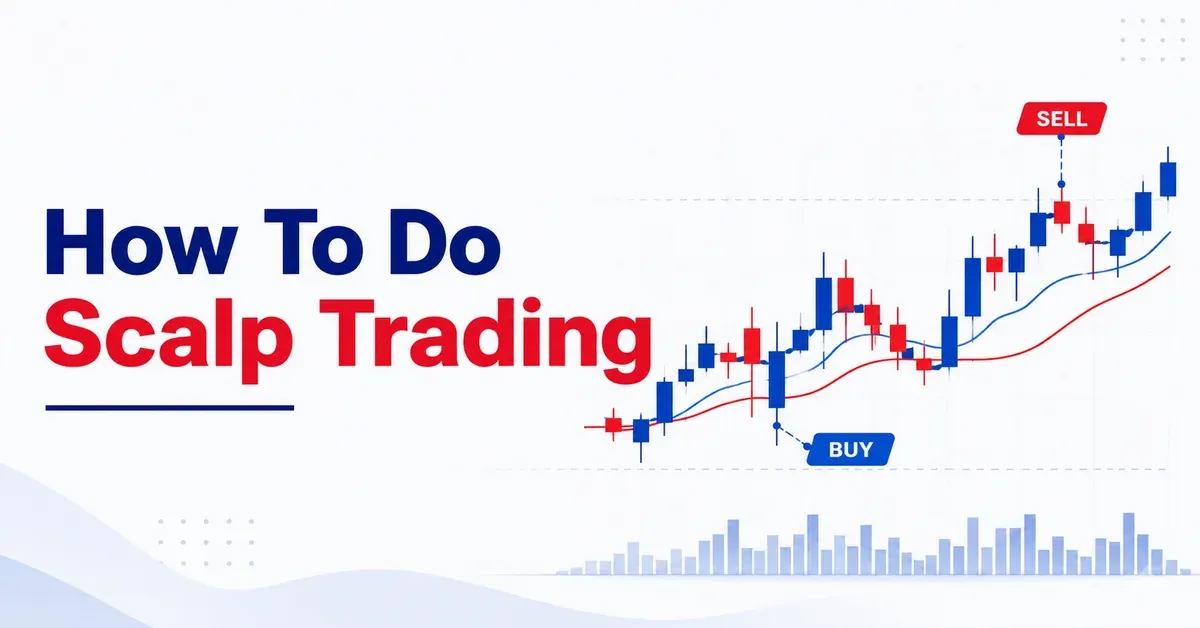
One of the first things many new traders discover is that not everyone in the market is looking for a big move.
Some traders are happy if a stock moves a few points in their favour. They enter, book a small profit, and exit. Then they do it again. And sometimes again.
That is essentially what scalp trading is about.
From the outside, it can look exciting. Trades are quick. Results come fast. There is always something happening on the screen. But once people actually try it, they realise that scalp trading is not about speed alone. In many cases, the biggest challenge is waiting for the right opportunity and having the discipline to act only when it appears.
What Is Scalp Trading?
Scalp trading is a fast-paced trading style whereby traders try to make profits on very minor price fluctuations within the same day. The holding period is usually brief. Sometimes a few minutes. Sometimes even less.
Instead of waiting for a stock to make a large move, scalpers focus on collecting smaller gains from multiple trades.
How To Do Scalp Trading Step-By-Step
People often ask how to do scalp trading, expecting a secret formula or a special indicator that would make them an expert in the field. The reality is usually less lucrative.
Most successful scalpers follow a fairly ordinary process. They search for liquid stocks, they wait patiently, they take trades only when the conditions fit their plan, and they are very careful about managing the risk. The routine may not sound very exciting, but that is often the way consistency is achieved.
If you are learning how to scalp trade, the process typically involves the following steps:
-
Start with stocks that have strong trading volume.
-
Focus on liquid instruments where buying and selling is easy.
-
Use short-term charts such as 1-minute or 5-minute charts.
-
Identify whether the stock is moving with a trend or trading in a range.
-
Wait for a setup instead of entering impulsively.
-
Decide your stop-loss before placing the trade.
-
Exit when the target is achieved.
-
Avoid reopening trades immediately after an exit.
A mistake many beginners make is believing they need to be in the market all the time. In reality, some of the best scalp traders spend more time observing than trading.
Essential Requirements For Successful Scalp Trading
A lot of people become interested in scalp trading because of the possibility of quick results. What they often overlook is the preparation involved.
A trader can have a solid strategy and still struggle because of poor execution. Sometimes the issue is discipline. Sometimes it is risk management. Occasionally, it is simply trying to trade stocks that are not suitable for scalping.
The following factors play an important role:
Liquidity | Allows smoother entry and exit |
Trading Discipline | Prevents emotional decisions |
Fast Order Execution | Helps avoid unnecessary delays |
Risk Management | Protects trading capital |
Stable Trading Platform | Reduces execution issues |
Focus and Patience | Helps avoid unnecessary trades |
Interestingly, patience is rarely mentioned when people discuss scalp trading. Yet experienced traders often consider it one of the most valuable skills, because waiting for the right setup can be harder than placing the trade itself.
Top Scalp Trading Strategies For Beginners
When people start researching how to trade scalping, they quickly discover hundreds of different strategies. That abundance of choice can actually become a problem.
A beginner who keeps switching between strategies rarely gives any of them enough time to work. It is usually better to choose one straightforward approach and learn it thoroughly.
Some beginner-friendly strategies include:
Moving Average Pullback | Trade with the trend after a temporary retracement |
Breakout Trading | Enter when price moves beyond an important level |
VWAP-Based Trading | Use Volume-Weighted Average Price (VWAP) as a reference for direction |
Momentum Trading | Focus on stocks showing strong movement |
Range Trading | Buy and sell within a defined range |
Often, it is not the most sophisticated strategy that is the best one. It is the one a trader can usually follow consistently without second-guessing every decision.
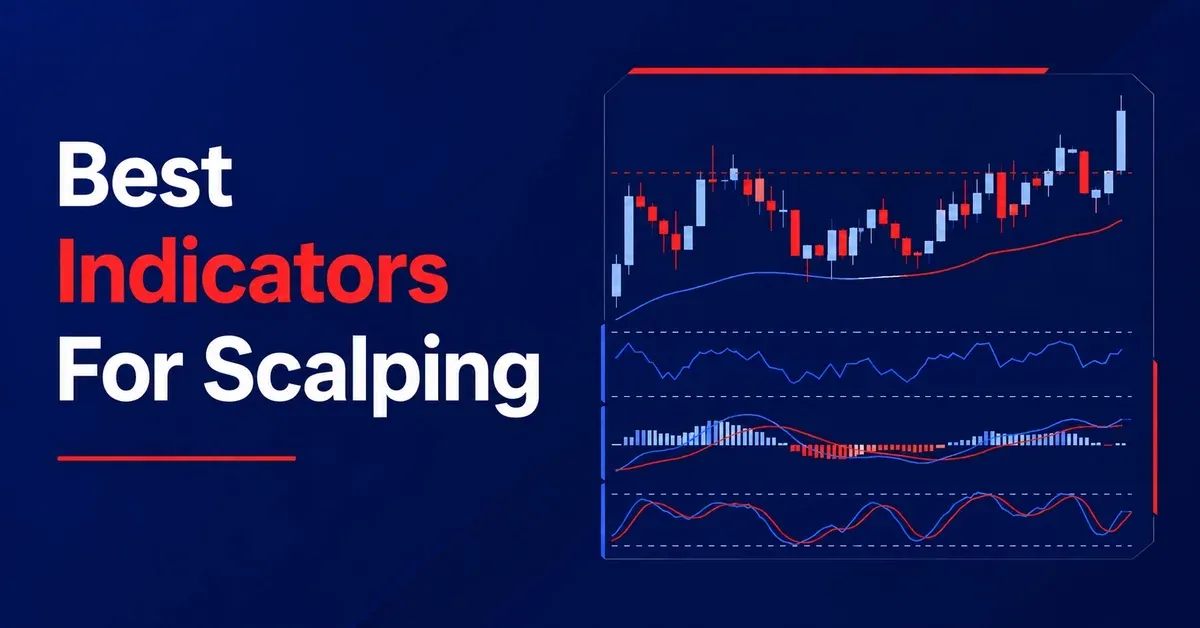
Top Indicators Used In Scalp Trading
Ask five scalpers about indicators, and you may receive five different answers.
Some traders keep their charts almost empty. Others prefer additional confirmation before entering a position. Neither approach is automatically right or wrong.
A few indicators appear regularly in scalp trading because they help traders understand trend, momentum, and volatility.
Moving Averages | Tracking short-term trend direction |
VWAP | Identifying average traded price |
Relative Strength Index (RSI) | Measuring momentum |
Moving Average Convergence Divergence (MACD) | Confirming momentum shifts |
Bollinger Bands | Assessing volatility |
Volume | Gauging market participation |
An important point to keep in mind is that indicators perform their best only when they are used to support a decision. The overuse of indicators sometimes leads to confusion rather than providing clarity.
Who Should Consider Scalp Trading?
Not every trading style suits every person. Scalping is a good example of that.
Some traders like to watch the market all day long. They like to make quick decisions, analyse short-term price movements and be involved in every trade. Scalp trading is really a thrill and a satisfaction for them.
Others prefer a slower pace. They would rather spend time researching a stock, place a trade, and then let it develop over several days or weeks. It is just a matter of goals and preferences.
Scalp trading may be worth considering if you:
-
Can dedicate time during market hours.
-
Enjoy monitoring charts and price action.
-
Prefer short-term trading opportunities.
-
Are comfortable making quick decisions.
-
Can follow a trading plan consistently.
-
Understand the importance of stop losses.
Before learning how to start scalp trading, it is better that you be honest with yourself first and ask whether the trading style is in line with your personality or not. A strategy can look attractive on paper, but it still needs to fit the person using it.
Conclusion
Learning how to do scalp trading is often simpler than people expect. The basic process is fairly straightforward. The real challenge lies in the execution.
Successful scalpers are not necessarily the fastest traders in the market. They tend to be the ones who stick to their rules consistently, keep a close eye on risk and stay away from unnecessary trades.
If you are exploring how to do scalping in intraday trading, start small. Focus on understanding market behaviour rather than chasing profits from day one. Over time, experience will teach lessons that no indicator or strategy can fully provide.
Like any trading approach, scalp trading requires practice. The goal should not be to win every trade. Instead, the aim must be to establish a system that is not only repeatable but can also be implemented faithfully irrespective of the market environment.
The content in this blog is intended purely for educational purposes. Any securities or mutual funds referenced are illustrative in nature and do not constitute a recommendation or endorsement by Kotak Neo. Investors are encouraged to assess their own financial situation and seek professional advice before making any investment decisions. For compliance T&C and disclaimers, visit https://www.kotakneo.com/disclaimer/.
0 people liked this article.