Bid Price And Ask Price: Meaning, Difference
- Updated: 24 Jul 2026, 5:36 PM IST
- | 4m
- 1,130
 Add Preferred News Source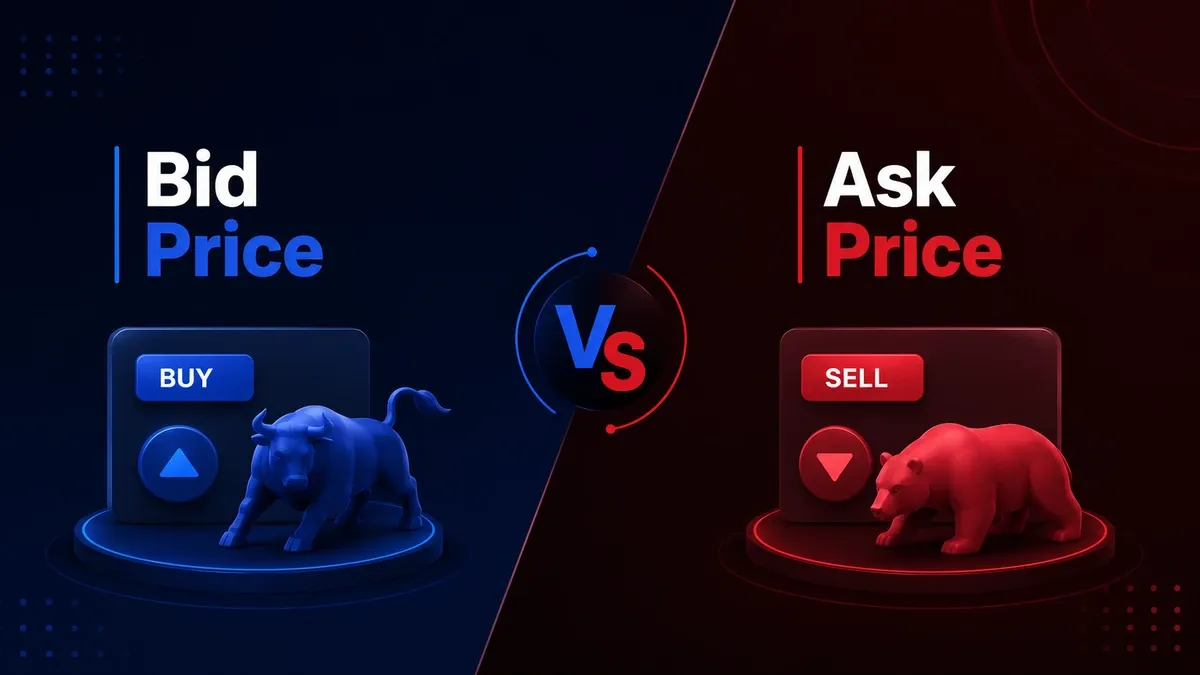
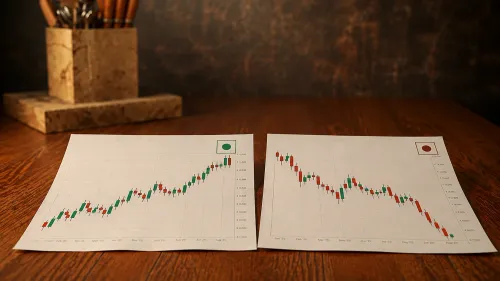
Bid price and ask price appear as soon as you open any stock's live quote. One number is what a buyer will pay. The other is what a seller wants. A trade only happens when these two meet. New investors often glance at both and freeze, not knowing which applies to their order. That confusion fades fast once you understand what the bid price and ask price are and how the spread between them actually works. This article explains both bid and ask price meanings, with examples, and shows exactly how the gap between them affects the trades you place.
What Is Bid Price?
Bid price is simply the highest amount someone is ready to pay for a stock right now. It keeps shifting. Buyers compete with each other, and the highest offer at any moment becomes the bid price you see. Place a buy order below the current market price, and it joins the list of bids. It stays there until a seller agrees to sell at that price.
What Is Ask Price?
Ask price is the flip side of this. It's the lowest amount a seller will accept at this moment, sitting at the front of the sell queue. Impatient sellers nudge this number down, hoping a buyer jumps on it before anyone else does.
What Is The Difference Between Bid Price And Ask Price?
The bid and ask price difference really comes down to who's asking for what. Buyers set the bid. Sellers set the ask. The gap between them is the bid-ask spread. Buy a stock instantly, and you pay the ask price. Sell instantly, and you get the bid. That is not a great use of your money because the second you buy and then try to sell, you are already behind by the value of that spread.
Meaning | What a buyer offers | What a seller wants |
Also called | Buy price | Offer price |
Usually | Lower | Higher |
Set by | Buyers | Sellers |
Matters most | When you're selling | When you're buying |
How Do Bid Price And Ask Price Work In The Stock Market?
Every listed stock carries a running list of buy and sell orders, updated by the second. Buyers stack bids. Sellers stack asks. The exchange matches them the instant a bid and ask line up.
Take a stock quoting a bid of ₹198 and an ask of ₹200. Buy it at market price, and you're paying ₹200. Sell it at market price, and you walk away with ₹198. Now, say a new buyer steps in and bids ₹199, and a seller accepts. That trade clears right there, at ₹199, and the quote resets. This happens thousands of times a minute across active stocks, which is why prices never sit still during market hours.
-
Bid side: Shows how much buying demand exists at each price
-
Ask side: Shows how much selling supply is sitting above it
-
Match point: A trade is executed the moment a bid meets an ask
-
Order book: Displays multiple bid and ask price levels, not just the best available bid and ask
What Is Bid-Ask Spread?
Every security has two prices. One is the highest amount a buyer is ready to pay. That is the bid price. Sellers also have a minimum price they are willing to take. This is the ask price. Compare it with the bid, and the difference is the bid-ask spread. It is a simple way to judge how active the market feels. Smaller spreads usually mean there is more liquidity. Bigger spreads often suggest lighter trading.
Take a stock with a bid price of ₹500 and an ask price of ₹502. The spread works out to ₹2. The difference is small, so traders can usually buy or sell at about the price quoted in the market.
How Is The Bid-Ask Spread Calculated?
The bid-ask spread is calculated using a simple formula:
Bid-Ask Spread = Ask Price − Bid Price
This calculation shows the difference between the lowest selling price and the highest buying price in the market.
Example: Suppose a stock's bid price is ₹750 and its ask price is ₹753.50. The bid-ask spread is:
₹753.50 − ₹750 = ₹3.50
There is a cost to buying the stock immediately. This time, you would have to pay ₹3.50 more than the highest current bid. Also, traders look at spreads for different securities to get a sense of liquidity and the costs of trading.
Why Does The Bid-Ask Spread Matter?
The spread is a real cost. Buying at the ask and selling at the bid means that the gap comes straight out of your return. This matters more for frequent traders and larger trade sizes.
-
Wider spreads mean paying more to enter and exit a position
-
Tight spreads usually point to an actively traded stock
-
Scalpers and day traders watch this number closely before placing an order. This is because even small differences can affect profitability.
Factors Affecting Bid Price And Ask Price
A handful of things push bid and ask prices around all day. Demand and supply drive most of it, but volume, investor sentiment, and news matter just as much.
Trading volume | Higher volume usually narrows the spread |
Volatility | Sharp price swings tend to widen it |
News or earnings | Can shift both prices within seconds |
Liquidity | Thinly traded stocks show wider gaps |
Why Is The Ask Price Higher Than The Bid Price?
On the National Stock Exchange (NSE), prices come from an order-driven system, not a market maker setting both sides. Buyers place bids based on what they think a stock is worth, and sellers place asks based on what they're willing to accept, and these two views rarely land on the exact same number. The ask sits higher simply because sellers want more than buyers are currently offering. A trade only happens once a buyer agrees to pay the ask or a seller agrees to accept the bid.
Who Decides The Bid Price And Ask Price?
The exchange doesn't set the bid or ask price, and neither does any single authority. These numbers come from the live orders buyers and sellers place, second by second. A retail investor's order plays a part, but institutional traders and market makers usually carry more weight, since one large order from them can shift the visible price levels far more than an individual buying a few shares ever could.
What Happens When Bid Price Equals Ask Price?
When the bid and ask land on the exact same number, a trade goes through immediately at that price. The instant that match happens, the order book updates and fresh bid or ask levels take their place. Blink, and you'd miss it on a liquid stock. On something thinly traded, this overlap can take a while to show up, if it shows up at all during the session.
-
The trade clears the moment the buyer and seller agree on a price
-
That matched price disappears almost instantly once the book refreshes
-
Heavily traded stocks see this happen constantly, sometimes dozens of times a minute
-
Non-liquid stocks are different; the gap between bid and ask can sit there for a while before anyone matches it
How Bid Price And Ask Price Affect Trade Execution
Your order type decides which price you actually deal with. A market buy order fills at whatever the current ask is. A market sell order fills at the current bid. Limit orders work differently, since you're naming your own price and waiting for the market to reach it. Say a stock's ask sits at ₹150 and you place a market buy. You're paying ₹150. But place a limit buy at ₹148 instead, and your order just sits there until the ask drops to that level, or until a seller decides to accept it directly.
-
Market orders: Fill instantly at the best bid or ask available
-
Limit orders: Wait until the price reaches the level you set
-
Slippage risk: Fast-moving stocks can fill your order worse than expected
Where Can You See Bid And Ask Prices?
Bid and ask prices show up almost everywhere you check a stock. Most platforms place them right next to each other on the quote screen, often with the order size attached too.
-
Trading apps: Kotak Neo shows the live bid and ask directly on the order page
-
Exchange sites: NSE and the Bombay Stock Exchange (BSE) display real-time quotes for every listed stock.
-
Market depth window: Reveals several bid and ask levels stacked together
-
News tickers: Often flash bid and ask alongside the last traded price
How To Use Bid Price And Ask Price While Trading On Kotak Neo
The market depth window shows five levels of bid and ask on Kotak Neo by default, and paid data can be accessed for more levels. Checking this before placing an order gives you a clearer read on how much buying or selling interest actually exists at each price point.
-
Check market depth: View several bid and ask levels before you order
-
Pick your order type: Market for speed, limit for price control
-
Watch the spread: A quick glance tells you how tight or wide it is
-
Set limit prices near the bid or ask: Keeps your cost predictable
Common Mistakes Beginners Make
A lot of new traders skip past what bid and ask prices actually mean for their cost. Some fire off market orders on illiquid stocks without ever checking the spread, then wonder why they paid more than they expected. Others mix up the last traded price with the current bid or ask, and end up surprised when their order fills somewhere else entirely. None of this is complicated once you know what to look for, but it trips up almost everyone early on.
-
Ignoring the spread: Costs more than it should on widespread stocks
-
Confusing LTP with bid or ask: Your order won't always fill at that price
-
Careless market orders: Risky business on stocks with thin trading volume
-
Skipping market depth: Missing the full buy and sell picture
Advantages Of Bid And Ask Price
Knowing how bid and ask prices work gives you a much sharper read on a stock than the last traded price alone ever could. It helps you judge liquidity at a glance, plan your entry and exit better, and avoid the kind of surprise that comes from an order filling at a price you didn't expect.
-
Better price control: Makes the market versus limit order choice easier
-
Liquidity check: Spread size hints at how smoothly you can trade
-
Real cost awareness: Shows what entering or exiting actually costs you
-
Smarter timing: Helps you decide whether to wait it out or act now
Limitations Of Relying Only On Bid And Ask Price
These two figures don’t tell the whole story on their own. They shift by the second, and a quote you saw a moment ago might already be stale, especially on a volatile stock. Lean on bid and ask alone, without checking volume or trend or recent news, and you're working off half the picture.
-
Constant movement: Quotes can shift within seconds on active stocks
-
No trend signal: Bid and ask don't tell you where the price is headed
-
Narrow view: Only shows near-term buying and selling interest, nothing more
-
Blind to news: A sudden headline can make current quotes outdated fast
Conclusion
Bid price and ask price look like small numbers tucked into a corner of your screen, but they shape every single trade you place. Once the mechanics click, reading a stock's quote stops feeling confusing and starts feeling obvious.
The content in this blog is intended purely for educational purposes. Any securities or mutual funds referenced are illustrative in nature and do not constitute a recommendation or endorsement by Kotak Neo. Investors are encouraged to assess their own financial situation and seek professional advice before making any investment decisions. For compliance T&C and disclaimers, visit https://www.kotakneo.com/disclaimer/
0 people liked this article.

Kotak Neo (Kotak Neo) is India's venerable stockbroking company with a rich legacy. It offers comprehensive investment services across asset classes, prioritising a technology-first approach for a seamless experience. Trusted by 5 million+ customers, it guides you toward financial success with ease of investment and speed of trade.
Note: The opinions expressed in this blog are personal viewpoints and should not be construed as recommendations.