The Regulator Banned The Word “Energy”
- Updated: 09 Oct 2026, 4:17 PM IST
- | 7 min read
- 3,088
 Add Preferred News Source
A ₹20 bottle sits in the fridge of a highway dhaba, a college canteen and a corner kirana store.
A delivery rider picks one up between orders. A student buys one before an exam. A cab driver keeps one in the door pocket for the night shift.
Few of them stop to read the label.
Yet that ordinary bottle has found itself at the centre of an unusual regulatory dispute.
India’s food regulator, the Food Safety and Standards Authority of India, or FSSAI, has not banned the drink.
It has challenged the name on the label.
In June, FSSAI ordered makers of high-caffeine beverages to stop describing their products as “energy drinks”.
Then the courts stepped in.
On 29 September, the Delhi High Court set aside the order against Red Bull on procedural grounds.
On 6 October, it granted Reliance, PepsiCo and Monster interim relief (temporary protection while a case is still being heard).
Stock already carrying the disputed description can continue to be sold.
Fresh production, for now, cannot carry it.
So, the drink stays.
The word is what is under scrutiny.
And for investors, that tiny distinction has turned into a rather sizeable business question.
The June order was really about vocabulary
Source: Mordor Intelligence
The order, dated 30 June 2026, was aimed at what regulators call a descriptor.
A descriptor is simply a word or phrase on a product label that describes what the product is or which category it belongs to.
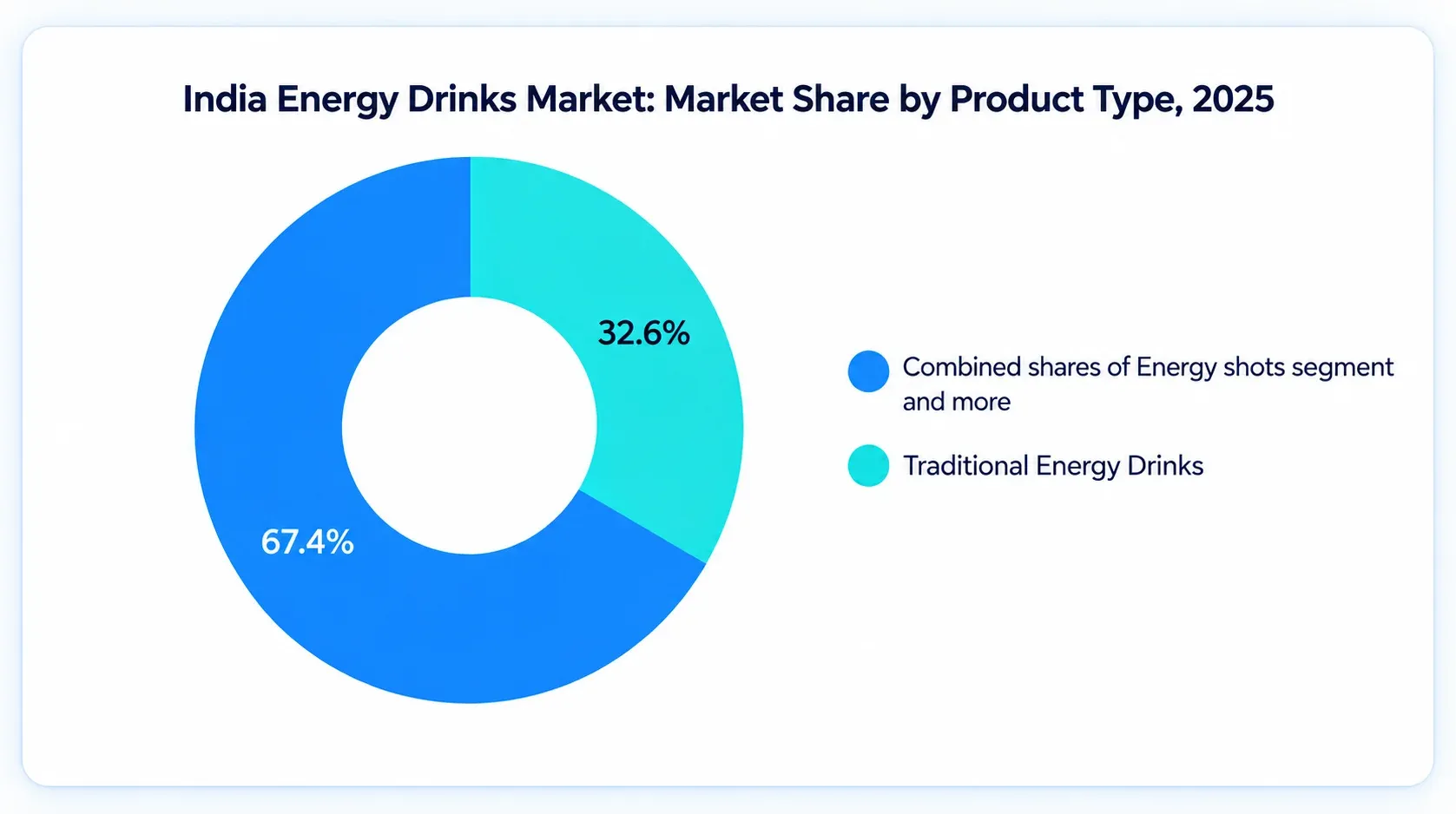
The regulator’s position was that Indian regulations do not prescribe a separate product standard called “energy drink”.
These products are regulated as caffeinated beverages instead.
FSSAI also objected to promotional language suggesting that such drinks could “vitalise” the body and mind or help with general weakness.
It reasoned that the “energy” in these beverages largely comes from added sugar and their caffeine content, and that such language could create an impression of a special benefit.
There was, however, a little regulatory history sitting awkwardly in the background.
In March 2024, FSSAI had itself said that “Energy” could be used on carbonated and non-carbonated flavoured drinks that met its standard for caffeinated beverages.
Two years later, the 2026 order gave companies 90 days to remove “energy drink” or similar descriptions from affected products.
FSSAI suggested “caffeinated beverages” instead.
Industry representatives argued that this was too broad a term, potentially covering everything from soft drinks to coffee.
It is a curious regulatory journey: a word can be recognised, become familiar, build a market around it, and then find itself questioned.
The ₹20 bottle had already built a market
Source: Mordor Intelligence
The ₹20 price point helped Sting, launched in India in 2017, find a broad audience among younger consumers and in rural markets.
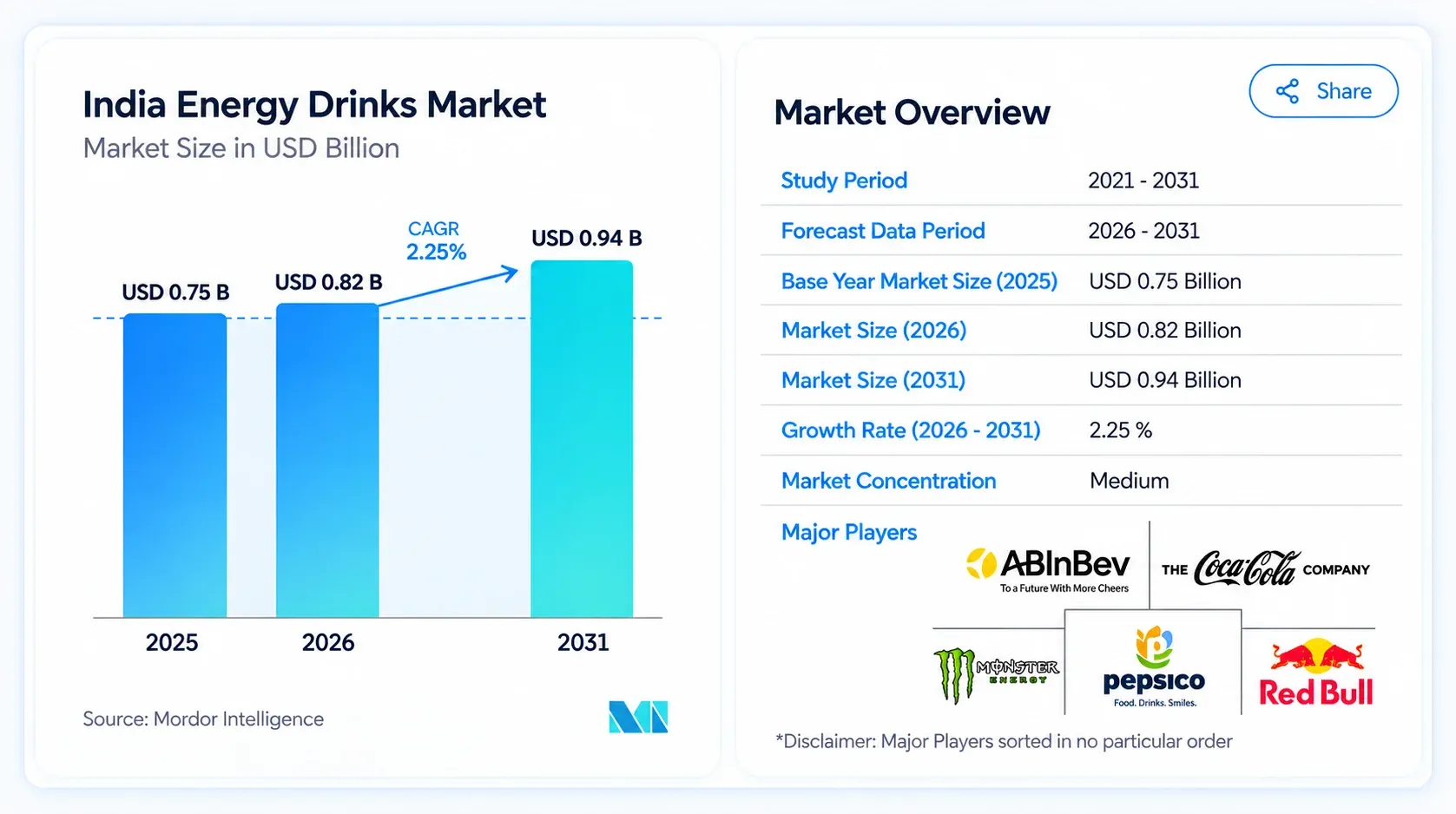
By one estimate, India’s energy drinks market is worth about USD 0.82 billion in 2026, up from USD 0.75 billion a year earlier.
Retail sales are growing at 12.6% a year, outpacing both the United States and China.
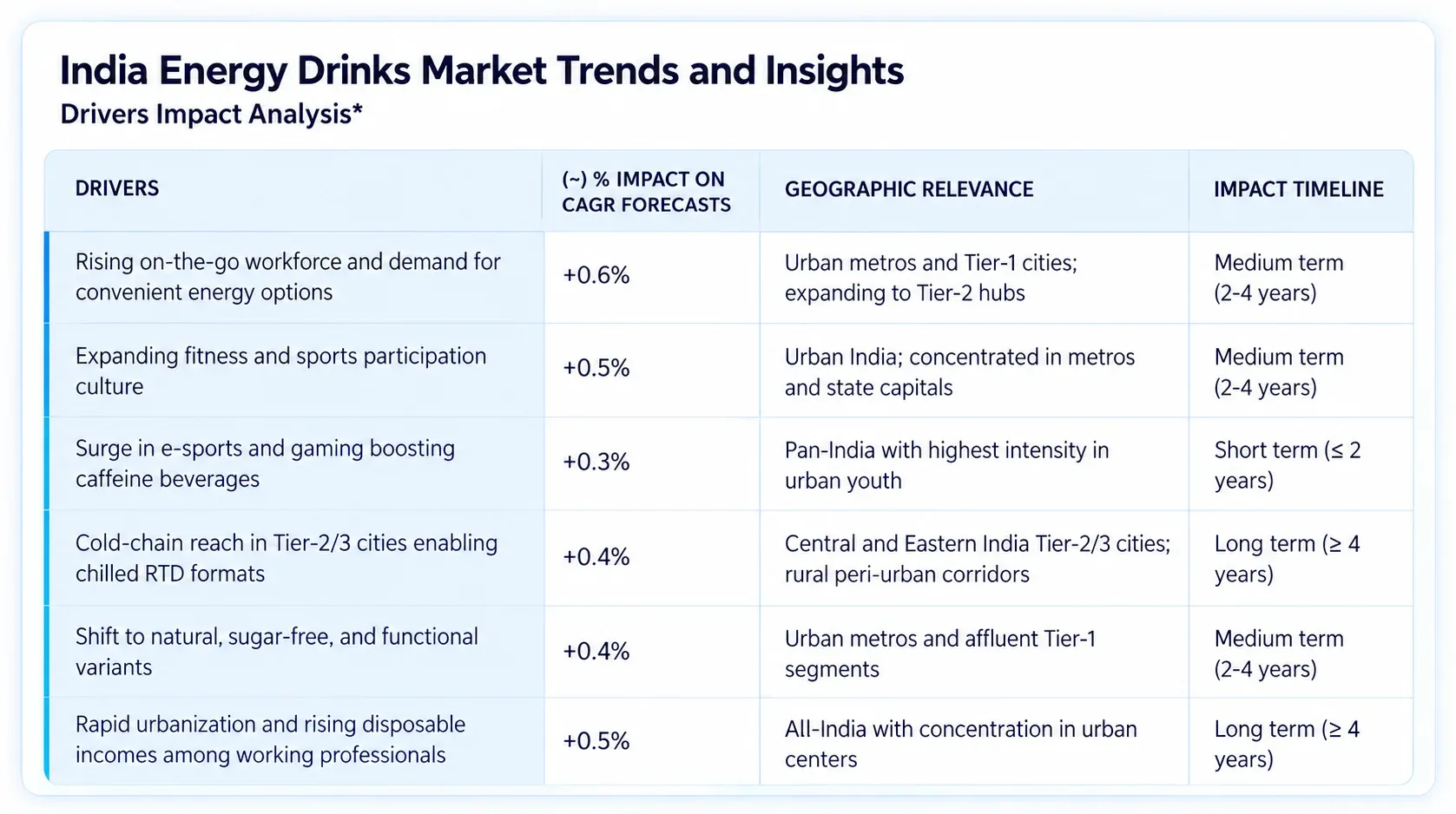
The reasons people buy are shifting too, towards on-the-go habits, late-night gaming and premium variants sold largely on what the label promises: zero sugar, natural ingredients, cleaner ingredient lists.
That is the point at which a label stops being merely a label.
Source: Mordor Intelligence
This is where the story moves from language to inventory.
There were already bottles in circulation, cans in warehouses, packaging waiting to be used and advertisements built around a familiar category.
PepsiCo told the Delhi High Court that 492 million bottles and 26 million cans carrying the disputed label were in circulation as of 31 July.
It subsequently began manufacturing new Sting bottles and cans without the word “energy” and reworking related advertising.
In July, Rajasthan authorities seized thousands of bottles and cans, across brands, carrying the contested label.
The state also instructed e-commerce platforms to ensure affected products were not promoted as “energy drinks”.
For distributors, this created an oddly practical problem.
Smaller distributors were reportedly continuing to buy limited quantities, while larger distributors supplying supermarkets and retail chains became reluctant to stock products that might require label changes.
Reliance’s numbers showed the scale.
The company told the Delhi High Court that it had 168 million cans and 120 million plastic bottles of finished inventory carrying the disputed description, along with pre- printed packaging for another 400 million cans and 360 million bottles.
For a consumer, changing a word sounds simple.
For a manufacturer, the word may already be sitting on hundreds of millions of pieces of packaging.
Then the court changed the question
The first major judicial turn came through the challenge by Red Bull.
The company argued that FSSAI had acted without a show-cause notice or any chance to respond.
That brings in natural justice, the legal principle that an affected party should know the case against it and have a meaningful opportunity to respond before an adverse decision is taken.
The Delhi High Court quashed the order against Red Bull, meaning it was set aside and no longer operates.
The court did not declare “energy drink” permanently permissible.
It said FSSAI could reconsider the matter after following due process and hearing the company.
The same procedural question then surfaced in the Reliance, PepsiCo and Monster proceedings.
On 6 October, the Delhi High Court questioned why Reliance had not received prior notice before regulatory action.
Existing Campa stock received interim protection. New production did not.
The broader matter remains before the court, with the next hearing scheduled for 5 November.
When a label starts looking like a licence
The deeper issue is not really about beverages.
It is about what happens when a commercial category grows faster than the vocabulary used to regulate it.
India has seen versions of this before.
The same 2024 advisory that allowed “Energy” said “Health Drink” was not a defined or standardised category, and asked e-commerce platforms to move such products into their legally appropriate categories.
Then came ORS, the oral rehydration solution doctors recommend for dehydration. In October 2025, FSSAI withdrew earlier permissions that had allowed the term to appear with certain brand names and clarified that using “ORS” in the naming of food products could constitute misleading labelling.
The pattern is hard to miss.
Regulators are no longer looking only at what goes into a product.
They are looking at what its name leads people to expect.
This is the territory of functional claims, meaning wording that suggests what a food or beverage does, not simply what it contains.
“Energy”. “Health”. “Immunity”. “Protein”. These can look like branding.
But once shoppers read them as a promise of what a product will do, they begin to carry regulatory weight.
For investors, the lesson sits less in sales volumes than in the chain beneath them:
A new label means new packaging. New packaging leaves old inventory behind. Old inventory raises questions for distributors, retailers and online platforms. And a change in how a product is described can, over time, alter where and how it sits on a shelf.
There is another wrinkle.
The regulatory position can now differ across companies, because court protection applies case by case.
One product may remain on shelves under interim protection while another faces enforcement under the June order.
So the question is no longer only what is inside the bottle.
It is also what is printed on it, how it is described online and which legal order applies to that particular company at that particular moment.
Back at the dhaba fridge, none of this may change tomorrow’s purchase.
The ₹20 bottle can look exactly the same. The formula can remain exactly the same.
The customer may still reach for it out of habit.
But the regulator has reminded the market of something fundamental: a category can become commercially real before it becomes legally settled.
And when that happens, sometimes the most valuable thing on the bottle is not the drink.
It is the word.
Sources and References:
- REUTERS
- FSSAI
- MORDORINTELLIGENCE
- AGRONFOODPROCESSING
- THETIMESOFINDIA
- LIVEMINT
- LIVELAW
- PIB
This article is for informational purposes only and does not constitute financial advice. It is not produced by the desk of the Kotak Securities Limited Research Team, nor is it a report published by the Kotak Securities Limited Research Team. The information presented is compiled from several secondary sources available on the internet and may change over time. Investors should conduct their own research and consult with financial professionals before making any investment decisions. The above images were generated using AI.
Investments in securities market are subject to market risks, read all the related documents carefully before investing. Brokerage will not exceed SEBI prescribed limit. The securities are quoted as an example and not as a recommendation. Registered Office: 27 BKC, C 27, G Block, Bandra Kurla Complex, Bandra (E), Mumbai 400051. Kotak Securities Limited; SEBI Registration No. INZ000200137(Member of NSE, BSE, MSE, MCX & NCDEX), Member Id: NSE-08081; BSE-673; MSE-1024; MCX-56285; NCDEX-1262. For compliance T&C and disclaimers, Visit bit.ly/ksecdisc.
0 people liked this article.

Shreyas is a capital markets enthusiast and content strategist at Kotak Neo, driving content for Kotak Stockshaala and Kotak Insights. His work sits at the intersection of market analysis and financial literacy, turning what's moving the market into content people can actually act on.
Outside the 9-to-5, he's usually chasing his next sneaker drop, planning his next vacation, or elbow-deep in a crossword.