What is the PMI (Purchasing Managers' Index) and why does it matter for the economy?
- Updated: 22 May 2026, 5:09 PM IST
- | 4 min read
- 1,041
 Add Preferred News Source
Serving a key role within financial analysis, the Purchasing Managers’ Index (PMI) serves as an important indicator for those seeking to gauge the current state of the economy. In contrast to metrics such as GDP or inflation, which are often reported with considerable lag, the PMI provides a timely snapshot of industry performance. Its value, thus, extends beyond merely recording past activity; it often acts as a forward-looking gauge, offering insights into potential future trends. As a result, investors, policymakers and business leaders consistently monitor this monthly index, recognising the substantial influence it holds in economic decision-making.
What is the PMI?
The PMI serves as a key economic indicator derived from monthly surveys of purchasing managers operating within the manufacturing and services sectors. The purpose of this index is to gauge whether prevailing business conditions – considering factors such as new orders, employment levels, supplier delivery speeds and inventory volumes – are showing signs of improvement or decline.
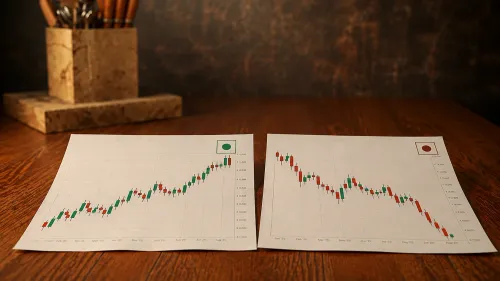
Numerically, the PMI is presented on a scale from 0 to 100. Anything over 50 indicates growth in the industry, and anything less than 50 indicates contraction. A reading exactly at 50 indicates that conditions are stable.
There are different types of PMIs.
-
Manufacturing PMI: Measures activity in the manufacturing sector.
-
Services PMI: Focuses on service-oriented businesses such as retail, IT and financial services.
-
Composite PMI: Combines data from both manufacturing and services.
In India, PMI data is compiled by S&P Global (formerly IHS Markit) and released monthly.
How is the PMI calculated?
To calculate the PMI, a survey is conducted with senior purchasing executives from hundreds of firms. In India, it involves large- and mid-cap firms across industries. They are asked whether significant parameters of their business have seen an improvement, decline or been stable against the previous month. The key variables surveyed typically include:
- New orders
- Output
- Employment
- Suppliers' delivery times
- Inventories of purchased goods
Each response is weighted, and the results are aggregated into a single index number. But it’s not a simple average – the formula employs a diffusion index method, which provides a better measure of the breadth and strength of change across all inputs.
Why should you care about the PMI?
If you're an investor, economist, policy advisor or even a small business owner, the PMI can give you critical early insights. Here’s how:
Leading indicator of economic health
While GDP statistics arrive with a lag, PMI statistics are published on a monthly basis and show current business conditions. An increasing PMI usually indicates mounting demand, higher levels of production and higher levels of hiring. A declining PMI, however, usually heralds an economic slowdown. So, if you are trying to anticipate what direction the economy might take in the next few months, the PMI is a valuable tool.
Market sentiment and stock prices
Financial markets closely watch PMI data. A sudden drop in the index may spark selloffs in equity markets or reduce investor appetite for riskier assets. On the flip side, a better-than-expected PMI can boost investor confidence. This is particularly important if you invest in sector-specific funds.
Policy decisions and RBI moves
The Reserve Bank of India (RBI) looks at PMI data as part of its overall assessment of the economy. If the data indicates that the economy is overheating (by way of excess demand, shortages in supply), the RBI may increase interest rates. If PMI indicates a sustained contraction, the central bank may relax monetary policy through rate cuts or infusion of liquidity.
Business planning and forecasting
For business leaders and entrepreneurs, the PMI helps in strategic planning. Suppose you run a company that supplies raw materials to manufacturers. A rising manufacturing PMI could indicate upcoming bulk orders, so you might ramp up inventory. Conversely, a falling services PMI might be a red flag for firms dependent on retail or hospitality demand.
Currency and bond market impact
Forex and bond traders also track the PMI closely. A strong PMI number can lead to a stronger rupee as it reflects robust economic performance, attracting foreign investments. Bond yields may also respond, particularly if the data shifts expectations for RBI interest rate decisions.
Conclusion
The PMI is not just another number – it is a directional compass for understanding where the economy might be heading. Whether you are managing personal investments, running a business or tracking macroeconomic trends, the PMI offers a timely, sector-specific perspective. It won’t tell you everything, but it gives you enough to ask the right questions and take more informed action.
FAQs
A PMI above 50 indicates expansion, which is generally considered positive for the economy. The higher the number above 50, the stronger the growth in the sector being measured.
The PMI is a forward-looking indicator based on surveys and reflects short-term business sentiment. GDP, on the other hand, is a lagging indicator that measures the actual economic output over a specific period.
The PMI is widely used by investors, business leaders, policymakers and central banks. It helps them assess current economic conditions and plan investments, interest rate moves or operational strategies accordingly.
The content in this blog is intended purely for educational purposes. Any securities or mutual funds referenced are illustrative in nature and do not constitute a recommendation or endorsement by Kotak Neo. Investors are encouraged to assess their own financial situation and seek professional advice before making any investment decisions. For compliance T&C and disclaimers, Visit https://www.kotakneo.com/disclaimer/
0 people liked this article.