Gold Investment in India: Demand, Imports & Returns Data 2026
- Updated: 14 Aug 2026, 6:05 PM IST
- | 4 min read
- 1,002
 Add Preferred News Source
2026 has been a rollercoaster for financial markets so far.
Oil price shocks, FII outflows and the US-Iran war have kept equity markets on edge.
While the Sensex is down 7.09%, gold has delivered a 5.23% return as of 7 August 2026.
Amid this uncertainty, gold has emerged as a standout performer.
But the bigger story is the scale of the gold market.
Around 2.2 lakh tonnes of gold have been mined globally between 2010 and 2025, while annual mine production stands at around 3,600 tonnes.
Gold is also one of the most actively traded commodities in the world.
Average daily gold trading volume stood at around $465.80 billion during the first seven months of 2026.
India has an important role to play in this story.

India accounted for around 30% of global gold jewellery demand in FY25, making it one of the world’s largest gold markets.
India’s total gold demand reached 151 tonnes in Q1 2026, up 10% year-on-year.
More importantly, investment demand has been growing alongside jewellery demand.
In Q1 2026, jewellery accounted for around ₹99,900 crore of gold demand, while bars and coins contributed approximately ₹94,100 crore.
Gold ETFs accounted for around ₹30,000 crore, while industrial demand stood at about ₹3,500 crore.
This shows that Indians are increasingly buying gold not only to wear but also to invest.
The growing demand is also visible in India’s import numbers.
Gold imports rose from $28.20 billion in FY20 to $71.98 billion in FY26.
India is not alone in buying gold.
Central banks around the world continue to add gold to their reserves as they look to diversify their foreign exchange holdings.
The US has the world’s largest official gold reserves at more than 8,100 tonnes, followed by Italy, China, Russia and India.
Gold’s appeal also becomes clearer when we look at its long-term performance.
As of 7 August 2026, gold had delivered a 10-year CAGR of 16.50% and a 20-year CAGR of 13.97%.
Over the same periods, the S&P BSE Sensex delivered CAGRs of 12.17% and 11.88%, respectively.
Indian government bonds delivered lower returns, with a 10-year CAGR of 7.24% and a 20-year CAGR of 8.13%.
This does not mean gold will outperform equities every year.
Instead, the numbers show why gold continues to attract investors over longer periods.
Gold does not generate interest or dividends, but it can provide diversification when other asset classes are under pressure.
This defensive characteristic becomes particularly visible during periods of market stress.
In 2008, gold gained 28.9% while equities fell 51.3% during the global financial crisis.
The same pattern was seen in 2018 and 2019, and is visible again in 2026.
The reasons behind every market crisis are different.
But the broader pattern remains similar.
When uncertainty rises, investors often look for assets that can provide diversification and preserve purchasing power.
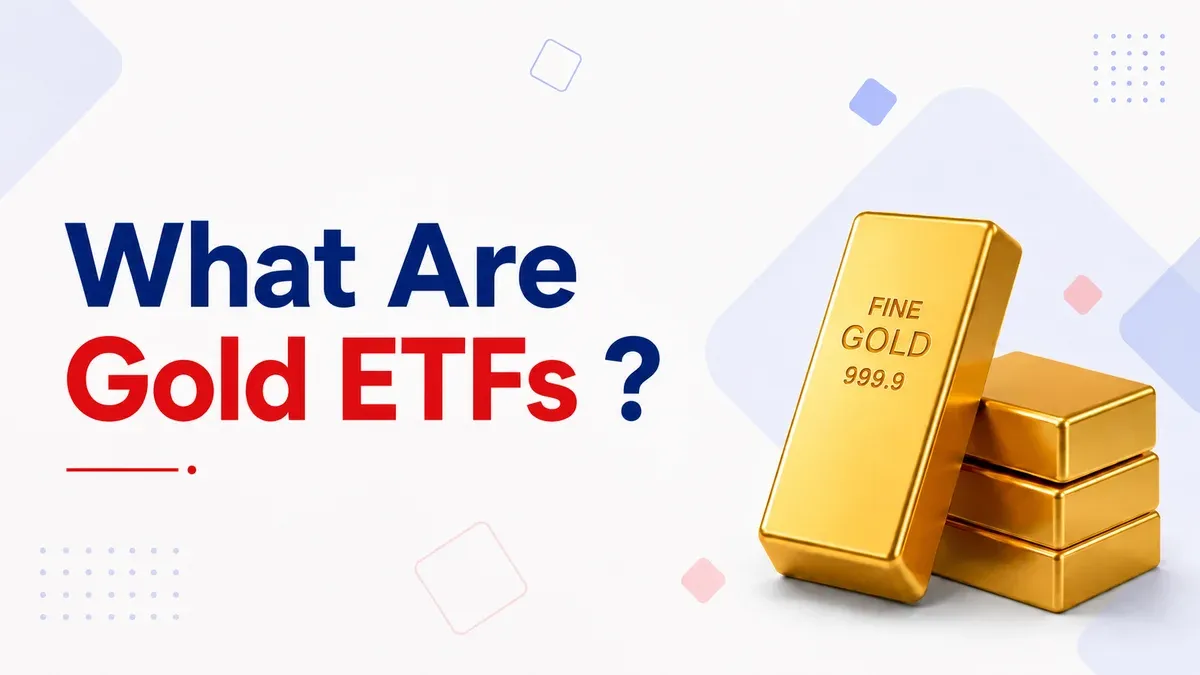
This has also contributed to the growing popularity of Gold ETFs.
Investors no longer need to buy physical gold or keep it in a locker to gain exposure to the metal.
Gold ETFs allow investors to participate in gold price movements through a financial product.
The growth has been significant.
Gold ETF assets under management increased from ₹22,339 crore in June 2023 to ₹1,70,148 crore in June 2026.
The sharp increase shows that financial gold is becoming increasingly popular among Indian investors.
Flows, however, have not moved in one direction.
Gold ETF net inflows stood at ₹11,647 crore in December 2025 and surged to ₹24,040 crore in January 2026.
May saw a net outflow of ₹725 crore before inflows returned to ₹3,443 crore in June.
The volatility in monthly flows shows that investor interest can change quickly, particularly after a strong rise in gold prices.
The gold rush may not be over.
But after a good performance, investors need to look beyond the price and focus on the factors driving the market.
Global demand, mine supply, central bank purchases, ETF flows, interest rates, geopolitical developments and the rupee will be important indicators to watch going forward.
Gold may not replace equities or bonds.
But in a market where uncertainty remains high, its role as a diversification asset continues to matter.
Sources:
● World Gold Council
● World Gold Council
● Fortune India
● World Gold Council
● Economic Times
● World Gold Council
● World Gold Council
● Economic Times
● AMFI
The content in this blog is intended purely for educational purposes. Any securities or mutual funds referenced are illustrative in nature and do not constitute a recommendation or endorsement by Kotak Neo. Investors are encouraged to assess their own financial situation and seek professional advice before making any investment decisions. For compliance T&C and disclaimers, visit www.kotakneo.com/disclaimer
0 people liked this article.

Kotak Neo (Kotak Neo) is India's venerable stockbroking company with a rich legacy. It offers comprehensive investment services across asset classes, prioritising a technology-first approach for a seamless experience. Trusted by 5 million+ customers, it guides you toward financial success with ease of investment and speed of trade.
Note: The opinions expressed in this blog are personal viewpoints and should not be construed as recommendations.