EPF Claim Status: How to Check PF Claim Status Online
- Updated: 09 Jun 2026, 5:22 PM IST
- | 4m
- 2,438
 Add Preferred News Source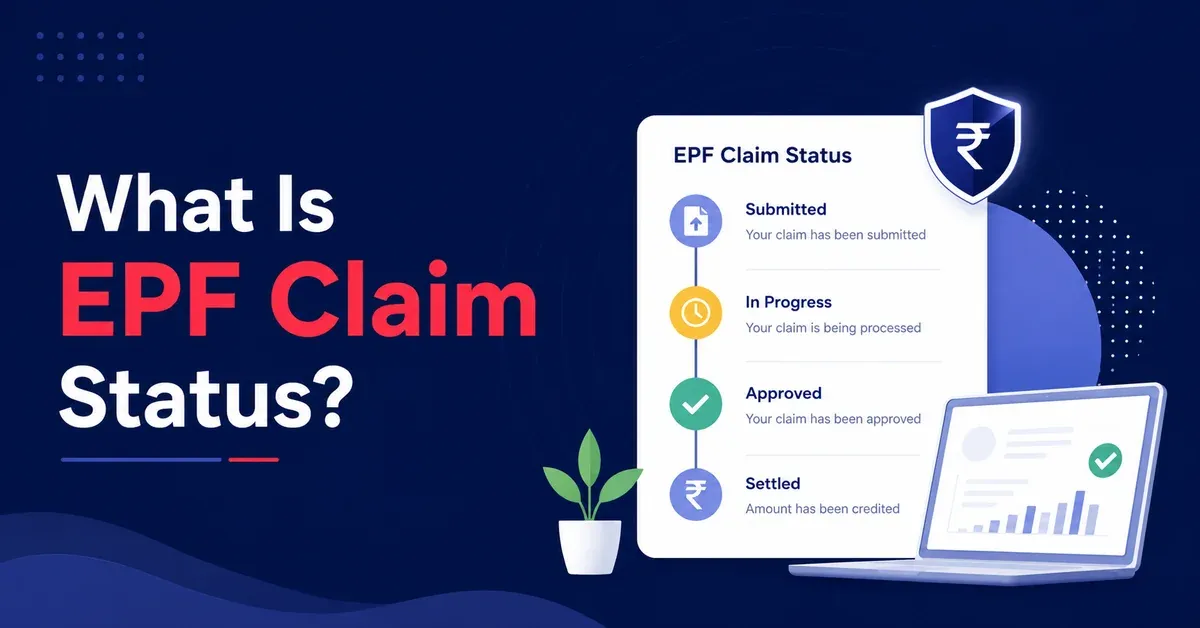
For many salaried employees, PF becomes one of the biggest long-term savings built over the years. People usually claim this amount during job changes, emergencies, retirement, or other financial needs. Once the claim is submitted, the waiting period often creates anxiety. Most people keep checking when the amount will be credited and whether the request status is still ‘under process’.
That is where EPFO claim status tracking becomes useful. In this article, we will look at how you can check PF claim status online, common status messages, possible delays, and ways to avoid rejection issues.
What Is EPF Claim Status?
EPF, or Employees’ Provident Fund, is one of the main long-term savings schemes available to salaried employees. Every month, a portion of the salary gets deposited into the PF account. The employer contributes too, which is why the amount gradually builds over the years.
Employees are allowed to withdraw this money under specific conditions. Retirement is one situation. Job loss, medical emergencies, major purchases, or long periods without employment are some others.
After submitting a withdrawal request, most people start checking their EPF claim status regularly. The status simply shows the current stage of the application. In some cases, it may still appear as “under process.” Sometimes the claim moves forward without any issues, and sometimes it gets delayed. A mismatch in details or pending verification is often what causes the hold-up.
Checking the update offline is still possible through the PF office. Most people, however, now track their PF claim status online. This is usually quicker and more convenient.
How To Check EPF Claim Status Online
There are multiple ways to track a PF claim now.
Method 1: Via EPFO Portal
A large number of users check PF status by UAN number directly through the official EPFO website.
Visit the EPFO portal: https://www.epfindia.gov.in/site_en/index.php
Open the “Services” section available on the homepage.
Under that, select “For Employees.”
Click on the “Know Your Claim Status” option.
The portal then redirects users to the login page.
Enter the Universal Account Number (UAN), password, and CAPTCHA code.
Once the login is completed, the latest claim-related update can be checked from the “Claims” section available.
Method 2: Via UAN Member Portal
Open: https://unifiedportal-mem.epfindia.gov.in/memberinterface/
The portal first asks for the UAN, password, and CAPTCHA details.
After this, an OTP is sent to the mobile number linked with the account.
Entering the OTP completes the verification step.
Users can then move to the “Online Services” area inside the dashboard.
Select “Track Claim Status” to check the latest update linked to the submitted request.
Method 3: Via Mobile (Without Login)
There is also an offline option for people who do not want to log in to the portal or app every time.
-
Employees can call the EPFO toll-free helpline number: 14470
-
The service is available 24×7.
-
The PF account number or UAN usually needs to be kept ready before the call.
-
The support team can then provide the latest update linked to the withdrawal or transfer claim request.
Method 4: Via UMANG App
PF claim details can also be accessed through the UMANG mobile application.
-
Go to the EPFO section available inside the app.
-
The app then asks for the account-related login details.
-
After entering the account, users can view the claim-related update from there itself.
Note: EPFO also allows people to check PF status online with UAN number in some cases.
Portal: https://www.epfindia.gov.in/site_en/KYCS.php
Users first have to choose the EPFO office connected to the PF account. After that, the PF account number needs to be entered on the page. This is not the same as the UAN number.
EPF Claim Status Types Explained
While checking the PF claim status online, different updates may appear on the screen. Some are straightforward. Others can confuse people a little, especially if they are checking the status for the first time.
- Under Process
This status usually appears when the claim is still being checked by EPFO. The request has reached the system, but the processing is not finished yet.
- Settled
This is usually considered a successful update in the claim process. After this, the amount is expected to reach the registered bank account.
- Rejected
Sometimes the request does not get approved. This is where the rejected status appears. Incorrect details, KYC issues, or a mismatch in records are some common reasons behind it.
- Payment Sent
This update means the money has already been transferred from EPFO’s side. After this, the amount is expected to reflect in the linked bank account.
- Claim Under Process At The Field Office
At times, the request stays with the concerned EPFO office for additional checks. This can happen during verification or document review stages.
How Long Does An EPF Claim Take?
EPF claims do not always get processed at the same speed. Some requests get processed fairly quickly. Others take longer than expected.
For many people, the claim gets processed within 7-20 days. But delays are not unusual either. Sometimes the issue is linked to KYC details. In other cases, the verification process itself takes more time.
The EPFO office handling the request also affects the timeline in some situations.
Common Reasons For EPF Claim Delay Or Rejection
Sometimes the delay is from EPFO’s side. But very often, the issue starts with the details submitted in the application itself.
KYC Not Updated
A lot of claims get stuck because the KYC process is not fully completed. PAN details may still be pending. Sometimes the bank account is not verified yet.
Aadhaar Mismatch
This is another common reason behind claim issues. Sometimes the PF records carry details that are different from Aadhaar. Even a small mismatch in name, date of birth or initials can create problems during verification.
Incorrect Bank Details
Bank details matter more than people realise. A wrong account number or incorrect IFSC code can slow the process down. In some situations, the payment may not go through at all.
Tips To Ensure Faster EPF Claim Processing
Sometimes the issue is not very complicated at all. A minor error in the submitted details can slow things down. A quick review beforehand can save quite a bit of waiting later.
Complete KYC
KYC details should be updated properly before raising the withdrawal request. Aadhaar, PAN, and bank account details are usually the important ones here. Linking PAN matters for tax reasons, too. If PAN is missing from the records, higher TDS may be deducted in some cases.
Link Aadhaar With UAN
Many online PF claims depend on Aadhaar verification during processing. Because of this, the Aadhaar-UAN linkage should ideally already be active before the claim is submitted.
Double-Check Details
Even small mistakes can create unnecessary delays. Sometimes it is the account number. Sometimes the spelling of the name is different from the records. Checking the details once again before submission usually helps avoid these issues.
Conclusion
Most people keep checking their PF claim status once the withdrawal request is submitted. That is understandable, especially when the funds are needed urgently. In many situations, the delay comes down to small issues in records or verification details. Keeping Aadhaar, PAN, bank details, and KYC information updated usually helps avoid unnecessary problems later.
FAQs
EPF claim status can be checked through the EPFO portal, UAN Member Portal, UMANG app, or EPFO helpline services. Most people use their UAN details while tracking the request online.
There is no exact timeline that applies to every PF claim. Most PF claims generally take between 7-20 days.
Yes, that option is available too. People can use the EPFO helpline service or track the status using the PF account number in certain cases.
This status usually appears when the request is still being examined by EPFO. The claim is active in the system, but the final approval or settlement is still pending.
Most claim rejections happen because of a mismatch in records. Sometimes it is an Aadhaar issue. In other cases, the problem could be linked to KYC or bank account details.
The content in this blog is intended purely for educational purposes. Any securities or mutual funds referenced are illustrative in nature and do not constitute a recommendation or endorsement by Kotak Neo. Investors are encouraged to assess their own financial situation and seek professional advice before making any investment decisions. For compliance T&C and disclaimers, visit https://www.kotakneo.com/disclaimer/
0 people liked this article.

Kotak Neo (Kotak Neo) is India's venerable stockbroking company with a rich legacy. It offers comprehensive investment services across asset classes, prioritising a technology-first approach for a seamless experience. Trusted by 5 million+ customers, it guides you toward financial success with ease of investment and speed of trade.
Note: The opinions expressed in this blog are personal viewpoints and should not be construed as recommendations.