

Kotak
Stockshaala
Chapter 5 | 3 min read
डिप्रेसीएशन कैलकुलेशंस (depreciation calculations): स्ट्रेट-लाइन (straight-line) बनाम डिक्लाइनिंग बैलेंस मेथड्स (declining balance methods) इन एक्सेल (Excel)
डिप्रीसिएशन (depreciation) एक आवश्यक अकाउंटिंग (accounting) कांसेप्ट (concept) है जो एक टेंजेबल एसेट (tangible asset) की लागत को उसकी उपयोगी जीवन अवधि में आवंटित करता है। डिप्रीसिएशन (depreciation) की गणना के लिए कई तरीके हैं, जिनमें स्ट्रेट-लाइन (straight-line) और डिक्लाइनिंग बैलेंस (declining balance) तरीके सबसे आम हैं। इस चैप्टर में, हम दोनों डिप्रीसिएशन (depreciation) तरीकों का पता लगाएंगे और उन्हें एक्सेल (Excel) में कैसे लागू किया जाए ताकि समय के साथ एसेट वैल्यू (asset value) का विश्लेषण किया जा सके।
डिप्रीसिएशन (What is Depreciation)?
डिप्रीसिएशन (depreciation) का मतलब है एक फिक्स्ड एसेट (fixed asset) के मूल्य में उसकी उपयोगी जीवन के दौरान व्यवस्थित कमी, जो उपयोग, पुरानेपन या घिसावट के कारण होती है। यह कंपनियों को एसेट की लागत को समय के साथ फैलाने में मदद करता है, इस प्रकार वित्तीय स्टेटमेंट्स (financial statements) यह सुनिश्चित करते हैं कि जिस अवधि में एसेट राजस्व उत्पादन में योगदान करता है, उसमें उसका खर्च सही रूप से दर्शाया गया है।
स्ट्रेट-लाइन डिप्रीसिएशन (Straight-Line Depreciation)
स्ट्रेट-लाइन मेथड (straight-line method) एसेट की लागत को उसकी उपयोगी जीवन अवधि में समान रूप से फैलाता है। यह तरीका उपयोग में आसान है और अक्सर तब लागू किया जाता है जब एसेट का लाभ समय के साथ स्थिर माना जाता है।
स्ट्रेट-लाइन डिप्रीसिएशन (Straight-Line Depreciation) का फॉर्मूला:
डिप्रीसिएशन एक्सपेंस (Depreciation Expense) = (एसेट की लागत (Cost of Asset) - सेल्वेज वैल्यू (Salvage Value)) / उपयोगी जीवन (वर्षों में) (Useful Life (years))
जहां,
- एसेट की लागत (Cost of Asset): शुरुआती खरीद मूल्य।
- सेल्वेज वैल्यू (Salvage Value): एसेट की उपयोगी जीवन के अंत में अनुमानित अवशिष्ट मूल्य।
- उपयोगी जीवन (Useful Life): अनुमानित वर्षों की संख्या जिसमें एसेट सेवा में रहेगा।
स्टेप-बाय-स्टेप गाइड: एक्सेल में स्ट्रेट-लाइन डिप्रीसिएशन की गणना (Step-by-Step Guide: Calculating Straight-Line Depreciation in Excel)
उदाहरण: एक कंपनी ₹50,000 में उपकरण खरीदती है, जिसकी सेल्वेज वैल्यू ₹5,000 है और उपयोगी जीवन 10 वर्ष है।
1. डेटा सेट अप करें:
- एसेट की लागत = ₹50,000
- सेल्वेज वैल्यू = ₹5,000
- उपयोगी जीवन = 10 वर्ष
वार्षिक डिप्रीसिएशन की गणना करें:
=(₹50,000 - ₹5,000) / 10

2. परिणाम (Result): वार्षिक डिप्रिशिएशन एक्सपेंस (annual depreciation expense) ₹4,500 है।
3. डिप्रिशिएशन शेड्यूल (Depreciation Schedule) बनाएं: एक्सेल (Excel) में, वर्षों को लिस्ट करें और प्रत्येक वर्ष के लिए डिप्रिशिएशन एक्सपेंस (depreciation expense) लागू करें। एसेट (asset) की बुक वैल्यू (book value) ₹4,500 सालाना घटती जाती है जब तक कि यह वर्ष 10 के अंत में ₹5,000 के साल्वेज वैल्यू (salvage value) तक नहीं पहुँच जाती।
वर्ष (Year) | डिप्रिशिएशन (Depreciation) | एक्यूम्युलेटेड डिप्रिशिएशन (Accumulated Depreciation) | बुक वैल्यू (Book Value) |
|---|---|---|---|
1 | ₹4,500 | ₹4,500 | ₹45,500 |
2 | ₹4,500 | ₹9,000 | ₹41,000 |
... | ... | ... | ... |
10 | ₹4,500 | ₹45,000 | ₹5,000 |
घटती शेष राशि विधि (Declining Balance Method)
घटती शेष राशि विधि (Declining Balance Method) डिप्रिसिएशन (depreciation) को तेज करती है, संपत्ति के जीवन के शुरुआती वर्षों में अधिक खर्च आवंटित करती है। यह उन संपत्तियों के लिए उपयोगी है जो जल्दी मूल्य खो देती हैं या जल्दी अप्रचलित हो जाती हैं।
घटती शेष राशि डिप्रिसिएशन (Declining Balance Depreciation) के लिए सूत्र:
डिप्रिसिएशन खर्च (Depreciation Expense) = बुक वैल्यू (Book Value) × 2 / उपयोगी जीवन (वर्षों में) (Useful Life (years))
(डबल घटती शेष राशि के लिए) (For Double Declining Balance)
- बुक वैल्यू (Book Value): प्रारंभिक संपत्ति लागत माइनस संचित डिप्रिसिएशन (Initial asset cost minus accumulated depreciation)।
चरण-दर-चरण गाइड: एक्सेल में घटती शेष राशि डिप्रिसिएशन की गणना (Step-by-Step Guide: Calculating Declining Balance Depreciation in Excel)
उदाहरण: समान उपकरण (₹50,000 लागत, ₹5,000 बचत मूल्य, 10-वर्षीय जीवन) का उपयोग करते हुए डबल घटती शेष राशि विधि (Double Declining Balance method)।
- डेटा सेट करें (Set Up the Data):
- संपत्ति की लागत (Cost of Asset) = ₹50,000
- बचत मूल्य (Salvage Value) = ₹5,000
- उपयोगी जीवन (Useful Life) = 10 वर्ष
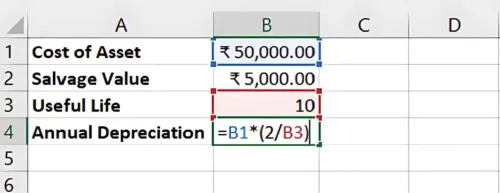
वर्ष 1 के लिए डिप्रिसिएशन की गणना (Calculate Depreciation for Year 1): =50,000 * (2/10)
-
परिणाम: पहले साल के लिए डिप्रिशिएशन एक्सपेंस (depreciation expense) ₹10,000 है।
-
अगले वर्षों के लिए डिप्रिशिएशन की गणना करें: अगले वर्षों के लिए, डिप्रिशिएशन (depreciation) नए बुक वैल्यू (book value) पर लागू होता है (मूल लागत माइनस एक्यूम्युलेटेड डिप्रिशिएशन (accumulated depreciation))।
वर्ष | डिप्रिशिएशन | एक्यूम्युलेटेड डिप्रिशिएशन | बुक वैल्यू |
|---|---|---|---|
1 | ₹10,000 | ₹10,000 | ₹40,000 |
2 | ₹8,000 | ₹18,000 | ₹32,000 |
... | ... | ... | ... |
डिक्लाइनिंग बैलेंस (declining balance) मेथड (method) शुरुआती वर्षों में अधिक डिप्रिशिएशन (depreciation) आवंटित करती है और बाद के वर्षों में कम, डिप्रिशिएशन तब रुक जाती है जब बुक वैल्यू (book value) सलवेज वैल्यू (salvage value) तक पहुँच जाती है।
सीधे-सीधे और डिक्लाइनिंग बैलेंस के बीच चुनना
- सीधे-सीधे (Straight-Line): उन एसेट्स (assets) के लिए सबसे अच्छा है जो समय के साथ समान लाभ प्रदान करते हैं, जैसे कि बिल्डिंग्स या ऑफिस फर्नीचर।
- डिक्लाइनिंग बैलेंस (Declining Balance): उन एसेट्स (assets) के लिए उपयुक्त है जो जल्दी मूल्य खो देते हैं या अप्रचलित हो जाते हैं, जैसे कि टेक्नोलॉजी इक्विपमेंट या वाहन।
मुख्य बातें:
-
सीधे-सीधे मेथड (Straight-Line Method) सरल है और एसेट (asset) की लागत को उसके उपयोगी जीवन पर समान रूप से फैलाता है।
-
डिक्लाइनिंग बैलेंस मेथड (Declining Balance Method) डिप्रिशिएशन (depreciation) को फ्रंट-लोड करता है, जो शुरुआती उच्च वियर एंड टियर या अप्रचलन को दर्शाता है।
-
एक्सेल (Excel) दोनों मेथड्स (methods) के लिए विस्तृत डिप्रिशिएशन शेड्यूल्स (depreciation schedules) बनाना आसान बनाता है।
निष्कर्ष:
सटीक वित्तीय मॉडलिंग और अकाउंटिंग के लिए सीधे-सीधे और डिक्लाइनिंग बैलेंस मेथड्स (methods) के डिप्रिशिएशन (depreciation) को समझना आवश्यक है। प्रत्येक मेथड (method) का उपयोग उसके एसेट (asset) की प्रकृति पर निर्भर करता है, और दोनों को आसानी से एक्सेल (Excel) में लागू किया जा सकता है।
अगले अध्याय का पूर्वावलोकन: अगले अध्याय में, हम पैसे के समय मूल्य की अवधारणा पर पुनः विचार करेंगे और FV और PV फंक्शन्स (functions) का उपयोग कर फ्यूचर और प्रेजेंट वैल्यू (future and present value) की गणना करने के तरीकों का अन्वेषण करेंगे। कैसे एक्सेल (Excel) के बिल्ट-इन फंक्शन्स (built-in functions) का उपयोग कर फ्यूचर और प्रेजेंट वैल्यू (future and present values) की गणना की जाए, इसके विस्तृत स्पष्टीकरण के लिए जुड़े रहें!
This content has been translated using a translation tool. We strive for accuracy; however, the translation may not fully capture the nuances or context of the original text. If there are discrepancies or errors, they are unintended, and we recommend original language content for accuracy.
Disclaimer: This article is for informational purposes only and does not constitute financial advice. It is not produced by the desk of the Kotak Neo Research Team, nor is it a report published by the Kotak Neo Research Team. The information presented is compiled from several secondary sources available on the internet and may change over time. Investors should conduct their own research and consult with financial professionals before making any investment decisions. Read the full disclaimer here.
Investments in securities market are subject to market risks, read all the related documents carefully before investing. Brokerage will not exceed SEBI prescribed limit. The securities are quoted as an example and not as a recommendation. SEBI Registration No-INZ000200137 Member Id NSE-08081; BSE-673; MSE-1024, MCX-56285, NCDEX-1262.
Recommended Courses for you



















Learn, Invest, and Grow with Kotak Videos
Explore our comprehensive video library that blends expert market insights with Kotak's innovative financial solutions to support your goals.

Trading with collateral as margin with Kotak Neo

How India is Redefining Space Exploration