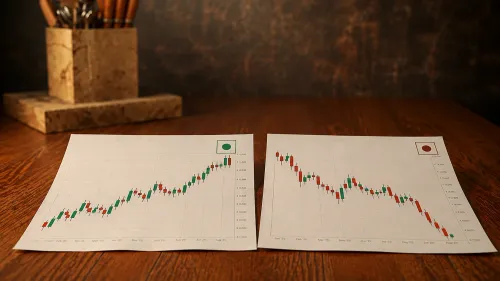
Death Cross vs Golden Cross Strategies: A Trend Trading Guide
- Updated: 22 May 2026, 5:12 PM IST
- | 2 min read
- 1,223
 Add Preferred News Source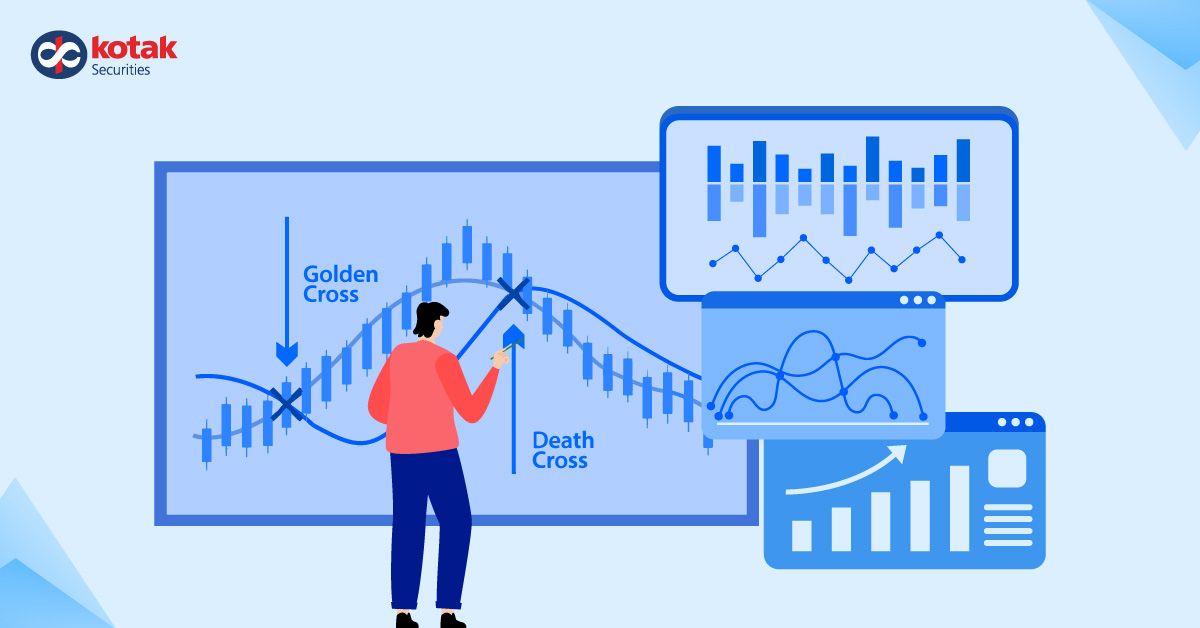
Have you ever felt the stock market speaking a different language? One minute, the charts are all sunshine and rainbows. The following day, they look like something straight out of a horror movie. This is where two signals, golden cross and death cross, can help you.
The Golden Cross: The Bull’s Best Friend
Figure this. You’re walking up the escalator. However, suddenly, you feel even a faster escalator right underneath you. And you are zooming up. In technical terms, a golden cross happens when a short-term moving average (usually the 50-day) crosses above a long-term moving average (like the 200-day). It signals that momentum is shifting upwards, and a potential uptrend is in play.
The Death Cross: A Bear’s Warning Sign
Now, let’s flip the above situation. The same escalator, instead of speeding up, turns into a downward slide. A death cross happens when the 50-day moving average crosses below the 200-day moving average. This suggests that the market may be shifting into a downtrend.
Key Differences Between Golden Cross and Death Cross
The table captures the key differences between the Golden Cross and the Death Cross on various parameters:
Moving average crossover | 50-day MA crosses over 200-day MA | 50-day MA crosses below 200-day MA |
Market signal | Bullish | Bearish |
Investors’ sentiment | Optimistic with strong buying pressure | Pessimistic with strong selling pressure |
Common use | Used as an entry point for long positions | Used as an exit point or shorting opportunity |
How to Use These Crosses in Your Trading Strategy? Here’s your trading guide on how to use these crosses in your trading strategy:
- If you spot a golden cross, you can consider entering into long positions. More so, if it aligns with strong fundamentals.
- If you see the death cross formation, you can consider taking profits.
That said, you shouldn’t rely on these signals alone before zeroing in on a trading strategy. You must consider volume, trend strengths and other indicators before making a move. It’s equally important to watch out for false signals, especially in choppy markets.
Wrapping it up
Whether you’re a beginner or a seasoned trader, understanding trend signals can help you in trading. While the golden cross signals a potential uptrend, the death cross suggests a downtrend. However, it’s crucial for you to use them wisely to trade smart.
The content in this blog is intended purely for educational purposes. Any securities or mutual funds referenced are illustrative in nature and do not constitute a recommendation or endorsement by Kotak Neo. Investors are encouraged to assess their own financial situation and seek professional advice before making any investment decisions. For compliance T&C and disclaimers, Visit https://www.kotakneo.com/disclaimer/
0 people liked this article.

Kotak Neo (Kotak Neo) is India's venerable stockbroking company with a rich legacy. It offers comprehensive investment services across asset classes, prioritising a technology-first approach for a seamless experience. Trusted by 5 million+ customers, it guides you toward financial success with ease of investment and speed of trade.
Note: The opinions expressed in this blog are personal viewpoints and should not be construed as recommendations.