How to Invest in Gold ETF: A Beginner's Step-By-Step Guide
- Updated: 11 Nov 2026, 4:31 PM IST
- | 6 min read
- 1,002
 Add Preferred News Source
Buying gold jewellery or coins is not the only way to invest in the yellow metal. You might love the thought of owning gold, but the prospect of carefully storing it, testing its purity and dealing with making charges can take some of the shine off. Another way to invest in gold is through a Gold Exchange-Traded Fund (ETF).
If you’re considering adding gold to your portfolio but aren’t sure where to start, learning how to invest in a Gold ETF can be an excellent place to begin. Its units can be bought and sold on a stock exchange like shares. Want to know how to invest in a Gold ETF in India? This article will help you understand the process, expenses and things to check before placing your order.
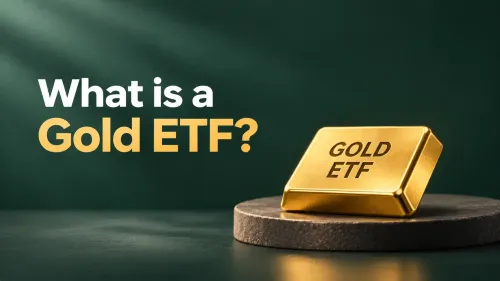
What is a Gold ETF?
A Gold ETF is a mutual fund that invests in high-purity physical gold (995 fineness) to track market prices. It is listed on stock exchanges, such as the Bombay Stock Exchange (BSE) or the National Stock Exchange (NSE). Its units can be bought or sold during market hours using a trading account. Each unit reflects a proportionate interest in the gold-linked assets of the scheme.
How Does a Gold ETF Work?
A Gold ETF pools the money of investors and uses the funds to hold physical gold as per the scheme’s investment objective. In general, its Net Asset Value (NAV) tracks the domestic price of gold, after considering expenses and tracking differences. As the units are traded on an exchange, their market price may fluctuate somewhat from the NAV throughout the trading day.
Why Should you Invest in a Gold ETF?
Gold has a place in most Indian households, but buying jewellery is not always the best way to invest in it. You need to think about storage, purity and additional buying costs. A Gold ETF removes some of these practical concerns and lets you take exposure to gold through your trading account.
Here are a few reasons investors consider this option:
- No need to store physical gold: Physical gold means that you have to locate a secure place to store it. With a Gold ETF, you can skip the locker and storage headaches. Your Demat account holds your units.
- Easy to buy and sell: You do not have to visit a jeweller whenever you want to buy or sell gold. Simply place an order through your trading platform during market hours.
- Exposure to gold prices: A Gold ETF is linked to domestic gold prices, and hence its value varies with the variations in gold prices. You can bet on the price changes without buying the metal.
- Portfolio diversification: Gold does not necessarily move up or down with shares or bonds. Owning some gold in your portfolio gives you exposure to a new asset class. But that doesn’t eliminate the possibility of losses.
- No purity checks: You don’t need to check the purity of the gold yourself. The fund is responsible for holding the underlying gold in line with its investment policy.
The convenience is useful. But remember that a Gold ETF does not guarantee returns. If gold prices fall, your investment value can fall too.
Who Should Invest in Gold ETFs?
Gold ETFs may suit investors who want exposure to gold but do not want to purchase or store physical metal. They can also be considered by investors looking to diversify an existing portfolio.
You may find them useful if you:
- Have a demat and trading account and knowledge of buying exchange-listed products.
- Want to invest in gold but don’t want to bother with the making charges on jewellery or storing physical gold.
- Understand that gold prices change and you are comfortable with the risk of losing money.
However, gold ETFs may not be ideal if your purpose is to use gold for jewellery or for physical consumption. If you are uncomfortable with price movements tied to the market, these may not be suitable either.
How to Invest in Gold ETF in India: Step-By-Step Process
If you already have a Demat account and trading account, learning how to invest in a gold ETF is fairly simple. You can complete the purchase through your broker's trading platform.
- Sign in to your trading account on your broker’s website or app.
- Search for a gold ETF that you want to invest in.
- Compare the expense ratio, tracking error, trading volume and market price of the ETFs available.
- Open the ETF you have chosen and select the Buy option.
- Enter the number of units you want to buy. You can place a limit order to specify the price you are willing to pay.
- Review the order value and relevant charges before placing the order.
- Check under Orders to see if your order has been executed. The units will be credited to your Demat account once settled.
That is how to invest in Gold ETF online through a stockbroker. If you do not have a Demat account, you can also consider a Gold ETF Fund of Funds (FoF), which invests in Gold ETF units and can generally be purchased through a mutual fund platform.
When is the Right Time to Invest in Gold ETFs?
There is no fixed time when gold prices are guaranteed to be favourable. They can rise or fall depending on international demand, interest rates, currency movements and economic uncertainty. Trying to identify the lowest price can be difficult, even for experienced investors.
Instead of making a purchase based only on a recent price rally or correction, decide why you want gold exposure. It could be portfolio diversification or a long-term allocation to the metal. Track the trends of domestic gold prices and know what is driving the recent movements. See how much exposure you already have in gold in the form of jewellery, coins or other investments. You also need to think about whether you can stay in the market when gold prices fall.
Avoid rushing into a gold ETF simply because prices are rising or everyone around you is discussing gold.
Can you Invest in Gold ETFs Through SIP?
You can build your Gold ETF investment gradually by purchasing units at regular intervals. However, a traditional mutual fund Systematic Investment Plan (SIP) is not directly available for an exchange-traded Gold ETF in the same way it is for a regular mutual fund scheme.
You can instead place periodic buy orders through your trading account. The number of units you purchase will depend on the market price and the amount you wish to invest each time.
Another option is Gold ETF FoF. It invests in Gold ETF units and may offer an SIP facility, subject to the scheme's terms. Keep in mind that a FoF can have an additional layer of expenses over those charged by the underlying ETF.
Charges Involved in Gold ETF Investing
The amount you pay for a Gold ETF is not limited to its market price. There are a few other costs worth checking before you place an order.
Charge | What It Means |
|---|---|
Expense Ratio | The annual fee charged by the fund for managing the scheme. It is reflected in the fund's NAV. |
Brokerage | Your broker may charge a fee for buying or selling ETF units. The amount depends on the brokerage plan. |
Demat Account Charges | Your Depository Participant may charge annual maintenance or other account-related fees. |
Stamp Duty | Applicable stamp duty is charged on the purchase of securities, as per prevailing rules. |
Goods And Services Tax (GST) | GST applies to service charges such as brokerage and other applicable fees, not to the ETF units themselves. |
Capital Gains Tax | Any profit made when you sell your units is taxable. If you sell within 12 months, the gains are taxed at your income tax slab rate. If you hold for more than 12 months, the gains are taxed at 12.5% without indexation. |
Besides these charges, check the ETF’s tracking error and the difference between its market price and NAV. They can impact the entire experience of holding and trading the fund. You can compare the scheme expenditures through Total Expense Ratio information provided by the Association of Mutual Funds in India (AMFI).
Common Mistakes to Avoid While Investing in Gold ETFs
Choosing a Gold ETF just because it has delivered good returns recently may not always be the right approach. Take some time to compare its expense ratio, tracking error and liquidity instead of looking at past performance alone. Also, evaluate the difference between the market price of the ETF and its NAV. A significant gap could mean that you are paying a premium or receiving less than the value of the underlying assets.
Another mistake is investing without a purpose. Do not just acquire units because prices are rising; figure out how much gold exposure you really need. Keep in mind the brokerage, fund expenses and other applicable charges. All these charges can impact your overall returns. Further, never assume that gold prices always go up. They can be down for a long time, so do not consider a Gold ETF to be a risk-free investment.
Should You Invest in a Gold ETF?
A Gold ETF is a convenient way to invest in gold without buying or storing the physical metal. You can buy its units through a trading account and track their value through the stock market. But do take the time to analyse available schemes, understand their expenses, and figure out how much gold exposure is right for your portfolio. The aim should be to make an informed investing decision, not just follow a trend.
How to Invest in Gold ETF FAQs
Gold ETFs do not have any minimum investment as such. You can buy one unit. The amount you will need to buy one unit is determined by the market price at that time and the applicable costs.
Yes, if you are buying gold ETF through a stock exchange, you need a Demat and trading account. If you don’t have one, you can consider investing through gold ETF FoF.
Yes, a gold ETF lets you invest in gold without having to buy gold coins or bars or worry about where to store them. Your investment is held as ETF units in your Demat account.
Gold ETFs are regulated mutual fund products. But there are risks, too. Their value depends a lot on the price of gold. And gold prices can be very volatile. Hence, your investment can be affected by differences in tracking and market liquidity.
Yes, if you are looking to stay invested in gold for a few years, gold ETFs can be one way to do so. But do not lose sight of price movements along the way. Gold does not always deliver gains. Your investment can lose value when prices fall.
Look at the expense ratio, tracking error, trading volume, assets under management (AUM), and market price relative to NAV. Also, check the fund house’s track record and scheme documentation before making a decision
The content in this blog is intended purely for educational purposes. Any securities or mutual funds referenced are illustrative in nature and do not constitute a recommendation or endorsement by Kotak Neo. Investors are encouraged to assess their own financial situation and seek professional advice before making any investment decisions. For compliance T&C and disclaimers, Visit https://www.kotakneo.com/disclaimer
0 people liked this article.