Centre Hikes Diesel, ATF Export Taxes In Latest Windfall Duty Review; Reduces Levy on Petrol
 Add Preferred News Source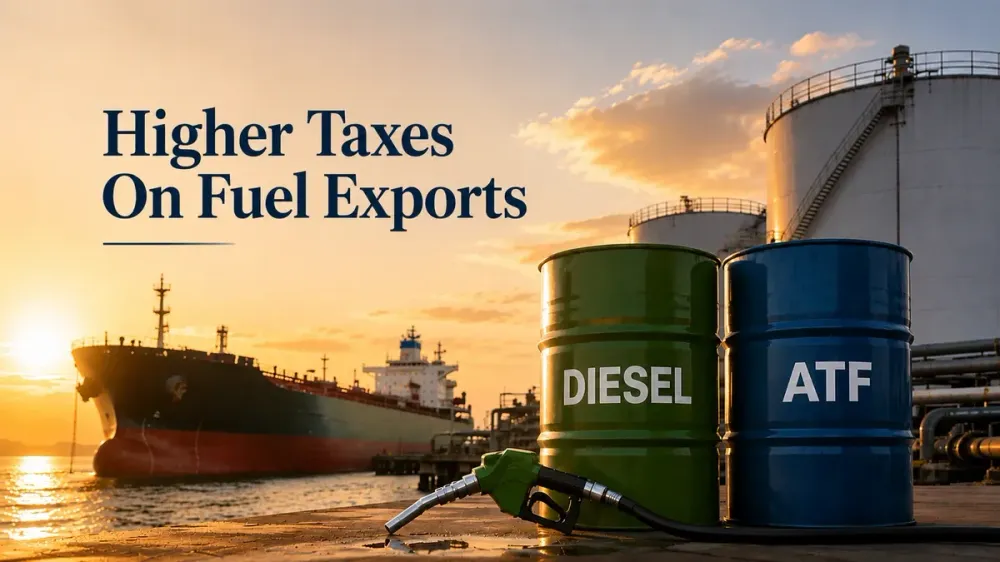
The Centre has revised export duties on petrol, diesel and ATF in line with rising crude oil prices. Find out what the new rates are and what's driving the move.
The Centre has revised windfall taxes on fuel exports in its latest fortnightly review, raising duties on diesel and aviation turbine fuel (ATF) while lowering the levy on petrol. The changes, announced through Finance Ministry notifications on Wednesday, will come into effect from 16 July and follow a sharp recovery in global crude oil prices.
Under the revised rates, the diesel export duty has been increased to ₹15.5 per litre from ₹8.5 per litre. ATF export duty has also been raised to ₹14.5 per litre from ₹7.5 per litre. At the same time, the export duty on petrol has been cut to ₹2.5 per litre from ₹4 per litre.
Why Has The Government Revised Indian Windfall Taxes?
The latest revision comes as global oil markets remain volatile. Brent crude climbed nearly 2% on Wednesday to touch a one-month high of $84.73 per barrel after the US reinstated a naval blockade on Iran, raising concerns over supplies moving through the Strait of Hormuz.
Oil prices have also been supported by renewed geopolitical tensions and attacks on oil tankers. At the same time, supply disruptions, including lower Russian diesel exports, have pushed up refining margins. However, worries over inflation and slowing global demand have limited further gains in crude prices.
Brent crude has recovered strongly this month, rising around 17% in July after recording three straight monthly declines through June.
Earlier Fuel Supply Restrictions
The government had earlier taken temporary steps to manage domestic fuel supplies. On 11 June, it barred industrial, commercial, and institutional consumers from buying petrol and diesel through retail fuel stations, asking them to source supplies through bulk procurement channels instead.
The restrictions were introduced to prevent hoarding and ensure adequate fuel availability for retail consumers amid geopolitical disruptions. They were later withdrawn on 29 June, with the decision taking effect from 1 July.
Also Read - Sun Pharma Receives South African Approval For Generic Semaglutide
This article is for informational purposes only and should not be considered investment advice from Kotak Neo. For compliance T&C and disclaimers, Visit www.kotakneo.com/disclaimer
Right Tools, Rich Insights