Add Preferred News Source
1,002 Views| 26 Oct 2026
SEBI Proposes Replacing Name-Wise AMC Pay Disclosures With Consolidated Reporting
Summary
Securities and Exchange Board of India proposed replacing individual name-wise AMC pay disclosures with consolidated reporting, citing trust structure differences and talent retention concerns. Comments due by 30 June 2026.
The Securities and Exchange Board of India (SEBI) issued a consultation paper on Wednesday proposing to replace individual, name-wise salary disclosures at asset management companies (AMCs) with consolidated reporting, acknowledging that the current framework may not be well-suited to how mutual funds are actually structured.
Under the current framework, asset management companies are required to publicly disclose the names and individual remuneration of their chief executives officers (CEOs), chief investment officers (CIOs), chief operating officers (COOs), their top ten employees by pay, and all employees earning ₹1.02 crore or more annually or ₹8.5 lakh per month for those employed for part of the year.
What Is Being Proposed
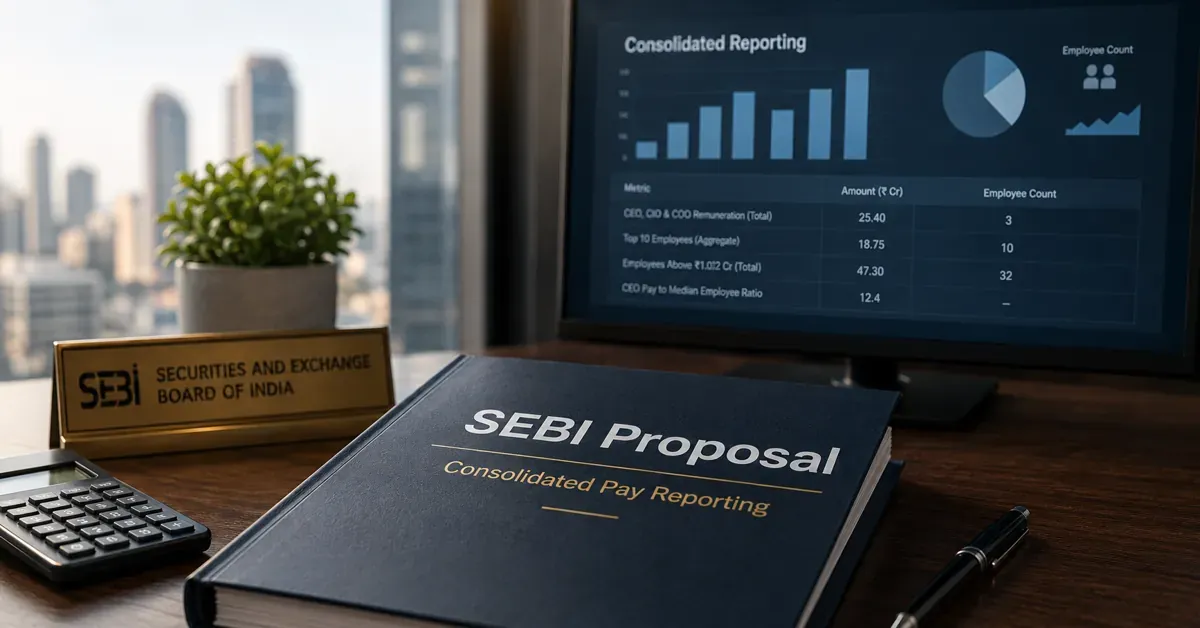
Rather than naming individuals, asset management companies would disclose consolidated figures:
-
Total remuneration of CEO, CIO and COO combined, with employee count.
-
Aggregate pay of the top ten employees without naming them.
-
Consolidated remuneration of all staff above the ₹1.02 crore threshold, with a headcount.
-
CEO pay to median employee ratio, in the existing format.
A separate proposal would make fund manager remuneration available at the scheme level, on request, limited to schemes the requesting unitholder is actually invested in.
Why The Regulator Is Moving On This
SEBI acknowledged in the paper that mutual funds are trust structures where investors are unitholders rather than shareholders with direct ownership rights over the asset management company. That distinction weakens the case for applying the same disclosure standards used for listed companies, where equity shareholders bear residual risk and vote on governance matters.
The regulator also flagged two practical concerns. First, public disclosure of individual names and salaries creates personal data misuse risks for employees. Second, Portfolio Management Services and Alternative Investment Funds face no equivalent disclosure requirements, putting asset management companies at a talent retention disadvantage when competing for the same professionals.
Also Read - India Waives Excise Duty On Higher Ethanol Petrol Blends; E22 To E30 Grades Now Tax-Exempt
The Securities and Exchange Board of India's own analysis found that current disclosures cover only 2 to 10% of the employee base across most fund houses, pointing to the limited reach of a framework that nonetheless creates significant friction for the industry.
Public comments are invited until 30 June 2026.
Sources:
SEBI
The Economic Times
This article is for informational purposes only and should not be considered investment advice from Kotak Neo. For compliance T&C and disclaimers, Visit www.kotakneo.com/disclaimer
Right Tools, Rich Insights

Latest News
- 1,049 Views| 26 Oct 2026
- 1,032 Views| 26 Oct 2026
- 1,067 Views| 26 Oct 2026
- 1,081 Views| 26 Oct 2026
- 1,015 Views| 26 Oct 2026
- 1,079 Views| 26 Oct 2026
- 1,049 Views| 26 Oct 2026
- 1,058 Views| 26 Oct 2026
- 1,055 Views| 26 Oct 2026