India's Fuel Consumption Rises In May; LPG Demand Falls 20% Amid Supply Crisis
 Add Preferred News Source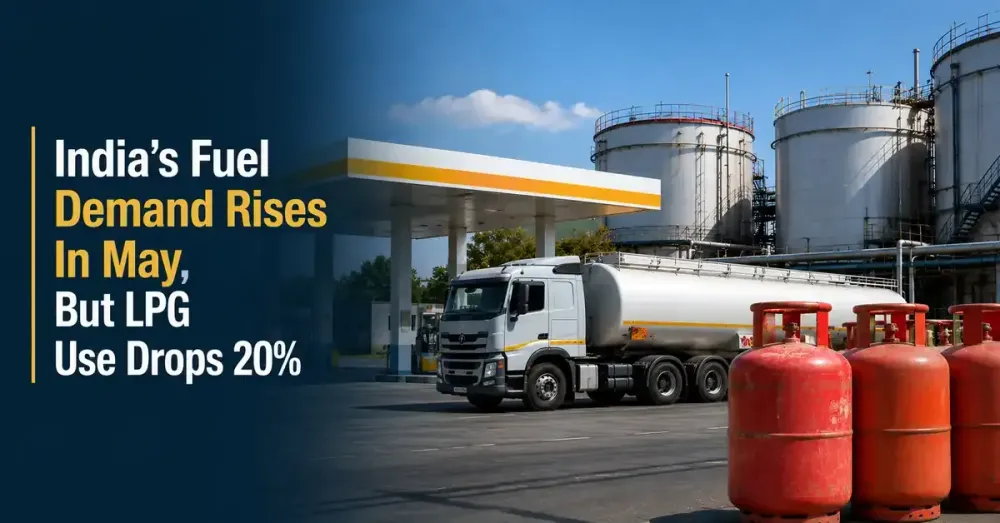
India's fuel consumption rose to 19.93 million metric tonnes in May from 19.47 million tonnes in April, supported by higher diesel and petrol demand. However, LPG consumption dropped about 20% year-on-year to 2.13 million tonnes as supply disruptions linked to the Strait of Hormuz continued to affect availability.
India's petroleum product consumption increased in May, helped by stronger demand for diesel and petrol, according to data released by the Petroleum Planning and Analysis Cell (PPAC).
Total fuel consumption stood at 19.93 million metric tonnes in May, compared with 19.47 million tonnes in April. On a year-on-year basis, however, demand was down 6.5% from 21.31 million tonnes recorded in May 2025.
Which Fuel Categories Supported Fuel Demand In May?
Diesel remained the largest contributor to overall fuel consumption. Demand rose to 8.73 million tonnes in May from 8.33 million tonnes in April and 8.59 million tonnes in May last year. That translates into growth of about 4.8% over April and 1.6% compared with a year ago.
Petrol consumption also moved higher. Demand stood at 3.91 million tonnes in May, up from 3.68 million tonnes in April and 3.78 million tonnes in May 2025. Based on PPAC data, petrol consumption increased by roughly 6% month-on-month and 3% year-on-year.
The increase came after state-run fuel retailers raised petrol and diesel prices four times during May. According to Reuters, diesel prices were increased by ₹2.71 per litre and petrol prices by ₹2.61 per litre as retailers sought to offset part of the impact of higher crude oil costs.
Jet fuel demand remained largely unchanged at 0.78 million tonnes, compared with 0.77 million tonnes in April and 0.78 million tonnes in May last year.
Fuel oil recorded stronger growth. Consumption rose to 0.63 million tonnes in May from 0.49 million tonnes in April and 0.50 million tonnes a year ago.
Domestic Fuel Sales (Million Metric Tonnes)
Product | May 2026 | Apr 2026 | Mar 2026 | May 2025 | Apr 2025 | Mar 2025 |
|---|---|---|---|---|---|---|
Diesel | 8.73 | 8.33 | 8.73 | 8.59 | 8.26 | 8.08 |
Petrol | 3.91 | 3.68 | 3.78 | 3.78 | 3.45 | 3.51 |
LPG | 2.13 | 2.21 | 2.38 | 2.68 | 2.55 | 2.73 |
Naphtha | 0.67 | 0.76 | 0.94 | 0.95 | 0.94 | 1.03 |
Jet Fuel | 0.78 | 0.77 | 0.81 | 0.78 | 0.77 | 0.80 |
Kerosene | 0.03 | 0.03 | 0.04 | 0.04 | 0.03 | 0.03 |
Fuel Oil | 0.63 | 0.49 | 0.65 | 0.50 | 0.49 | 0.50 |
Bitumen | 0.52 | 0.58 | 1.02 | 0.86 | 0.86 | 1.09 |
Total | 19.93 | 19.47 | 21.37 | 21.31 | 20.23 | 20.70 |
Why Did LPG Consumption Fall Sharply?
LPG demand fell to 2.13 million tonnes from 2.68 million tonnes in May 2025. It was also lower than 2.21 million tonnes recorded in April and 2.38 million tonnes in March.
The situation is India's worst LPG supply crisis in decades, driven by shipping disruptions in the Strait of Hormuz amid the US-Israeli conflict involving Iran.
India sources about 90% of its LPG imports from the Middle East, with the fuel primarily used for cooking purposes.
Supply conditions have also been affected by sanctions imposed by the US Treasury Department on a network of individuals, entities and tankers accused of moving Iranian-origin LPG disguised as Omani LPG to South and East Asian markets.
Weakness was visible in other petroleum products as well.
What Do The Latest Fuel Demand Trends Indicate?
Diesel and petrol consumption increased during May, helping overall fuel demand rise from April levels. At the same time, LPG consumption remained under pressure as supply disruptions affected availability.
Several industrial and construction-linked products also recorded weaker demand compared with last year. Naphtha and bitumen were among the sharpest decliners in the PPAC data.
Growth in petrol and diesel demand could slow later this year following fuel price increases linked to higher oil costs caused by the war in Iran.
The report also noted early signs of stress in the trucking sector.
Also Read - SEBI & RBI Working On Corporate Bond Index Derivatives: SEBI Chief
For now, May's numbers show that while transport fuel demand remained resilient, supply-side disruptions and higher energy costs continued to influence consumption patterns across several petroleum products.
Sources:
ET Energy
Moneycontrol
This article is for informational purposes only and should not be considered investment advice from Kotak Neo. For compliance T&C and disclaimers, Visit www.kotakneo.com/disclaimer
Right Tools, Rich Insights