 Add Preferred News Source
1,026 Views| 27 Oct 2026
Vedanta's Four Demerged Businesses To Begin Trading On BSE And NSE On Monday
Summary
Vedanta's four demerged entities will make their stock market debut on Monday, advancing the group's restructuring efforts. Here are the factors investors should keep an eye on.
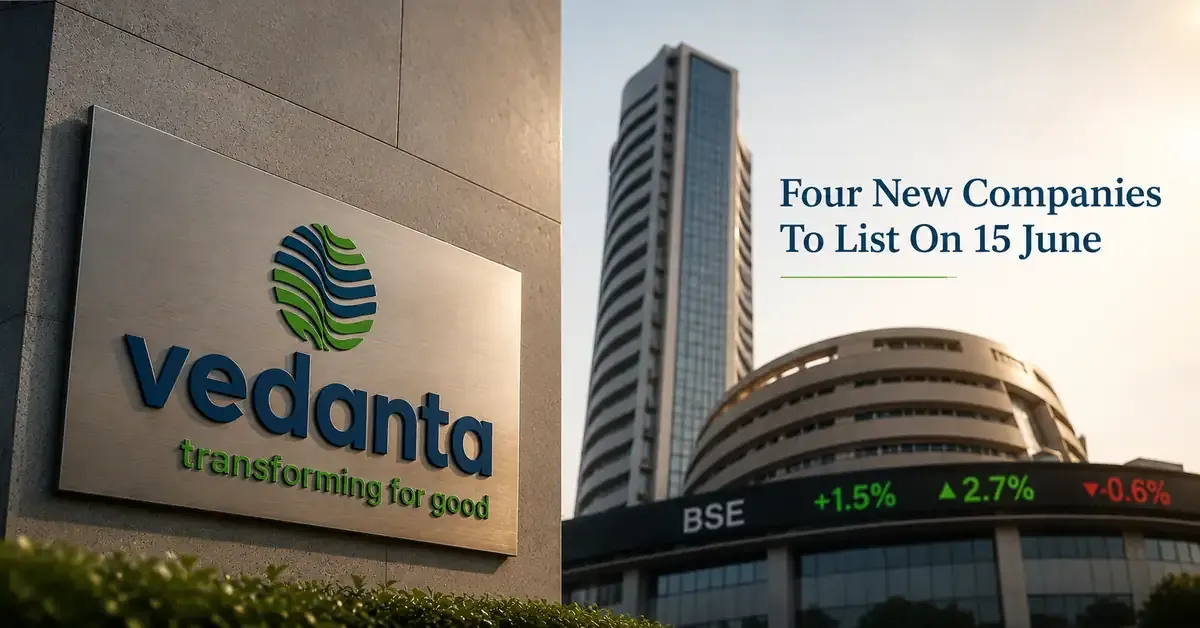
Vedanta Group's demerger plan finally reaches the market on Monday, 15 June, with four newly carved-out businesses set to start trading on Indian exchanges.
After the demerger, Vedanta Aluminium Metal, Vedanta Oil & Gas, Vedanta Power, and Vedanta Iron & Steel will be listed separately on both the Bombay Stock Exchange (BSE) and National Stock Exchange (NSE). Vedanta Ltd will remain a listed entity and will focus on its base metals business along with its stake in Hindustan Zinc.
The simultaneous listing comes nearly three years after the restructuring was first announced and is being seen as one of the country's biggest demerger exercises.
Shareholders did not have to make an additional investment to participate. Under the approved 1:1 scheme, every investor holding one Vedanta Ltd share received one share in each of the four newly created companies. The market will now decide whether these standalone businesses deserve higher valuations than they did under a single conglomerate structure.
Why Are Investors Paying Close Attention?
The demerger gives investors the option to invest in individual businesses rather than a single diversified conglomerate. Vedanta has said the move will simplify its corporate structure and create sector-focused companies with independent growth plans.
Investors who like the aluminium story can now invest only in aluminium. Those optimistic about India's energy demand can choose the power or oil and gas businesses instead.
Among the four newcomers, Vedanta Aluminium Metal is expected to grab the spotlight. Analysts believe its scale, lower production costs and earnings potential could make it the strongest performer after listing. The iron and steel business, however, may have a tougher task winning investor confidence because it competes with larger and more established players.
What Happens After The Excitement Of Listing?
The focus will quickly shift from the demerger itself to how each company performs on its own.
Debt remains an important factor. The aluminium business is expected to carry sizeable borrowings, although it also generates strong operating earnings. Vedanta Power is likely to have the highest leverage ratio among the entities, though management has said much of that debt is long-term and backed by structured repayment schedules.
Dividend expectations may also evolve. Vedanta built a reputation for rewarding shareholders with generous payouts. Going forward, each company's board will have greater freedom in deciding how much profit to distribute and how much to retain for expansion.
Also Read - Lesser-Known AI-Linked Indian Firms Add $48 Billion In Market Value
The listings may mark the end of Vedanta's restructuring journey, but for investors, the real test begins now: can these independent businesses deliver the value that the demerger promised?
Sources:
The Economic Times
Moneycontrol
This article is for informational purposes only and should not be considered investment advice from Kotak Neo. For compliance T&C and disclaimers, Visit www.kotakneo.com/disclaimer
Right Tools, Rich Insights

Latest News
- 1,071 Views| 27 Oct 2026
- 1,027 Views| 27 Oct 2026
- 1,030 Views| 27 Oct 2026
- 1,079 Views| 27 Oct 2026
- 1,096 Views| 27 Oct 2026
- 1,026 Views| 27 Oct 2026
- 1,008 Views| 27 Oct 2026
- 1,037 Views| 27 Oct 2026
- Transformers And Rectifiers (TARIL) Shares Rally As Company Announces ₹1,250 Crore Gujarat Expansion
 1,095 Views| 27 Oct 2026