Brent Crude Drops Below $100 As US-Iran Peace Talks Progress
 Add Preferred News Source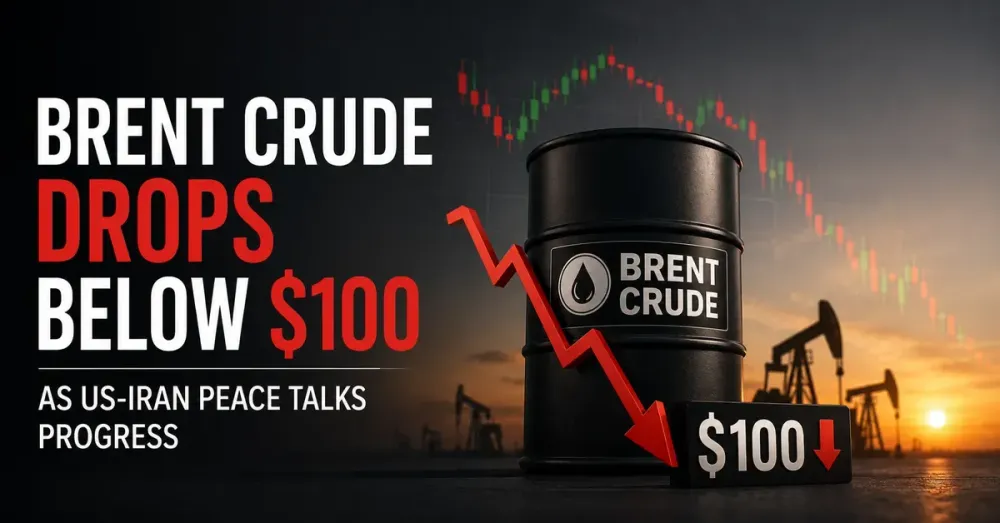
Brent crude fell below $100 on 25 May as US-Iran peace talks showed progress toward a memorandum of understanding. Key disputes over the Strait of Hormuz remain unresolved.
Crude prices fell sharply on Monday, with Brent dropping below the $100 mark for the first time in two weeks as markets priced in the possibility of a peace agreement between Washington and Tehran that could eventually reopen the Strait of Hormuz.
Brent crude futures dropped 4% to $94.96 a barrel by 9:15 AM. West Texas Intermediate fell 5% to $90.87 a barrel. Both contracts touched their lowest levels since 07 May during the session.
What Moved The Market
US President Donald Trump said on Saturday that Washington and Tehran had largely negotiated a memorandum of understanding on a peace deal. The agreement, if finalised, would include the reopening of the Strait of Hormuz, the narrow waterway that, before the conflict, handled roughly one-fifth of global oil and liquefied natural gas shipments. The prospect of easing supply constraints drove the selloff in crude prices.
The optimism, however, came with qualifications. Trump said on Sunday he had told his negotiating team not to rush into any deal, making clear that significant gaps remain between the two sides on several issues, including shipping access and broader regional security arrangements. The Strait of Hormuz remains blocked and oil flows through the region continue to be disrupted.
Analyst View
Analysts said the development offered some near-term price relief, even accounting for the risks and caveats still surrounding the peace process. The sense of a possible resolution, however fragile, was enough to bring some of the war premium out of crude prices.
At the same time, analysts were careful not to overstate what a deal would mean for supply in practice. Even if an agreement is reached, restoring normal oil flows through the strait is expected to take months.
Damaged oil and gas infrastructure along the Gulf corridor will require repairs, and shipping routes, insurance arrangements and export logistics will all need time to normalise before volumes return to pre-conflict levels.
Also Read - Stock Market Update 25 May 2026: Sensex Gains Over 800 Pts; Nifty 50 Above 23,950
The Bigger Picture
The Strait of Hormuz carried roughly a fifth of global oil and liquefied natural gas shipments before the conflict began. Its closure has tightened global energy supply, pushed inflation higher and raised concerns about economic growth across import-dependent economies.
A sustainable reopening would bring relief to energy markets, but the path from a memorandum of understanding to restored flows is not a short one.
Sources:
Reuters
Firstpost
This article is for informational purposes only and should not be considered investment advice from Kotak Neo. For compliance T&C and disclaimers, Visit www.kotakneo.com/disclaimer
Right Tools, Rich Insights