Centre Notifies Coal Exchange Rules To End Decades Of Opaque Coal Pricing
 Add Preferred News Source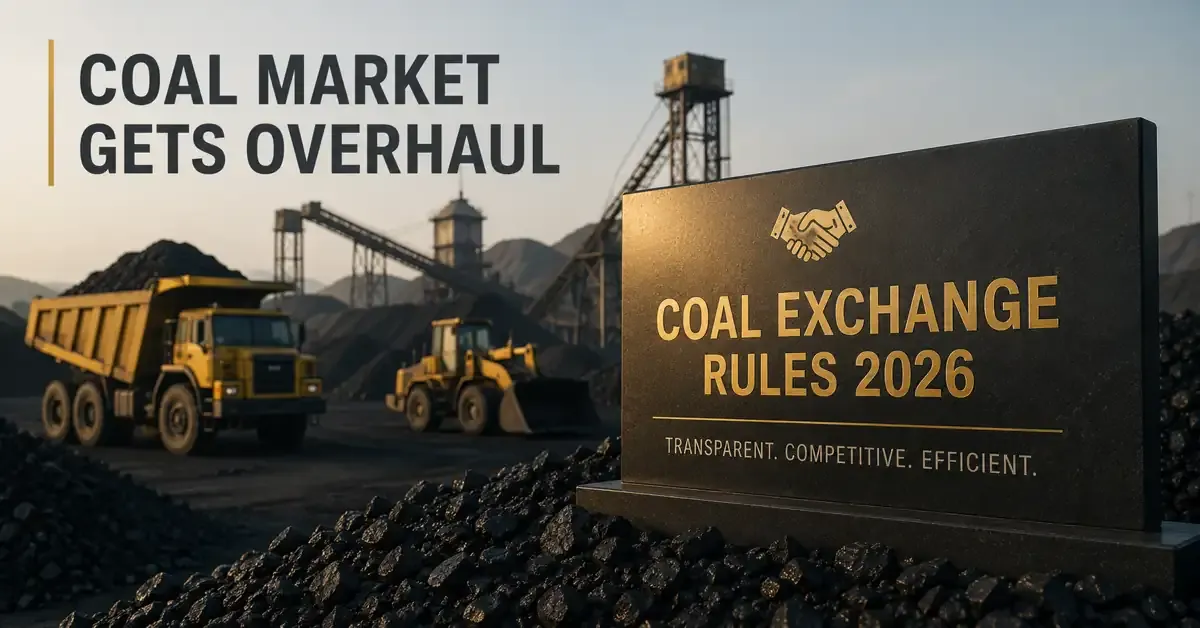
The government notified the Coal Exchange Rules, 2026 on June 4. The rules pave the way for competitive coal trading platforms and are expected to improve price discovery and market access. Read ahead to know more.
India's coal market is getting a structural overhaul. The Ministry of Coal published the Coal Exchange Rules 2026 in the Official Gazette on 04 June, creating the legal foundation for organised coal exchanges to operate in the country for the first time.
The rules flow from the Mines and Minerals Development and Regulation Amendment Act 2025, which introduced the concept of a mineral exchange and gave the central government the authority to promote market-based trading of minerals including coal. The notification is the first concrete step toward turning that legislative intent into an operational reality.
Who Regulates The Exchanges
The Coal Controller Organisation was designated as the registering and regulating authority for coal exchanges in December 2025. Under the new rules, eligible entities can apply to the Coal Controller Organisation for authorisation to set up and run exchanges, write their own market rules and bye-laws and facilitate trading between buyers and sellers. Each registration will run for 25 years.
What Changes For The Market
India's coal sector has long operated on a one-to-many model where a single seller pushes coal out to multiple buyers through an allocation process. The exchange framework breaks that open into a many-to-many platform where producers and buyers on both sides compete simultaneously.
What that means in practice:
-
Coal prices will be set by the market rather than administratively determined.
-
Commercial and captive miners get direct access to a broader buyer pool.
-
Public sector coal companies can use the platform to expand their market reach.
-
Smaller industrial buyers get a competitive route to procure coal outside traditional allocation channels.
-
Price transparency improves across the entire supply chain.
Also Read - Meta Partners With Reliance To Build First AI Data Centre In India At Jamnagar; Leases 168 MW
The Bigger Picture
Coal powers the majority of India's electricity generation. For years, the lack of a formal trading platform meant pricing remained largely opaque, while access to coal depended heavily on allocations and existing relationships rather than market-driven price discovery. Both problems are addressed by this framework.
The government described the reform as part of its commitment to ease of doing business and building a self-reliant energy ecosystem. A more competitive coal market, the ministry argued, strengthens energy security and supports industrial growth at the same time.
Sources:
PIB
Financial Express
This article is for informational purposes only and should not be considered investment advice from Kotak Neo. For compliance T&C and disclaimers, visit www.kotakneo.com/disclaimer
Kotak News Desk brings you latest updates, expert insights, and market-ready ideas - helping you stay informed and invest smarter.
Connect on: Linkedin
0 people liked this article.