118-Year-Old Calcutta Stock Exchange Eyes Return With New Trading Platform
 Add Preferred News Source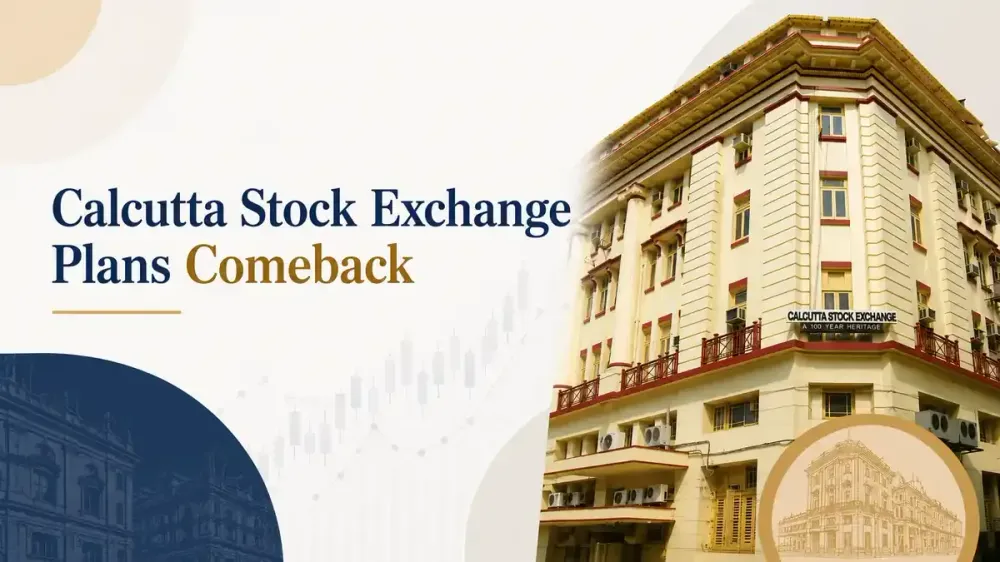
The Calcutta Stock Exchange is planning to withdraw its voluntary exit application and revive operations with a new trading platform, backed by the West Bengal government and a net worth exceeding ₹300 crore.
The Calcutta Stock Exchange (CSE) is preparing to reverse course on its own shutdown, seeking to withdraw the voluntary exit application it filed with the Securities and Exchange Board of India (SEBI) in February 2025 and revive operations with a rebuilt technology backbone, new trading infrastructure and a disaster recovery site, according to people familiar with the matter.
The push is backed by West Bengal's new state government, with Finance Minister Swapan Dasgupta making the revival a stated budget priority in his June speech. The 118-year-old institution, which stopped trading in April 2013 after failing to meet regulatory requirements, has the capital to restart operations, though much of it currently sits in an escrow account.
The Regulatory Path Back
The exchange's board will need to pass a fresh resolution and formally inform the Securities and Exchange Board of India that it intends to withdraw its voluntary exit application.
Following the February 2025 application, the regulator had already appointed an independent valuer to assess the exchange's assets and constituted a working group to examine exit modalities.
The Financial Position
Here's a look at the key financial metrics and ownership details of the exchange:
-
Net worth: Over ₹300 crore
-
Reported income in FY25: ₹26 crore, largely from listing fees and bank interest.
-
Land sale proceeds: ₹253 crore from the sale of a parcel in Kolkata's Eastern Metropolitan area earlier this year.
-
Bombay Stock Exchange (BSE) stake in CSE: 5.05%
-
West Bengal Infrastructure Development Finance Corporation stake: 3.4%
What A Rebuilt Exchange Would Need
Former CSE President JM Chaudhury, who led the exchange three times between 1994 and 2000, said a proprietary trading platform is non-negotiable for any revival. He pointed to C-STAR, the exchange's own screen-based trading system inaugurated by then Chief Minister Jyoti Basu on 26 February 1997, as the model. Without its own platform, he argued, no recovery effort would succeed.
Chaudhury also added that a functional CSE would reduce trading costs for brokers in eastern India who were forced to shift to the National Stock Exchange (NSE) or BSE after 2013.
The Commercial Case
Members of the local broking community said commercial viability is the real test. The exchange's best strategic positioning, according to a Kolkata-based broker, would be as a niche incubation and small business listing platform for eastern India, rather than attempting to compete directly with the NSE or BSE on mainstream products.
Finance Minister Dasgupta framed the revival around three benefits in his budget speech: easier capital access for eastern India, lower listing and trading costs, and job creation in the state.
Also Read - Jewellery Stocks Rally Up To 40% As Strong Q1 FY27 Updates Offset Gold Price Concerns
This article is for informational purposes only and should not be considered investment advice from Kotak Neo. For compliance T&C and disclaimers, Visit www.kotakneo.com/disclaimer
Right Tools, Rich Insights