Why Fuel Retailers Are Losing ₹7–8 Per Litre?
 Add Preferred News Source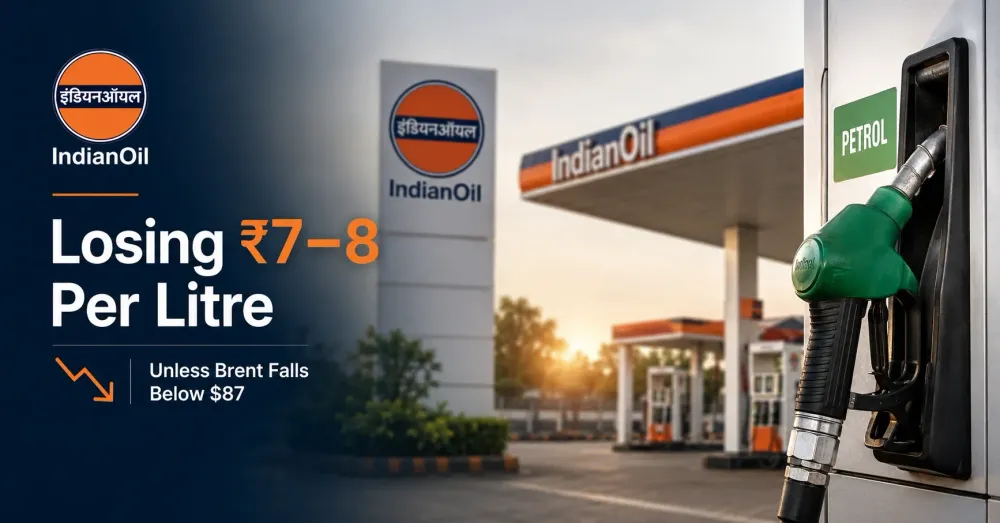
India’s fuel retailers are losing ₹7–8 per litre as crude nears $98, with relief unlikely unless Brent drops below $87.
India’s state-run fuel retailers are still losing an estimated ₹7–8 on every litre of petrol and diesel sold, despite four fuel price hikes in May, underlining the severe pressure higher global crude prices are placing on the country’s oil marketing system. Analysts say these losses will continue unless Brent crude falls to around $85–87 per barrel, which is currently seen as the sector’s breakeven range.
The latest stress comes after global oil prices climbed sharply amid supply disruptions linked to West Asia tensions. Brent crude recently traded near $98 a barrel, well above the level at which Indian fuel retailers can recover costs under existing pump prices.
Price Hikes Yet No Relief
India’s three state-owned oil marketing companies, Indian Oil Corporation, Bharat Petroleum Corporation and Hindustan Petroleum Corporation, together control nearly 90% of the country’s fuel retail market. These firms have already increased petrol and diesel prices four times since May 15, lifting retail prices by about ₹7.8 per litre for petrol and ₹8.6 per litre for diesel. Yet, according to market estimates, the hikes have still not fully offset the rise in crude procurement costs.
In New Delhi, petrol is now priced at around ₹102.12 per litre, while diesel stands near ₹95.20 per litre. But with crude prices staying elevated, current retail rates remain below the level required for OMCs to earn normal marketing margins.
Brokerage estimates suggest that at $90 Brent, India’s fiscal burden could rise by ₹75,000 crore to ₹90,000 crore, or roughly 20–25 basis points of GDP, due to a combination of higher fuel subsidies, fertiliser support and reduced oil-tax revenue. That has narrowed the government’s room to provide direct compensation to fuel retailers.
Additional fiscal pressure is also building elsewhere. Analysts estimate fertiliser subsidy costs could rise by ₹30,000–40,000 crore in FY27, while LPG-related support may increase by another ₹20,000–30,000 crore. Some estimates also indicate weak monsoon risks could push rural spending higher by ₹10,000–20,000 crore, further limiting budget flexibility.
Demand Stays Strong Despite Margin Pressure
Meanwhile, demand at petrol pumps remains strong. Between 1 May and 22 May, Indian Oil reported retail diesel sales rising 18% year-on-year, while petrol sales increased 14%. In several regions, diesel demand at retail outlets has surged 20–30%, partly because bulk buyers are shifting to pumps due to wholesale diesel being ₹40–42 per litre costlier than retail supply.
Also Read - India Plans $1 Billion LIC Stake Sale Next Month Through 2% Government Divestment
For now, the numbers leave little room for relief. Unless global crude retreats toward $85–87 per barrel, India’s fuel retailers are expected to keep absorbing losses, keeping pressure on both corporate balance sheets and the government’s broader fiscal roadmap.
Sources:
Economic Times
TV9 Bharatvarsh
This article is for informational purposes only and should not be considered investment advice from Kotak Neo. For compliance T&C and disclaimers, Visit www.kotakneo.com/disclaimer
Right Tools, Rich Insights