 Add Preferred News Source
1,018 Views| 24 Oct 2026
Urea Import Bids Fall Over 50% As China Opens Up Exports; Relief For India's Fertiliser Subsidy Bill
Summary
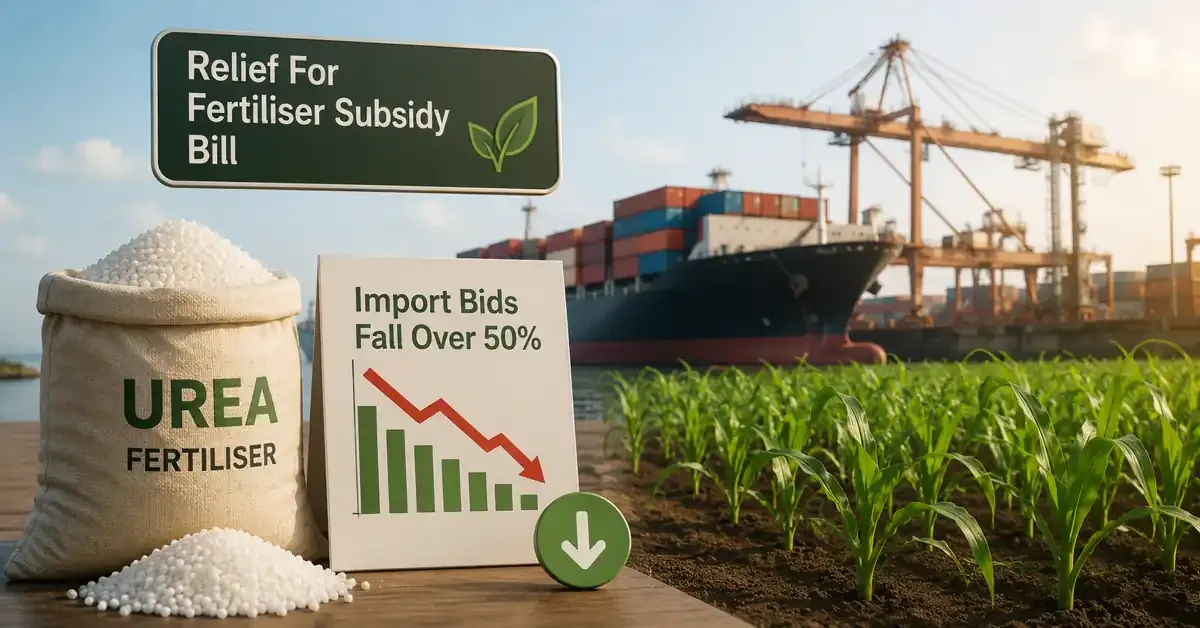
India's latest urea import tender has received bids at around $444 to $449 per tonne, more than 50% lower than the $959 per tonne paid in April, as China eased export restrictions and global prices softened ahead of the kharif season. The development could help contain India's rising fertiliser subsidy bill. Read ahead to know more.
India is set to import urea at roughly half the price it paid just weeks ago, after its latest tender drew bids well below recent purchase levels. National Fertilizers Limited floated a tender on 27 May for 1.7 million tonnes of urea and received bids in the range of $444 to $449 per tonne, compared with $935 to $959 per tonne paid in the previous tender issued by Indian Potash Limited in April.
The sharp drop has come as China lifted some of the export restrictions it had imposed on fertilisers since March, improving global supply and pulling prices lower.
The tender attracted strong interest. Bids totalling around 6.24 million tonnes were received from approximately 34 firms against a requirement of just 1.7 million tonnes. Bids for East Coast supplies alone came in at around 3.17 million tonnes, with a similar volume offered for the West Coast.
What Drove The Price Drop
Two factors came together to bring prices down. Several countries that had deferred urea purchases after the price spike triggered by the Iran war in late February shifted to cheaper nitrogen alternatives, softening demand. At the same time, China, which accounts for a significant share of global urea trade, issued fresh export quotas, adding supply to the market.
Industry sources said Chinese urea is likely to be the dominant source of supply for the East Coast because of its geographical proximity. This is similar to the situation in 2022 when urea prices surged to almost $1,000 a tonne after the Russia-Ukraine war, before falling sharply as supply improved. However, sources warned that China may again impose strict export curbs after August 2026, tightening availability.
Why This Matters For India
India is the world's largest urea importer, with the nutrient accounting for around 45% of total fertiliser consumption. Urea is applied shortly after sowing, making availability around the end of June critical for the kharif season. India has already procured around 40% of its annual import requirement at close to double the pre-crisis price. Purchases at the new lower rates could prevent a further widening of the fertiliser subsidy bill.
That bill is already under significant pressure. The budgeted estimate for FY27 stands at ₹1.7 lakh crore, but a Finance Ministry official said this week that it could more than double to over ₹3.4 lakh crore due to the West Asia war. The previous high was ₹2.5 lakh crore in FY23 during the Russia-Ukraine conflict.
Also Read - Cancer Drug Shortage: Government Allows Higher Prices For Cisplatin And Carboplatin
India's domestic urea production has also been affected. The West Asia crisis disrupted LNG supplies, a key feedstock for urea plants. Nearly 85% of the gas used in domestic urea production is imported, with more than half of India's total LNG imports sourced from West Asia. The government has since trimmed its kharif urea requirement estimate to 19 million tonnes from 19.4 million tonnes.
The agriculture ministry has also launched a campaign urging farmers to reduce chemical fertiliser use by up to 50%, citing soil health and the need to lower import dependence amid elevated global prices.
Sources:
Economic Times
Business Standard
This article is for informational purposes only and should not be considered investment advice from Kotak Neo. For compliance T&C and disclaimers, Visit www.kotakneo.com/disclaimer
Right Tools, Rich Insights

Latest News
- 1,091 Views| 24 Oct 2026
- 1,078 Views| 24 Oct 2026
- 1,064 Views| 24 Oct 2026
- 1,063 Views| 24 Oct 2026
- 1,074 Views| 23 Oct 2026
- 1,058 Views| 23 Oct 2026
- 1,064 Views| 23 Oct 2026
- 1,028 Views| 23 Oct 2026
- 1,062 Views| 23 Oct 2026