How To Select Stocks For Intraday Trading?
- Updated: 22 May 2026, 5:10 PM IST
- | 4 min read
- 50,988
 Add Preferred News Source
In intraday trading, the stock you choose can influence how the trade plays out within a few minutes or hours. Some stocks offer steady movement and enough trading activity, while others can become difficult to enter or exit at the right time.
That is why traders usually begin by looking at volume, identifying trends, and chart patterns before taking a position. Entry and exit decisions are then planned around these signals. Let us look at some practical rules that can help in selecting stocks for intraday trading.
Why Does Stock Selection Matter?
Stock selection is crucial in intraday trading as it directly impacts your ability to make profits. Liquid stocks tend to work better for intraday trading. When price movement isn’t wildly unstable, and the chart shows recognisable patterns, it becomes easier to plan entries and exits during the day. These conditions often raise the odds of a successful trade.
These traits make it easier to predict price movements and execute trades swiftly. Poorly chosen stocks can lead to unpredictable price swings, slippage, and reduced profit margins.
Tracking sector performance, monitoring market trends to stay ahead of the competition, choosing stocks sensitive to news for quick opportunities, regularly analysing and refining trading strategies are some key factors most intraday traders follow.
Consistent practise and learning, followed by a disciplined trading routine, can improve decision-making and increase the chances of better outcomes in intraday trading.
10 Rules For Selecting Stocks For Intraday Trading
There are a number of factors to consider when selecting stocks for intraday trading. Here are 10 rules that traders like you should follow:
1. Choose Liquid Stocks
Liquid stocks are those that are actively traded and have a high volume of shares being bought and sold. This means that you will be able to easily enter and exit your positions when trading opportunities arise during the day.
2. Avoid Highly Volatile Stocks
Stocks with high volatility often move sharply in very short periods. Prices can jump or fall without much warning. This makes intraday trading a bit of a gamble. Those quick price movements can become hard to manage, and even harder to respond to promptly, while the market is open.
3. Invest In Correlated Stocks
Investing in correlated stocks means you're looking at stocks that generally move together. Keeping an eye on these related stocks can be a useful tool for traders, helping them verify if a price change is backed up by what's happening in the wider sector.
4. Follow Market Trends
Intraday traders should keep an eye on the overall market trend. They have to make prompt buy and sell decisions based on market movements.
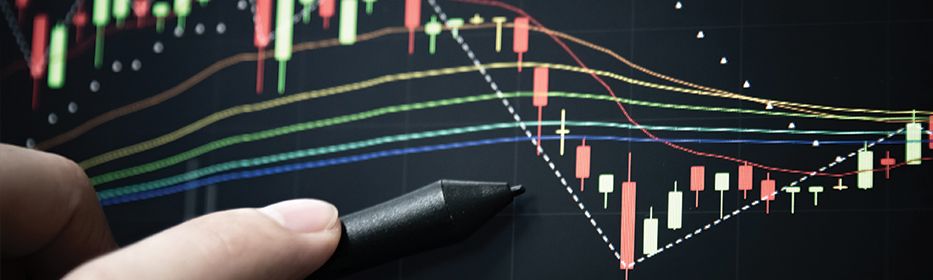
5. Use Charting Tools
Charting tools can help you analyse the price movements of stocks and identify potential trading opportunities.
6. Look For Companies With Clear Disclosures
Transparent companies disclose their financial information regularly. This makes it easier to assess the risk of investing in their stock.
7. Choose Stocks With A Presence In The Derivatives Segment
Stocks that are also traded in the derivatives market often have better liquidity and higher trading volumes. This makes them more suitable for intraday trading.
8. Trade News-Sensitive Stocks
News-sensitive stocks are those that are likely to be affected by news events. This can create trading opportunities, but it is important to be careful as these stocks can be more volatile.
9. Consider Sector Performance
You should choose sectors that are actively performing well in the current market. Strong-performing sectors indicate stability and growth, aligning with the day's market trends. Trading in such sectors enhances your chances of finding profitable intraday stock opportunities.
10. Look For Stocks With High Daily Turnover
You must prioritise stocks with high daily turnover. High turnover reflects strong market activity and liquidity, ensuring easy entry and exit. Active trading in these stocks makes them more reliable and suitable for your intraday trading strategies.
3 Factors To Consider While Selecting Stocks For Intraday Trading
1. Does The Stock Have A Narrow Tick Spread?
The sustainability of narrow tick spreads in the stock market is based on several factors and can vary over time and across different stocks.
Tick spread refers to the difference between the highest price a buyer is willing to pay (bid) and the lowest price a seller is willing to accept (ask) for a particular stock. A narrow tick spread means the gap between the bid and ask prices is small. That smaller gap can work in favour of traders and investors, making entries and exits a bit more efficient. Stocks with strong liquidity usually show this kind of narrow spread.
Liquidity is driven by the number of market participants and trading volume. Stocks with high liquidity often have narrow spreads because there are more buyers and sellers competing, reducing the spread.
The price of a stock can influence its tick spread. Generally, higher-priced stocks tend to have narrower spreads because the price difference between the bid and ask is a smaller percentage of the stock's value.
2. Does It Show Clear And Decipherable Chart Patterns?
Narrow tick spreads do not directly impact the clarity or decipherability of chart patterns. Chart patterns, such as triangles, head and shoulders, flags, and double tops or bottoms, are formed based on price movements over time and are primarily a function of price action, volume, and investor sentiment. These patterns can occur in stocks with both narrow and wide tick spreads.
Stocks with narrow tick spreads tend to be more liquid, meaning they have higher trading volumes and more market participants. This liquidity can result in smoother price movements and more accurate chart patterns. In contrast, stocks with wider tick spreads may have fewer participants and less trading activity, potentially leading to choppier and less reliable chart patterns.
3. Is The Price Sensitive To News?
Price sensitivity to news flows, often referred to as news sensitivity, describes how quickly and significantly the price of a financial asset, such as a stock, responds to new information or news releases. It quantifies the extent to which market participants incorporate fresh information into asset prices, reflecting the efficiency of the market in processing news. In highly efficient markets, asset prices tend to be more sensitive to news, as traders and investors quickly incorporate new information into their decisions. In less efficient markets, price adjustments may be slower and less pronounced.
The type of news or information can impact sensitivity. Market-moving news, such as earnings reports, economic indicators, or significant geopolitical events, often leads to more pronounced price reactions compared to less impactful news. The composition of market participants matters. Institutional investors and algorithmic trading systems may react more swiftly to news than individual retail investors, potentially leading to rapid price adjustments. Liquidity in the market plays a role.
Common Mistakes To Avoid When Selecting Stocks For Intraday Trading
Avoiding common mistakes is essential for improving your success in intraday trading. Here are key pitfalls to steer clear of:
1) Ignoring Liquidity
You should never trade illiquid stocks. Low liquidity makes it difficult to enter or exit positions quickly, leading to potential losses.
2) Chasing Volatility
While volatility can bring profit opportunities, you must avoid stocks with excessive price swings. Unpredictable moves can result in significant losses.
3) Skipping Analysis
You should always base your trades on proper research and technical analysis. Avoid making decisions driven by instinct or guesswork.
4) Emotional Trading
You must remain disciplined and follow your plan. Emotional reactions, such as panic buying or selling, often lead to poor outcomes.
5) Neglecting Risk Management
You should always set stop-loss orders and manage risks effectively. Ignoring risk management can lead to larger-than-expected losses.
6) Overtrading
You must avoid overtrading, which often arises from impatience or greed. Stick to a calculated strategy for better results.
Key Criteria For Stock Selection
Before choosing a stock for intraday trading, traders usually look at a few basic signals that indicate whether the stock is active enough for short-term trades. A stock may look attractive on price alone, but without supporting market activity, it may not offer a workable intraday setup.
Liquidity
A stock with steady trading activity is generally easier to handle during market hours. Orders get matched faster, and the difference between buying and selling prices usually stays narrow. That becomes important when a trade has to be entered or closed within minutes, especially in fast market conditions.
Volatility
For intraday trading, some price movement is necessary because, without movement, there is little room to capture gains. At the same time, very sharp swings can make timing difficult. Many traders prefer stocks where the movement is active but not erratic through the session.
Market And Sector Trends
A stock often follows the broader direction of its sector during the day. If banking stocks are seeing strong buying, individual banking counters may continue to attract attention. The same happens when a sector turns weak, even if one stock initially appears stable.
Volume
Price movement carries more weight when supported by visible trading volume. A rise in volume often shows stronger participation from buyers or sellers at that level. When volume remains low, even a price move may not sustain for long.
Technical Analysis
Many traders study charts before selecting a stock because price levels often repeat during the day. Support zones, resistance levels, and short intraday patterns help in deciding whether a stock is worth tracking for entry.
How Do Day Traders Determine The Correlation Of A Stock?
To determine the correlation, day traders usually compare a stock’s movement with its sector, index, or closely related stocks during the trading session. If price direction keeps matching over multiple intervals, the stock is treated as correlated. For instance, banking stocks often respond together when the banking index moves sharply.
Traders also watch whether that connection remains after the opening hour, because stock-specific news or sudden volume can break the usual pattern, which may indicate that the stock is starting to trade on its own strength or weakness.
How Do Day Traders Figure Out Where To Exit Winning And Losing Positions?
Support and resistance levels are often used first to judge where a trade may begin to lose momentum during the day. If the price approaches one of these levels and starts reacting there, many traders consider closing the position.
A target price is usually decided before entering, so that gains are not lost by waiting too long. Losses are handled differently. If the price moves against the trade and reaches the stop-loss level already planned, the position is normally closed without waiting for a recovery.
Conclusion
Selecting intraday trading stocks is a complex process that involves assessing liquidity, volatility, technical analysis, risk management, and continuous learning. Successful intraday trading relies on a well-thought-out strategy and the ability to adapt to dynamic market conditions.
While there are no guarantees in trading, adhering to these principles can significantly improve a trader's chances of achieving success in the fast-paced world of intraday trading. Traders should continuously practise and refine their skills.
A trading journal can help track and analyse past trades, allowing traders to identify strengths and weaknesses in their strategies. Additionally, traders must remain disciplined, stick to their trading plans, and avoid emotional decision-making.
Sources:
Investopedia

What Is Intraday Trading | 5 Key Rules You Must Know
Kotak Neo
•04m 57s
FAQs on stock selection for intraday
Before taking a position, the intraday trader must assess whether the stock is liquid enough. If the stock is not traded in large volumes, squaring off the trade by market close could be tough. For example, this issue may arise in small-cap and micro-cap stocks. In contrast, large-caps and upper-range mid-caps tend to be sufficiently liquid for intraday trades. Such stocks generally attract enough buyers and sellers through market hours. However, a stock’s liquidity may vary from one day to another. That is why traders often look at average daily traded volume before selecting the stock.
Being able to read technical charts is an essential skill for intraday traders. You should also be well-versed in trading indicators highlighting volume, trends, and market volatility. This will help you to assess if a stock is showing clear patterns. Study how the stock has moved historically to find if the same pattern has occurred earlier. With this information, you can trade based on how the stock is likely to move.
Yes, stock prices are sensitive to the news. As a result, they offer good day trading opportunities. When a stock reacts quickly, the news flow may offer hints about how the stock price could move. You can then place your buy and sell orders accordingly.
Penny stocks may look attractive because their prices are low and percentage moves can be large. However, they often suffer from poor liquidity and wider spreads. That makes trade execution harder.
Entry and exit points are usually determined using technical analysis. Traders often rely on indicators such as support and resistance levels, moving averages, and momentum indicators.
For example, a trader may enter a trade when the price breaks above a resistance level with strong volume.
Many traders focus on two-time windows during the trading session:
-
the opening phase
-
the final hour
Both periods often see higher activity.
The term intraday is specifically used for positions that are closed on the same day. However, if the trader does not do so, brokers square them off while the market closes at the price available at that time.
Traders can also convert these trades into delivery before the market closes, provided they have sufficient funds in their accounts.
Keeping a close eye on price movements is the fastest way to identify trends. Higher highs and higher lows usually show strength, while lower highs and lower lows often suggest the trend is weakening.
There's no surefire way to gather profits every single day in intraday trading. Still, traders can manage their gains and losses by adhering to certain principles. This includes sticking to a single trading strategy, cutting losses quickly when they're in the red, and not letting emotions dictate their choices.
Intraday trading is where the bet is mainly on short-term price movement, and traders buy and sell shares the same day without taking the actual delivery. On the contrary, delivery trading results in the actual transfer of ownership and possession of shares that can be held in the demat account for a longer period.
The content in this blog is intended purely for educational purposes. Any securities or mutual funds referenced are illustrative in nature and do not constitute a recommendation or endorsement by Kotak Neo. Investors are encouraged to assess their own financial situation and seek professional advice before making any investment decisions. For compliance T&C and disclaimers, Visit https://www.kotakneo.com/disclaimer/
0 people liked this article.

Kotak Neo (Kotak Neo) is India's venerable stockbroking company with a rich legacy. It offers comprehensive investment services across asset classes, prioritising a technology-first approach for a seamless experience. Trusted by 5 million+ customers, it guides you toward financial success with ease of investment and speed of trade.
Note: The opinions expressed in this blog are personal viewpoints and should not be construed as recommendations.
Similar Articles

Indian Market Strategy for 5th Oct. | Nifty Up 100 Points; 19,330 Crucial Support Level

Indian Market Strategy for 4th Oct. | Nifty Trades Lower; 19,350 Crucial Support Level
Indian Market Strategy for 3rd Oct. | Nifty Down 106 Points; 19,490 Crucial Support Level