Futures and Options
51 articles

Futures is a common terminology in derivatives trading. Essentially, futures is a derivative contract through which you can buy or sell an asset at a predetermined price on a future date. Using futures can help you lock in prices and manage risks related to price fluctuations. A futures trading example will help you better understand it.

Gold, silver, crude oil, natural gas, cotton, cardamom, copper, and nickel are some common commodities traded. Demand and supply, along with other variables such as cost of production, global growth rates, geopolitical events, and environmental conditions, influence commodity pricing. With gold being valuable and sought after, it is exchangeable inside the stock market in diverse shapes. Know about Gold futures & its benefits.
A reliable investment option, gold is seen as a storehouse of worth and an insurance policy in face of financial fluctuations. Traded on MCX, gold has a value of INR per 10 grams.

In comparison to stocks, options have a lower capital requirement for profit-making and can reduce risk by employing certain tactics. In contrast to futures, some high-profit, low-risk tactics can actually be used for a fraction of the price. Lets know about vertical spread options & its types in the following article.
Options are therefore regarded as the "go-to" financial derivatives for both traders and investors to trade or hedge their portfolios in the most effective and affordable way. Since option spreads are the most often used techniques, they should be in every trader's toolbox.
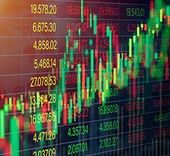
Trading in Futures and Options (F&O) involves buying and selling derivative contracts based on underlying assets. To trade in F&O, open a trading account with a registered broker, complete necessary documentation, and deposit margin funds. Research and analyze the market, choose the desired contract, and determine your trading strategy.

The F&O Ban List, also known as the "Futures and Options Ban List," comprises securities that have specific restrictions imposed by stock exchanges. These restrictions prevent excessive speculation or price manipulation in derivative contracts. When a stock is included in the ban list, traders are prohibited from initiating new positions in futures or options contracts of that particular stock.
A Bull Call Spread is an options strategy that involves buying a call option at a lower strike price and simultaneously selling a call option at a higher strike price, both with the same expiration date. This strategy is employed when an investor expects a moderate upward price movement in the underlying asset.

Typically, an investor will browse the options tables on a broker's website to search for good options to trade. Several put and call options for a given security will be available having various expiration periods. One can also find LEAPs whose expiration extends as far as a few years.
In short, there are numerous types of options out there. However, over the counter (OTC) options are a bit different as they are not traded on stock exchanges. Let’s explore what is otc in detail today.

In the stock market there are a set of financial terms that measure sensitivity of an option to different factors. These factors include changes in underlying asset price, volatility, expiration time, and interest rates. These financial terms are known as Greeks. Vega is one such Greek. Vega is one such Greek that calculates the increase or decrease in an option premium based on implied volatility.
When the implied volatility of the underlying asset changes by 1%, the value of a derivative changes by the same amount. This is the Vega. In order to understand the vega meaning, it is necessary to first comprehend implied volatility and how it is calculated.

A Covered Call is an options trading strategy where an investor who owns the underlying asset (such as stocks) sells a call option against it. By doing so, the investor collects a premium from the sale of the call option, which provides income. The strategy aims to profit from the income generated by the premium and potentially from limited gains if the underlying asset's price remains below the call option's strike price. However, the investor's potential upside is capped, as the call option obligates them to sell the asset at the strike price if the stock's price rises above it.
Enjoy ₹0 Brokerage for first 30 days
Open Your Demat Account Now