West Asia Conflict Raises Costs For Indian Apparel Exporters
 Add Preferred News Source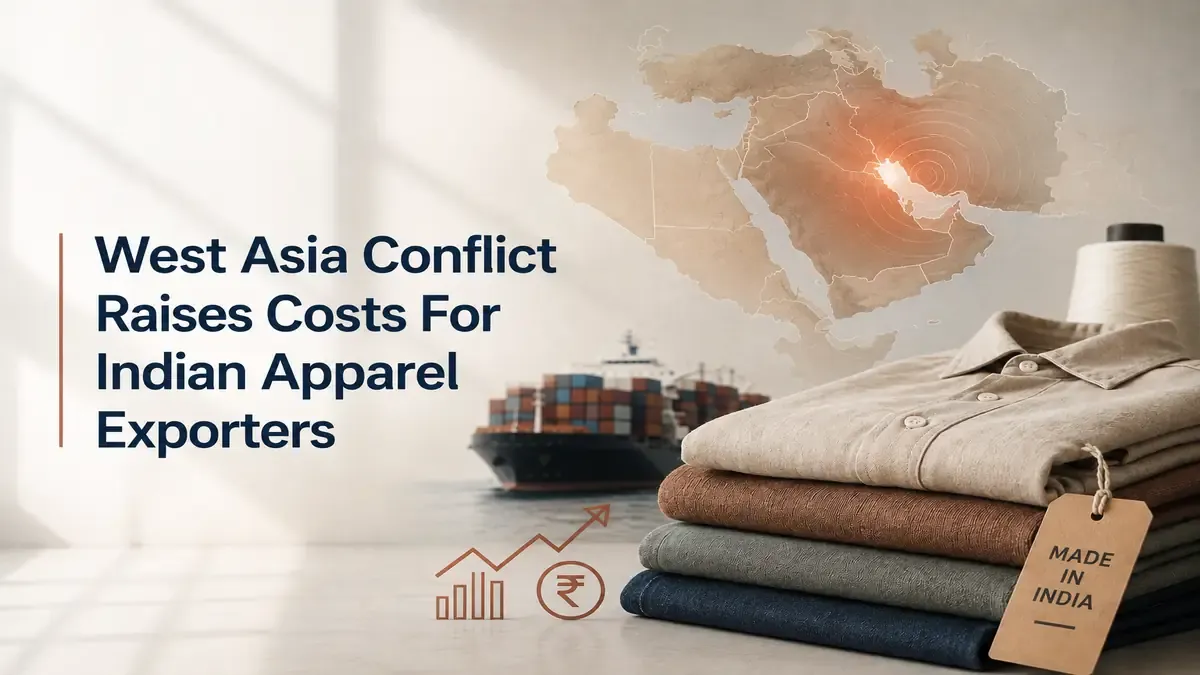
India's apparel exporters face higher costs due to disrupted shipping routes and increased freight charges in West Asia. They pay an extra ₹12-₹55 per garment because of war-related surcharges and longer transit times, which may hurt margins and orders.
India’s apparel exporters are feeling the strain as tensions in West Asia begin to disrupt shipping movement and raise logistics costs.
The Apparel Export Promotion Council (AEPC) has indicated that exporters are now bearing an added cost of ₹12 to ₹55 per garment. The increase comes from a mix of war-related surcharges and longer shipping routes.
Shipping lines have started to apply an emergency war surcharge (EWS) to shipments going to the Gulf countries.
This has pushed freight costs higher by around $1,200 for a 20-foot container. For exporters working on thin margins, this rise is not easy to absorb, especially when pricing commitments have already been made.
West Asia remains an important market for Indian ready-made garments, accounting for nearly 11.8% of total exports. When shipments to this region slow down or become expensive, it directly affects both order flow and delivery schedules.
Why Are Export Costs Going Up?
The immediate reason is the sharp increase in freight charges. Shipping companies are factoring in higher fuel usage, insurance costs and route risks while fixing prices.
The added container cost is now being spread across garments. Estimates suggest the increase works out to about the following:
-
₹12 per shirt,
-
₹18 per trouser,
-
₹37 per women’s dress,
-
₹43 per two-piece suit,
-
₹55 for heavier winter garments.
For large export orders, these small additions quickly add up. In many cases, exporters may not be able to pass on the entire increase to buyers, which puts pressure on already tight margins.
How Are Shipping Routes Changing?
The situation at sea has also become more uncertain. Traffic through key routes like the Strait of Hormuz and the Red Sea has slowed, leading some shipping lines to avoid these areas.
For exporters dealing in seasonal fashion goods, delays can lead to missed timelines and affect future orders.
Also Read - India–US Trade Deal Awaits Tariff Architecture Completion
What Can Investors Expect Next?
The situation might stay uneven in the very near future. If the shipping disruptions last, cost and delivery schedule pressures for exporters might intensify.
Furthermore, if the uncertainty in the West Asia region influences consumer spending, demand from West Asia may slow down, thereby affecting the volume of orders during the following months.
Freight rates, shipping patterns and worldwide events are aspects that investors will most probably monitor in detail.
A calm situation in the area could potentially reduce the pressure on logistics costs. On the other hand, a long-term disruption may continue to adversely affect the margins of exporters.
Sources:
ET
Apparel Resources
This article is for informational purposes only and should not be considered investment advice from Kotak Neo. For compliance T&C and disclaimers, Visit www.kotakneo.com/disclaimer
Right Tools, Rich Insights