Retail Inflation Slows To 2.75%: Understanding The New CPI Series
- By Kotak News Desk
- 13 Feb 2026 at 11:56 AM IST
- Market News
- 4 minutes read
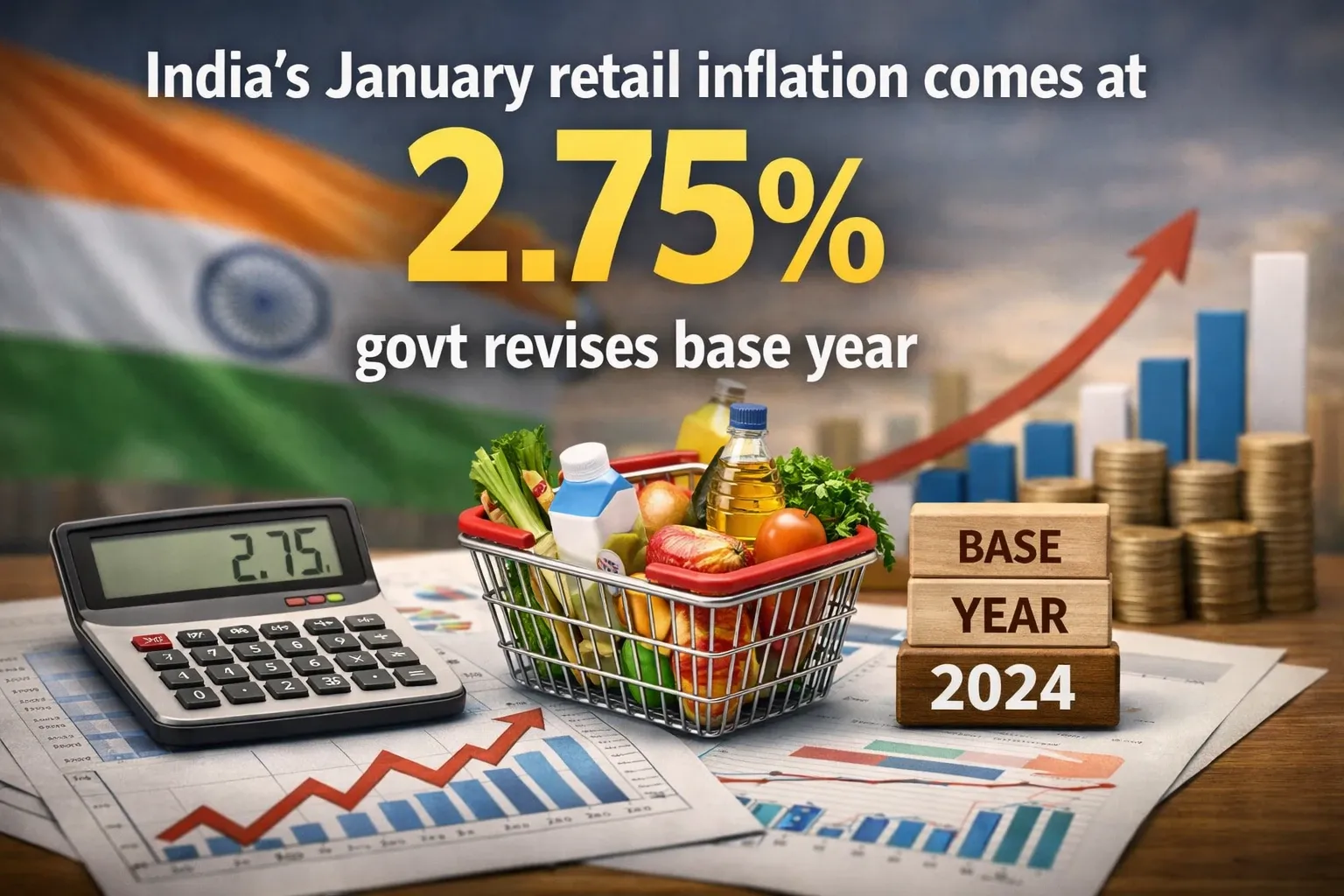
India’s January 2026 retail inflation printed at 2.75% under the new CPI base year 2024, with food inflation at 2.13%, rural 2.73%, urban 2.77%, and the basket expanded to 358 items.
India’s January 2026 retail inflation was reported at 2.75% year-on-year (YoY) on a provisional basis, marking the first official inflation figure released under the new Consumer Price Index (CPI) series while keeping the base year 2024=100. This data reflects extensive revision in the inflation measurement framework. This includes basket composition, weights, and coverage of items: designed to better mirror current consumption patterns and reduce volatility in headline inflation statistics.
With inflation comfortably within the Reserve Bank of India’s (RBI) target band of 2 – 6%, what do these numbers reveal about price pressure trends and the implications for the upcoming policies?
What Are The CPI Inflation Figures For January 2026?
Key CPI metrics (January 2026, base 2024=100):
-
All-India CPI (Combined): 2.75% inflation rate and CPI index level: 104.46
-
Rural CPI inflation: 2.73% | Index level: 104.59
-
Urban CPI inflation: 2.77% | Index level: 104.30
-
Consumer Food Price Index (CFPI): Rural: 1.96%; urban: 2.44%
-
Housing inflation: Rural: 2.39%; urban: 1.92%
Index level trends (Base 2024=100): The CPI (general) index rose from 101.67 in Jan-25 to 104.46 in Jan-26, denoting the price increase foundation for the 2.75% inflation figure.
Breakdowns by sector under the new series have not yet been fully published, but food and housing remain significant components, with food price inflation positive after several months of subdued or negative prints in late 2025.
Why The Government Changed The CPI Base Year?
The government revised the base year of the Consumer Price Index to 2024 from 2012. This indicates the updated household consumption patterns based on the Household Consumption Expenditure Survey (HCES) 2023-24. Major methodological updates include:
Revised CPI framework details:
-
Base year updated to 2024=100 to use current consumption behaviour.
-
Basket expands to 358 weighted items (from 299), mapped to 12 Divisions, 43 Groups, 92 Classes and 162 Sub-classes per international COICOP 2018 standards.
-
Food & beverages weight cut sharply to 36.8% from 45.86% previously.
-
Housing weight increases, with improved measurement of house rent, including for rural areas, for the first time.
-
Expanded coverage includes airfares, telecom plans, OTT subscriptions and e-commerce services, among others.
-
Price collection points expanded to 1,465 rural and 1,395 urban markets, broadening representativeness.
The respective weights of categories under the new series reflect significant shifts away from traditional food dominance to a broader consumption representation, expected to smooth headline volatility and give more weight to housing and service prices.
How Does The New CPI Compare With The Old Series?
Under the older CPI series (2012 base), India’s inflation readings in late 2025 were unusually low, with October at 0.25% and December at 1.33%.
Comparisons between the old and new series are inherently imperfect because of the shift in methodology and weights. However:
-
Food’s share falling from 46% to 37% dampens the outsized impact of volatile food prices on headline inflation.
-
With housing and services gaining weight, measured inflation may prove less sensitive to short-term swings in food prices and more reflective of structural price trends.
-
The RBI’s inflation targeting band (2–6%) remains relevant under the new series, with January’s figure comfortably inside.
Policymakers and analysts anticipate that the updated CPI will provide a sharper tool for inflation assessment by providing core inflation measures (excluding food and fuel) with more analytical prominence as structural components drive trends.
Sources:
PIB
Trading Economics
ET
Kotak Neo News Desk is a team of enthusiastic market observers backed by Kotak’s 30+ years of legacy, working round the clock to bring the latest news about equities, IPOs, corporate developments, commodities, and economic trends from the financial world.
This article is for informational purposes only and does not constitute financial advice. It is not produced by the desk of the Kotak Securities Research Team, nor is it a report published by the Kotak Securities Research Team. The information presented is compiled from several secondary sources available on the internet and may change over time. Investors should conduct their own research and consult with financial professionals before making any investment decisions. Read the full disclaimer here.
Investments in securities market are subject to market risks, read all the related documents carefully before investing. Brokerage will not exceed SEBI prescribed limit. The securities are quoted as an example and not as a recommendation. SEBI Registration No-INZ000200137 Member Id NSE-08081; BSE-673; MSE-1024, MCX-56285, NCDEX-1262.
Kotak News Desk brings you latest updates, expert insights, and market-ready ideas - helping you stay informed and invest smarter.
Connect on: Linkedin
0 people liked this article.