Risk-Reward Ratio in Trading
- 7 min read
- 1,566
- Published 02 Feb 2026
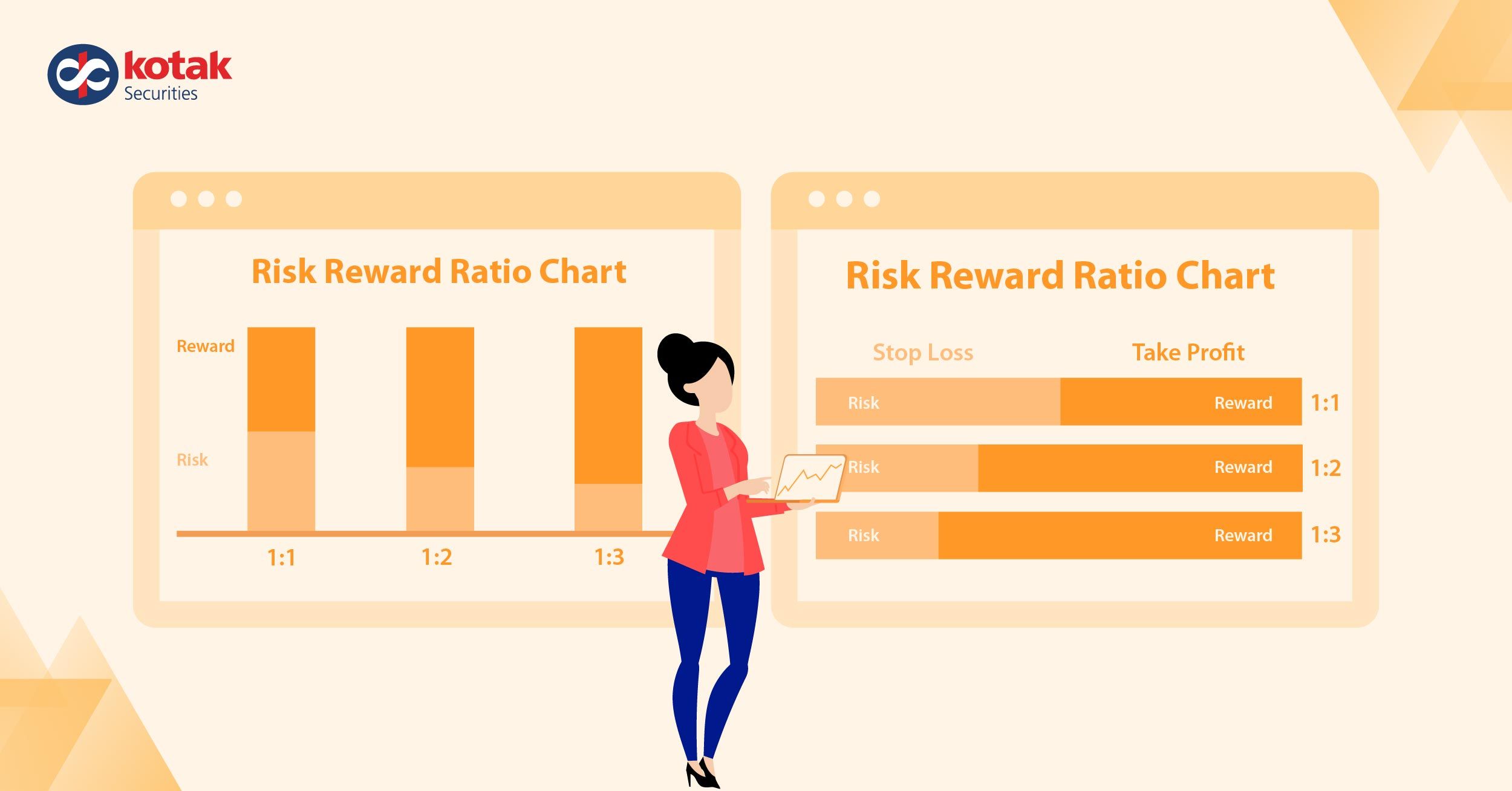
Risk and reward are two key concepts to understand in trading. The risk you are willing to take for a given reward must be identified before you trade. This risk reward ratio is a measure that quantifies exactly this. Read on to learn what is risk reward ratio and how you can apply this in trading.
What is Risk in Financial Markets?
In finance, risk refers to the degree of uncertainty and/or potential financial loss inherent in an investment decision. In general, as investment risks rise, investors seek higher returns to compensate themselves for taking such risks.
For example, when you invest in stocks, bonds or any financial asset you face the risk that your investment value will increase or decrease irrationally, which may result in greater losses than you anticipated.
Financial markets experience ongoing price fluctuations because of multiple factors, which include economic news but also interest rates and government policies and global events and investor sentiment. The existing uncertainty creates a situation where your actual return might differ from your expected return which we define as risk.
What is Reward in Financial Markets?
Reward refers to the potential profit or return an investor expects to earn from an investment. In simple terms, it is the gain you receive for taking a certain level of risk in the market. Higher risks usually offer higher possible rewards, while lower risks tend to give more stable but smaller returns.
Rewards come from price appreciation, interest, dividends, or trading profits. Although rewards are never guaranteed, smart strategies and informed decisions can help investors improve their chances of earning better returns over time.
What is the risk-reward ratio?
The risk-reward ratio is a comparison between the maximum loss on a trade and what can be gained. It is calculated by dividing the potential reward by the potential risk. If a trade's potential gain is Rs. 60 and potential loss is Rs. 20, then the risk-reward ratio is 60/20 = 3. This implies the trade is in a 3:1 risk-reward ratio.
How is Risk Measured?
The most standard method for measuring risk uses a stop-loss. A stop-loss defines the exact point where your trade is exited if the market moves against the direction of your portfolio. The distance between your entry price and stop-loss determines how much you are risking.
The risk assessment process includes market volatility and price movements and the success probability of each element. The financial markets that experience extreme price fluctuations present traders with increased investment danger. The process of assessing risk before trade execution enables traders to make appropriate position size decisions while protecting themselves from avoidable financial losses.
Why the Risk-Reward Ratio Matters?
Risk reward ratio in trading matters as it assists the trader in determining whether to enter a trade. A good risk-reward ratio – with potential profit larger than possible loss – gives a positive mathematical expectation for the trade. Such stacked probability is key to profitable trading in the long run.
Without a study of risk-reward ratios, it is possible for traders to enter trades in which they risk more than they could possibly gain. Through numerous trades, these negative ratios result in capital erosion. Analysis of risk-reward ratios and taking only positive mathematical expectation trades helps preserve capital and facilitates growth.
The risk-reward ratio also makes traders consider in terms of risk management. Through calculation of potential loss compared to gain, traders necessarily set appropriate stop losses and profit levels before going into trades. Logical thinking is most important in disciplined trading. Risk-reward analysis eliminates emotions in trading and makes decision-making more objective.
How To Determine Risk-Reward Ratios?
There are two main methods traders use to determine risk-reward ratios:
1. Set stop loss first
With this method, the trader first sets the maximum amount they are willing to lose on the trade - the stop loss. For example, they might set a stop loss of Rs. 20.
The trader then identifies a profit target - say Rs. 60. By dividing the profit target (Rs. 60) by the stop loss (Rs. 20), the trader calculates the risk-reward ratio as 3:1.
This method has the advantage of forcing traders to determine maximum loss before considering profit potential. It promotes logical risk management.
2. Set profit target first
In this approach, the trader starts by identifying the upside profit target - for example, Rs. 60.
They then set a stop loss that creates a desirable risk-reward ratio relative to that profit target. If seeking a 3:1 ratio, the stop would be Rs. 20 (60/3).
This method allows traders to identify attractive profit potential and then set stop losses accordingly. It can encourage finding trades with ideal risk-reward setups.
In practice, traders may use a blend of both methods. The key is utilising risk-reward analysis, not which comes first. Consistently evaluating risk-reward ratios develops discipline and objectivity.
How Do You Calculate the Risk/Return Ratio?
The risk/return ratio shows the rewards that can be attained compared to how much you are willing to risk. The calculation is straightforward:
Risk/Return Ratio = Potential Profit ÷ Potential Loss
For example, if you risk ₹50 on a trade to make ₹150, the ratio is 3:1. This means the reward is three times the risk. This clarity helps traders compare multiple trade opportunities and choose setups with better potential outcomes.
Why Is the Risk/Return Ratio Important?
The risk/return ratio plays a key role in disciplined trading. The system protects capital because it restricts losses to amounts that stay below potential profit. The strong ratio enables profitable trades to compensate for losses across time even when some trades result in losses.
The process enhances planning for upcoming strategies. Traders who follow consistent risk/return rules avoid emotional decisions, overtrading, and unnecessary exposure. The approach establishes a trading system that functions efficiently through time because it follows a logical path which traders can repeat.
Ideal Risk-Reward Ratios
While any positive risk-reward ratio represents a favourable trade, most traders seek minimum ratios of at least 2:1 before entering trades. This means the potential gain is at least double the potential loss.
Higher reward-risk ratios are generallypreferable. Experienced traders often look for 3:1 or 4:1 setups. These provide positive mathematical expectancy while limiting risk taken to achieve the potential gain.
Extremely high risk-reward ratios are rare and may indicate trades that are too good to be true. For example, a 10:1 ratio likely has unrealistic profit targets given the stop loss. Traders should research setups carefully before trading extraordinarily high ratios.
The ideal risk-reward ratio varies across trading strategies and instruments. Traders should analyse their historical trades and look for the ratios that work best with their approach. They can then fine-tune their trading plans to capture trades that match their ideal ratios.
Can the Risk/Return Ratio of an Investment Change Over Time?
Yes, the risk/return ratio is not fixed. As prices move, volatility changes and trends develop, both risk and reward levels can shift. A trade that initially had a poor ratio may improve as the market moves favourably.
Traders often adjust stop-losses or targets to improve the ratio during a trade. Understanding this dynamic nature helps traders manage positions better and respond calmly to changing market conditions.
Applying risk-reward ratios in trading
- Assess the risk-reward ratio before entering each trade. Only take trades that meet minimum ratio thresholds.
- Use risk-reward ratios to size positions. For trades with higher ratios, allocate more capital to maximise gains.
- Identify price levels that create favourable ratios. For example, buying near support may provide better ratios than at mid-range prices.
- Adjust stop losses and profit targets to achieve ideal ratios if a trade moves favourably. This locks in better risk-reward scenarios.
- Compare ratios across different trading opportunities to identify the best trades. Higher reward-risk trades have an advantage.
Consistently applying risk-reward analysis in these ways develops discipline and objectivity. Traders with a framework for evaluating each trade's risk versus reward trade more deliberately, boosting confidence.
Conclusion
As a trader, it is crucial for you to establish minimum risk-reward ratio rules that fit your trading style. Strive to maximise reward while minimising risk on each trade. When you master utilising the risk-reward relationship in your trading, your profits could accelerate. So be sure to understand this crucial ratio and make it a central part of your trading process.
FAQs
The risk-reward ratio does not restrict the maximum possible reward on a trade. The ratio only defines the potential gain versus potential loss at the outset. Traders can still let profits run to maximise returns beyond initial profit targets.
Analysing risk-reward ratios reduces risk by forcing traders to predefine maximum losses with stop losses before entering trades. This promotes logical risk management.
The best way to determine ideal risk-reward ratios is by analysing historical trades to identify the ratios that have worked well for your trading strategy and personal risk tolerance.
This article is for informational purposes only and does not constitute financial advice. It is not produced by the desk of the Kotak Neo Research Team, nor is it a report published by the Kotak Neo Research Team. The information presented is compiled from several secondary sources available on the internet and may change over time. Investors should conduct their own research and consult with financial professionals before making any investment decisions. Read the full disclaimer here.
Investments in securities market are subject to market risks, read all the related documents carefully before investing. Brokerage will not exceed SEBI prescribed limit. The securities are quoted as an example and not as a recommendation. SEBI Registration No-INZ000200137 Member Id NSE-08081; BSE-673; MSE-1024, MCX-56285, NCDEX-1262.
0 people liked this article.