Add Preferred News Source

1,014 Views| 29 Oct 2026
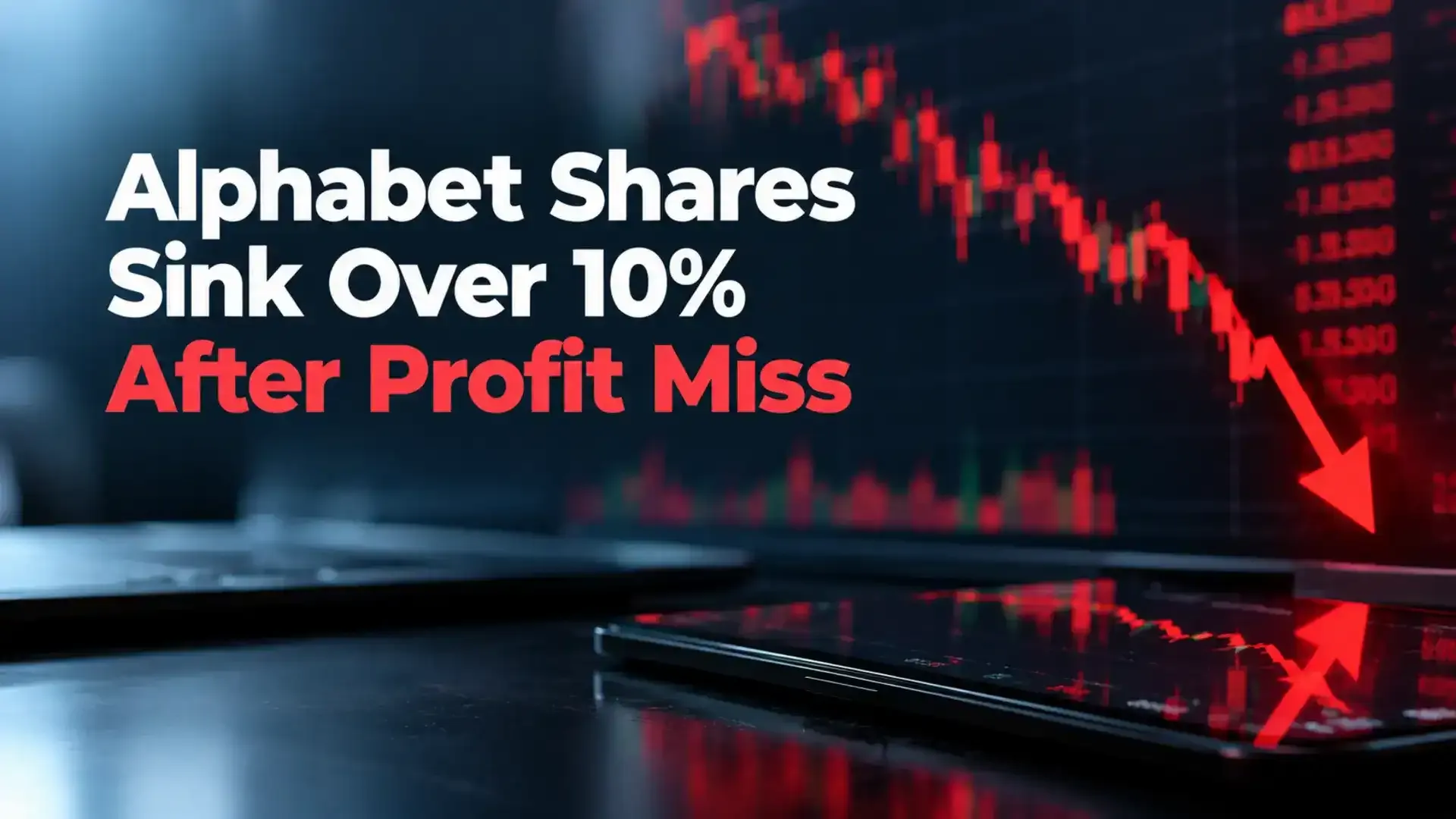
Alphabet Shares Sink More Than 10% After Profit Miss, Slower Google Ad Growth And Heavy AI Spending Worry Investors
Summary
Alphabet shares fell more than 10% in after-hours trading after quarterly profit missed estimates and advertising growth slowed. Google Cloud revenue surged 103%, while heavy AI spending remains a concern.
Shares of Alphabet, the parent company of Google, fell more than 10% in after-hours trading on Wednesday after its September-quarter profit came in below expectations. Slower growth in advertising revenue and continued heavy spending on artificial intelligence (AI) also weighed on the Alphabet share price.
Alphabet reported a 25% year-on-year decline in net profit to $26.2 billion for the July-September quarter. Earnings stood at $2.12 per share, below estimates compiled by FactSet.
The company also recorded an $8.7 billion loss on equity investments, which it attributed to its stake in SpaceX. The Elon Musk-led company has seen its shares struggle since going public in June.
Revenue grew 25% from a year earlier to $127.6 billion. However, that was slightly below analysts’ estimate of around $128 billion.
Google Search And YouTube Ad Growth Slows
Alphabet’s advertising business continued to expand, but growth was slower than investors had expected. Advertising revenue rose 11% to $82 billion during the quarter.
Google Search, Alphabet’s biggest source of revenue, brought in $63.4 billion, up 12% year on year. The growth rate had stood at 17% in the previous quarter.
YouTube also reported slower advertising growth. Revenue from ads on the video platform increased 9% to $11.2 billion, compared with 13% growth in the preceding quarter. Separately, YouTube Music and Premium crossed 150 million subscribers worldwide, including trial users.
The numbers put the spotlight on Alphabet’s core advertising business at a time when the company is spending heavily to expand its AI capabilities.
Google Cloud Delivers Strong Growth
Google Cloud was a bright spot in the results. Revenue from the business, which provides computing infrastructure and AI tools to companies, jumped 103% to $30.7 billion, beating analyst estimates.
Alphabet said demand for its in-house tensor processing units (TPUs), the chips it uses for AI workloads, contributed significantly to the growth. Operating income at Google Cloud more than tripled to $11.1 billion.
The company is also supplying TPUs to outside customers, putting it in more direct competition with Nvidia. OpenAI has reportedly considered buying some of these chips.
Alphabet’s Other Bets division, which includes autonomous ride-hailing business Waymo, reported revenue of $372 million and an operating loss of $2 billion. Waymo now provides more than 500,000 paid rides each week across 15 US metropolitan areas. It is targeting one million weekly rides by the end of the year.
Alphabet Keeps AI Spending Plans Intact
The scale of Alphabet’s investment programme remains a concern for investors. Capital expenditure reached $51.4 billion in the September quarter, more than double the $24 billion spent in the same period last year. Most of the spending went towards data centres and AI chips.
Alphabet expects capital expenditure of $195 billion to $205 billion in 2026. It also indicated that spending would rise significantly again in 2027.
The results leave investors weighing the strong performance of Google Cloud against slower advertising growth, a lower-than-expected profit and the cost of building out AI infrastructure. For now, Alphabet’s expanding AI business has not removed concerns about how much it will cost to sustain that growth.
Also Read - Shapoorji Pallonji Group Seeks Up To $200 Million To Repay Debt As Tata Sons Stake Remains Key Asset
This article is for informational purposes only and should not be considered investment advice from Kotak Neo. For compliance T&C and disclaimers, Visit www.kotakneo.com/disclaimer
About the Author

Vishwa Ved
Vishwa has spent 10+ years across fintech and FMCG doing what most people miss, connecting the dots, catching trends before they trend, and finding the angle nobody else thought to ask about.
At Kotak Neo, she drives content strategy for neoshorts, Kotak News Desk, and Investing Guide, turning market noise into something worth reading.
When she's not decoding markets, she trades charts for canvases, chasing art, painting, and architecture across cities she's yet to explore.
Right Tools, Rich Insights

Latest News
- 1,059 Views| 29 Oct 2026
- Shapoorji Pallonji Group Seeks Up To $200 Million To Repay Debt As Tata Sons Stake Remains Key Asset
 1,002 Views| 29 Oct 2026
- 1,024 Views| 29 Oct 2026
- 1,042 Views| 29 Oct 2026
- 1,001 Views| 28 Oct 2026
- 1,092 Views| 28 Oct 2026
- 1,034 Views| 28 Oct 2026
- 1,070 Views| 28 Oct 2026
- 1,086 Views| 28 Oct 2026