SEBI Introduces Stricter Disclosure Norms For Mutual Fund Sponsors
 Add Preferred News Source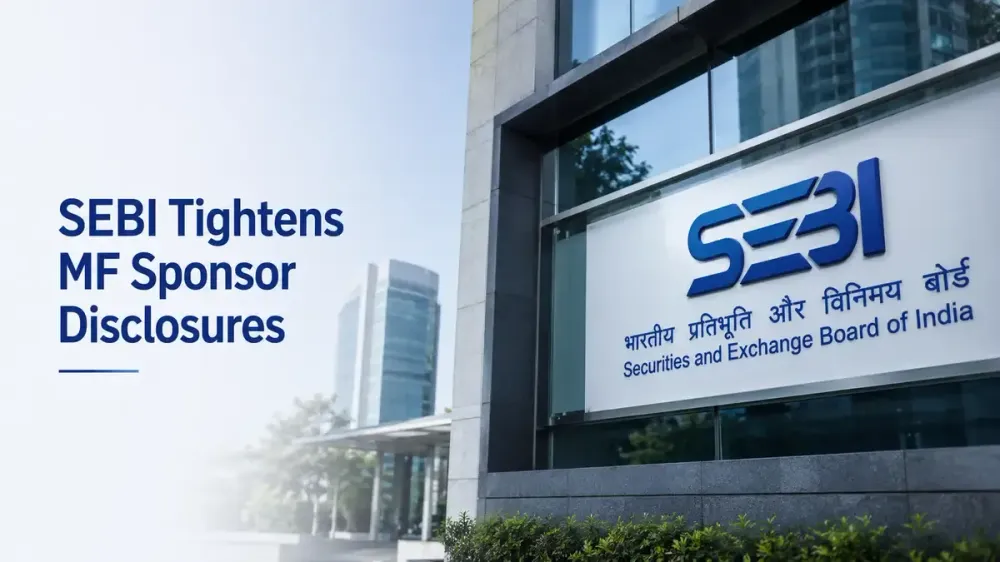
SEBI has introduced a single application form for mutual fund registration while keeping the existing two-stage approval process. Sponsors will now have to provide more details on ownership, finances, regulatory history and governance. Read more.
The Securities and Exchange Board of India (SEBI) has tightened the disclosure requirements for sponsors looking to set up mutual funds. The regulator has combined the existing mutual fund registration forms into a single application. Also, it has asked sponsors to provide more details about their business and financial position.
The revised application form follows changes to the SEBI (Mutual Funds) Regulations, 2026, and the SEBI Intermediaries Regulations.
For potential mutual fund sponsors, the key change is the amount of information they will now have to provide as part of the registration process.
Changes Made By SEBI
Sponsors will now have to disclose their shareholding pattern. They also need to identify their ultimate beneficial owners. They will also need to provide details of their capital structure.
The application will ask sponsors to state the amount they plan to contribute to the asset management company (AMC). This will have to be reported both in rupee terms and as a percentage of the AMC's shareholding.
SEBI will also seek details of the sponsor's regulatory history and governance practices.
The financial disclosures are also extensive. Sponsors will have to submit their latest auditor-certified net worth certificate, along with audited balance sheets and profit-and-loss accounts for the previous five financial years.
This means prospective sponsors will need to provide a broader financial and ownership picture while applying for approval.
Mutual Fund Registration Will Still Have Two Stages
SEBI has merged the existing registration forms into one application form. However, it has retained the two-stage approval process.
Under the existing system, a sponsor first seeks in-principle approval to set up a mutual fund. Once this stage is cleared, the mutual fund applies for final registration.
The revised format brings the information required at these stages into a single application. The two-step approval process itself remains unchanged.
So, while the paperwork has been consolidated, sponsors will still need to go through both stages before the mutual fund can receive final registration.
What Are The Eligibility Requirements For Sponsors?
The revised framework also sets out the financial and business track record that sponsors must demonstrate.
Under one route, a sponsor must have at least five years of experience in financial services. It must also have a positive net worth in each of the previous five years.
The sponsor must have been profitable from its financial services business during this period. Its average annual net profit from financial services must also be at least ₹10 crore over the preceding five years.
There is another route available to sponsors.
Under this option, the AMC must have a net worth of at least ₹150 crore at the time of registration. The sponsor will have to infuse this amount into the AMC.
The revised application format therefore brings ownership, financial strength, regulatory history and governance information into one place, while keeping the existing two-stage approval structure for new mutual funds.
Also Read - Hydraulic Fittings Maker Hy-Tech Engineers Fixes ₹50-53 Price Band For IPO
This article is for informational purposes only and should not be considered investment advice from Kotak Neo. For compliance T&C and disclaimers, Visit www.kotakneo.com/disclaimer
Vishwa has spent 10+ years across fintech and FMCG doing what most people miss, connecting the dots, catching trends before they trend, and finding the angle nobody else thought to ask about.
At Kotak Neo, she drives content strategy for neoshorts, Kotak News Desk, and Investing Guide, turning market noise into something worth reading.
When she's not decoding markets, she trades charts for canvases, chasing art, painting, and architecture across cities she's yet to explore.
Right Tools, Rich Insights