 Add Preferred News Source

4 min read• 1,011 Views
RBI Rate Hike Effect on Stock Market: Metal, Realty Shares Fall After Governor Signals Further Tightening
Summary
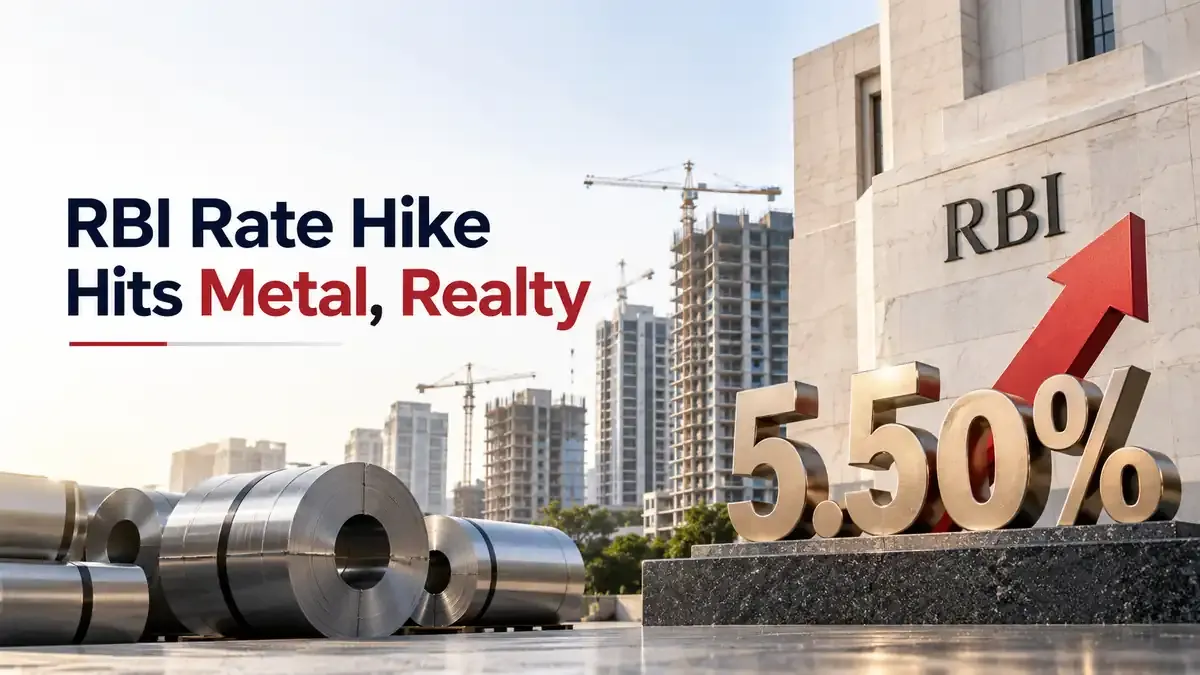
The RBI pushed the repo rate up to 5.50% and moved towards a tighter approach. Metal and realty stocks fell as investors looked at what higher borrowing costs could mean for demand. The possibility of more rate hikes added to the concern.
The Reserve Bank of India (RBI) raised its benchmark repo rate by 25 basis points to 5.50% on Wednesday, marking its first increase in nearly four years. The move was backed unanimously by the six-member Monetary Policy Committee.
The rate decision was mostly expected by the market. The bigger talking point was RBI Governor Sanjay Malhotra's shift towards "calibrated tightening". In simple terms, it suggests that rates are unlikely to be cut anytime soon.
Higher interest rates can increase borrowing costs for businesses and consumers. This can weigh on sectors that depend heavily on financing, including real estate, while also raising funding costs for metal companies and potentially slowing economic activity.
Metal, Realty Shares Under Pressure
The Nifty Metal index was the worst-performing sectoral index, falling 2.3% and ending a two-session winning streak.
-
NALCO was down more than 4%
-
Adani Enterprises was down 3.76%
-
Hindalco Industries fell by over 3%
-
JSW Steel fell by 2.35%
All constituents of the Nifty Metal index traded lower. The Nifty Realty index declined as much as 1.77%, with Brigade Enterprises and Prestige Estates Projects among the leading losers.
Housing Demand Faces Fresh Rate Pressure
The RBI's decision could affect housing affordability as home-loan costs rise. The impact may be more pronounced for first-time buyers and households dependent on financing.
Industry participants said festive demand could remain relatively stable, but buyers may take longer to arrange financing. Higher borrowing costs could also influence project planning, construction expenses and developer cash flows.
RBI Inflation Outlook Also Turns Cautious
The central bank marginally raised its retail inflation forecast for the current financial year to 5.2%, from 5% previously, citing increasing signs of price pressure.
The policy outlook now leaves markets weighing the possibility of another hike or a pause, depending on incoming economic data and inflation trends. For interest-rate-sensitive stocks, that shift has added another layer of uncertainty.
Also Read - 10 BSE 500 Stocks Tumble Up To 44% In A Month: PB Fintech, IFCI Among Top Losers As 83 Stocks Fall Over 10%
This article is for informational purposes only and should not be considered investment advice from Kotak Neo. For compliance T&C and disclaimers, Visit www.kotakneo.com/disclaimer
About the Author

Vishwa Ved
Vishwa has spent 10+ years across fintech and FMCG doing what most people miss, connecting the dots, catching trends before they trend, and finding the angle nobody else thought to ask about.
At Kotak Neo, she drives content strategy for neoshorts, Kotak News Desk, and Investing Guide, turning market noise into something worth reading.
When she's not decoding markets, she trades charts for canvases, chasing art, painting, and architecture across cities she's yet to explore.
Right Tools, Rich Insights

Latest News
- 4 min read• 1,025 Views
- 2.5 Min. Read• 1,062 Views
- 3 Min. Read• 1,032 Views
- 2.5 Min. Read• 1,042 Views
- 3 Min. Read• 1,023 Views
- 2.5 Min. Read• 1,036 Views
- 2 Min. Read• 1,027 Views
- 2.5 Min. Read• 1,032 Views
- 3 Min. Read• 1,016 Views