RBI MPC Meeting October 2026: What A Rate Hike Or Pause Could Mean For Nifty, Sensex And Rate Sensitive Stocks
 Add Preferred News Source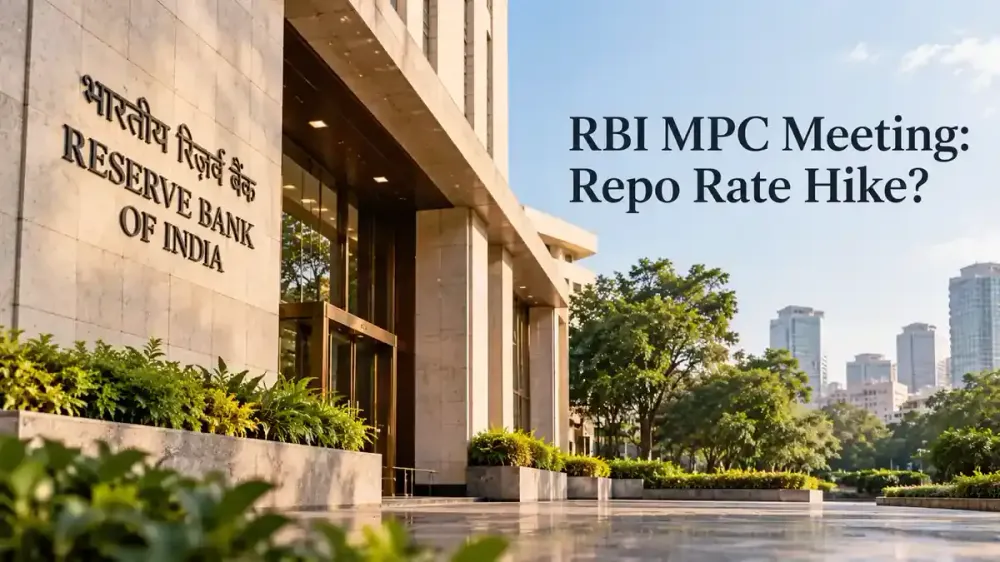
RBI will announce its rate decision on 7 October as markets weigh crude oil, inflation and global yields. Read what the outcome could mean for stocks.
The Reserve Bank of India’s (RBI’s) six-member Monetary Policy Committee (MPC) began its three-day meeting on 5 October, with the policy review scheduled to conclude on 7 October 2026. The RBI’s interest rate decision could influence liquidity, borrowing costs and market sentiment.
Indian equities are heading into the policy review after another weak week. The Sensex fell 1,986.04 points, or 2.68%, last week, while the Nifty declined 718.55 points, or 3.10%. Both indices have now ended lower for eight consecutive weeks. September was also a weak month, with the Sensex falling 4,476.98 points, or 5.81%, and the Nifty declining 1,459.95 points, or 6%.
There are three broad possibilities being discussed in the market. The RBI could raise rates by 25 basis points (bps), leave them unchanged, or deliver a larger hike.
What Could Happen If Rates Change?
A 25 basis point (bps) hike is already on the radar, so the RBI taking that route may not lead to a sharp market reaction. Much of the expectation has already worked its way into stock prices.
A pause, however, may be received differently. With some investors already expecting a rate cut, keeping rates unchanged could improve sentiment and bring buyers back into interest-rate-sensitive stocks.
Banking and financial services companies could be among the sectors in focus. Real estate, auto, capital goods, infrastructure and consumer durables may also see increased activity if the RBI does not raise borrowing costs.
A bigger hike could be a different story. Raising rates by more than 25 bps may make borrowing more expensive and add to concerns about economic growth. Shares of banks, financial companies, property firms and other rate-sensitive businesses could come under pressure, with the weakness potentially spreading to the Nifty 50, Sensex and Bank Nifty.
Why Are Crude Prices Being Watched?
Oil prices are another major concern ahead of the RBI MPC meeting outcome. India imports around 85% of its crude oil needs, so a prolonged rise in global prices could feed into domestic inflation and put pressure on the country’s external balances.
Investors will also keep an eye on global bond yields and foreign fund flows. A rise in US Treasury yields can make emerging-market assets less attractive, while softer yields could provide some relief.
On the domestic front, India’s final HSBC Services PMI and Composite PMI readings for September are due on 6 October. The earnings season is also set to begin, with TCS scheduled to announce its September quarter results on 8 October.
For the market, the RBI decision remains the biggest domestic trigger this week. The policy stance and its comments on inflation and growth may matter just as much as the rate decision itself.
Also Read - Adani Power Shares Gain 2.08% After Bhutan Pact For 770 MW Hydropower Project
This article is for informational purposes only and should not be considered investment advice from Kotak Neo. For compliance T&C and disclaimers, Visit www.kotakneo.com/disclaimer

Vishwa has spent 10+ years across fintech and FMCG doing what most people miss, connecting the dots, catching trends before they trend, and finding the angle nobody else thought to ask about.
At Kotak Neo, she drives content strategy for neoshorts, Kotak News Desk, and Investing Guide, turning market noise into something worth reading.
When she's not decoding markets, she trades charts for canvases, chasing art, painting, and architecture across cities she's yet to explore.
Right Tools, Rich Insights