Add Preferred News Source
1,006 Views| 24 Oct 2026
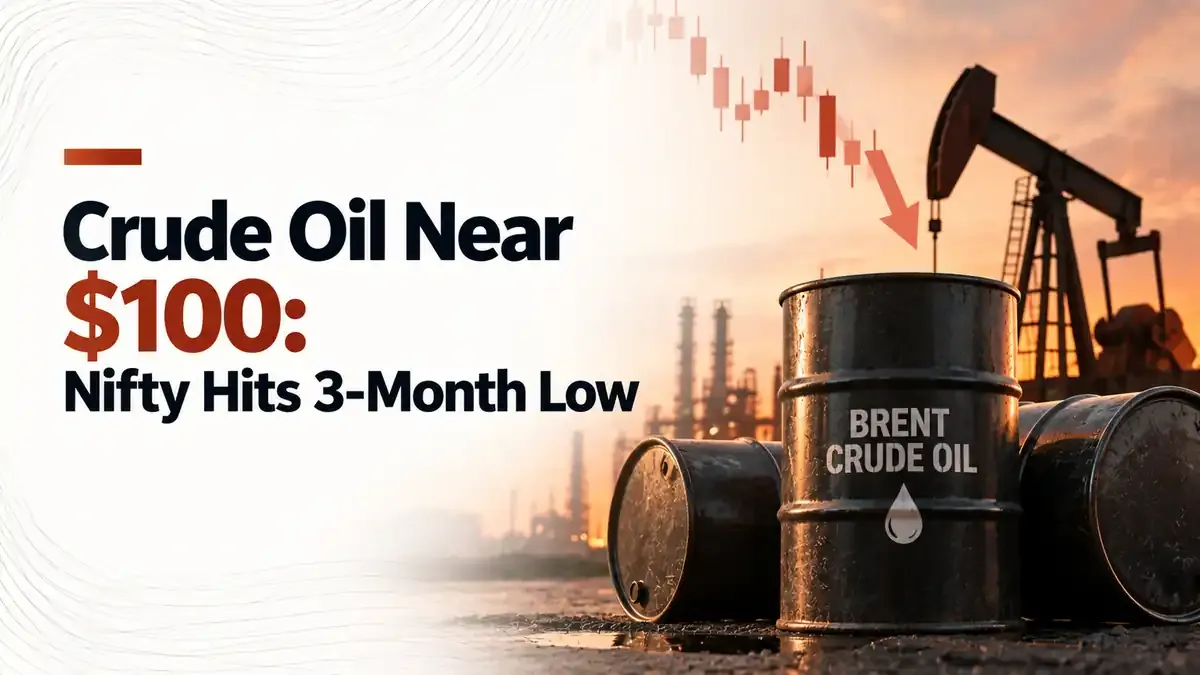
Crude Oil Near $100: Nifty Falls to 3-Month Low; What Happened the Last Time Oil Hit This Level?
Summary
Brent has returned to levels last seen in July, when the Nifty also came under pressure. The latest oil rally is raising concerns over the impact of higher import costs, inflation and margins on Indian companies.
Brent crude has returned to the $100-a-barrel mark, just as the Nifty has slipped to a three-month low near 23,550, bringing back concerns over how a sustained rise in oil prices could affect Indian equities. The current market move bears a close resemblance to what happened in July, when Brent was around $100 and the Nifty touched an intraday low of 23,606 on July 24.
The latest decline has come after a sharper rise in crude over the past few weeks. From August 5 to September 9, Brent has climbed from around $78 to $100 a barrel, while the Nifty has fallen from nearly 24,500 to around 23,550. That is a decline of about 4% for the index over 25 sessions, compared with a nearly 2% fall between July 13 and July 24, when Brent jumped from around $77 to $100.
What happened to the Nifty when crude hit $100 in July?
The July episode offers a useful comparison. Brent rose nearly 30% in nine sessions between July 13 and July 24, moving from around $77 to $100 a barrel. During the same period, the Nifty dropped from around 24,000 to an intraday low of 23,606.
The latest move has lasted considerably longer. While the Nifty’s decline cannot be attributed to crude alone, the two have moved in opposite directions as oil prices have climbed. Foreign fund flows, global risk appetite, valuations, earnings expectations and geopolitical tensions have also influenced equities during this period.
What matters for the market now is whether crude remains around $100 or moves materially higher. A prolonged rise would increase the pressure on India’s import bill and the rupee and could also add to inflation concerns, while companies with high fuel or raw material costs could see their margins come under pressure.
What happens if Brent moves above $100?
There is a more recent example of what a much larger oil move can do to equities. Between February 27 and March 9, Brent crude surged from around $73 to $119 a barrel. Over the same period, the Nifty fell from 25,179 to 24,030.
The comparison does not suggest that the current market will follow the same path, but it highlights why the $100 level matters. If crude were to rise significantly beyond this level and stay there, the impact would extend beyond energy companies, with higher fuel costs, inflation expectations and pressure on the rupee potentially affecting a wider range of sectors.
Which stocks are most exposed to higher crude prices?
The divergence is already visible across oil-sensitive stocks. Since August 5, Oil India has gained around 12%, while ONGC is down about 1%. Oil marketing companies have performed much worse, with HPCL falling 11%, BPCL 7% and IOC 6% as higher crude prices raise concerns over marketing margins.
The pressure has also spread to other fuel-sensitive sectors. Tata Motors PV has declined 13% since August 5, Maruti is down 11%, Asian Paints has fallen 10% and IndiGo has slipped 8%. For airlines, fuel is a major operating cost, while automakers and paint companies can face pressure from higher input costs and weaker consumer sentiment if expensive crude persists.
For the Nifty, therefore, the next move in crude could be more important than the fact that Brent has touched $100. A brief spike may have a limited impact, but a sustained move higher would make oil a much bigger headwind for Indian equities.
Also Read - HDFC Bank And HDFC Life Down ~30% In 2026, Hit Fresh 52-Week Lows
This article is for informational purposes only and should not be considered investment advice from Kotak Neo. For compliance T&C and disclaimers, Visit www.kotakneo.com/disclaimer
About the Author

Rochelle Britto
Rochelle Britto has spent 8+ years decoding India's markets, businesses, and consumer economy, reporting for ET Prime and Times Internet along the way, covering the stories behind the numbers.
A Mumbai native and perpetual planner of the next holiday, she stays far, far away from the eternal question, “Where are we going next?” When she's not chasing headlines, she's chasing new cultures, open roads, and a bit of quiet in nature.
Right Tools, Rich Insights

Latest News
- 1,020 Views| 24 Oct 2026
- 1,008 Views| 24 Oct 2026
- 1,097 Views| 24 Oct 2026
- 1,081 Views| 24 Oct 2026
- 1,093 Views| 23 Oct 2026
- 1,078 Views| 23 Oct 2026
- 1,089 Views| 23 Oct 2026
- 1,040 Views| 23 Oct 2026
- 1,066 Views| 23 Oct 2026