BOJ Rate Hike To 1.25%: What Japan’s Rate Decision Means For Indian Markets
 Add Preferred News Source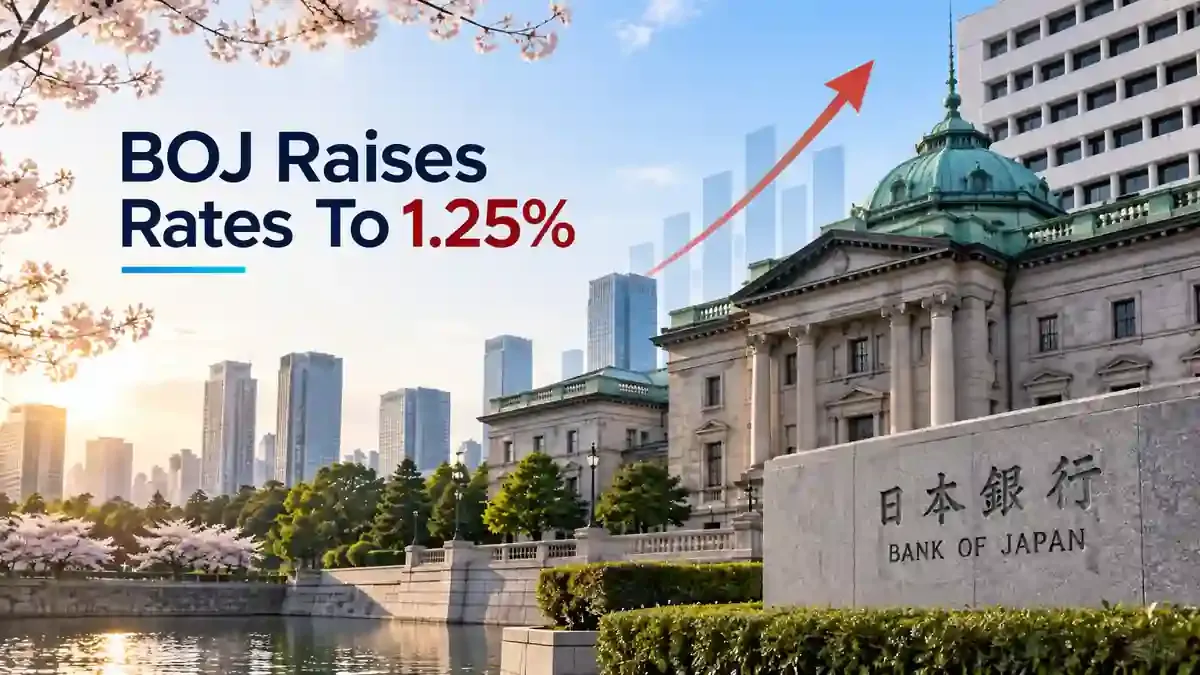
Bank of Japan raised rates to 1.25%, putting the yen, US Treasury yields and global fund flows in focus as Indian markets assess potential FII movement. Read more.
The Bank of Japan (BOJ) raised its policy rate to a 31-year high of 1.25% on Friday, taking another step towards tighter monetary policy as inflation risks remain above the central bank’s comfort level.
The BOJ raised the rate from 1% at its two-day policy meeting. The decision passed with a 7-2 vote. Board members Toichiro Asada and Ayano Sato voted against the hike. This is the first month in which the BOJ, US Federal Reserve and European Central Bank have all raised borrowing costs.
Yen Weakens After BOJ Decision
The yen weakened shortly after the announcement despite the rate increase. The currency fell 0.5% to 156.75 against the US dollar in immediate trading. It remains stronger than its level in July, when coordinated US-Japan intervention helped lift it from a roughly 40-year low of 163.99 recorded on 23 July.
The BOJ also maintained its guidance that it would continue raising rates if its economic and price outlook is realised. At 1.25%, the policy rate has moved into the lower end of the bank’s estimated neutral-rate range.
Likely Impact On Indian Markets
The BOJ rate decision is relevant for Indian markets mainly through global bond yields, the US dollar and foreign investor flows. Japan has been a major source of relatively cheap funding for global investors for years. Higher Japanese rates can change the return gap between Japanese assets and overseas markets.
As per experts, the BOJ move could put pressure on US Treasury yields and the US dollar. They anticipate foreign institutional investors (FIIs) to gradually move money towards Japan as Japanese rates rise.
For Indian equities, such a shift could become relevant if higher Japanese borrowing costs lead to changes in global investment flows. FIIs are closely watched by the domestic market because changes in overseas allocations can affect equity liquidity and the rupee. The impact on emerging markets, including India, could be positive in the short term because of pressure on US bonds and the US dollar.
Also Read - Veegaland Developers IPO Listing: Shares List At A Premium Of 10% On NSE
This article is for informational purposes only and should not be considered investment advice from Kotak Neo. For compliance T&C and disclaimers, Visit www.kotakneo.com/disclaimer

Vishwa has spent 10+ years across fintech and FMCG doing what most people miss, connecting the dots, catching trends before they trend, and finding the angle nobody else thought to ask about.
At Kotak Neo, she drives content strategy for neoshorts, Kotak News Desk, and Investing Guide, turning market noise into something worth reading.
When she's not decoding markets, she trades charts for canvases, chasing art, painting, and architecture across cities she's yet to explore.
Right Tools, Rich Insights