Add Preferred News Source

1,067 Views| 25 Oct 2026
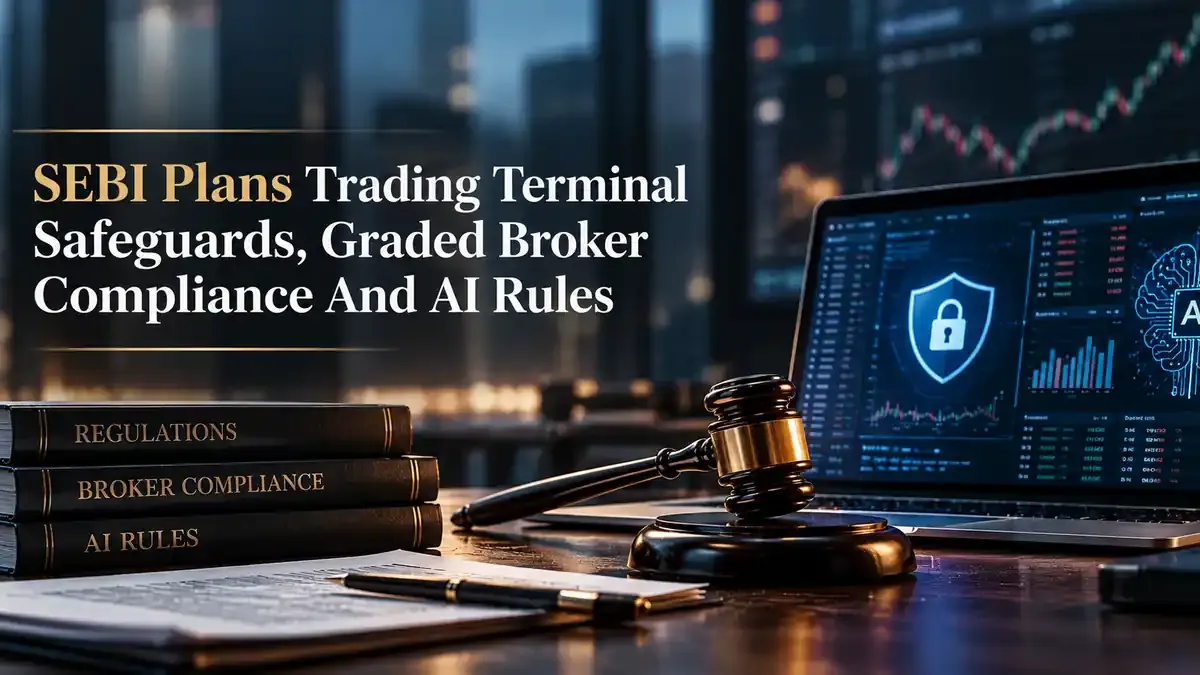
SEBI Plans Trading Terminal Safeguards, Graded Broker Compliance And AI Rules To Strengthen India's Securities Markets
Summary
SEBI plans tighter controls on trading terminals to prevent misuse. It is also considering broker-specific compliance rules, AI safeguards and reforms to improve liquidity in India's corporate bond market.
The Securities and Exchange Board of India (SEBI) is preparing safeguards to prevent the misuse of trading terminals operated by stockbrokers. Chairman Tuhin Kanta Pandey announced the proposed measures on 24 October 2026. The regulator is also considering a graded compliance framework that would account for brokers’ business size, client exposure and dependence on technology.
The move follows concerns that some brokers may have allowed individual traders to use their proprietary trading accounts through arrangements involving fees or profit-sharing. Such practices could potentially bypass prescribed requirements relating to margins and disclosures.
One measure under consideration is to link trading terminals to their Media Access Control (MAC) addresses and static Internet Protocol (IP) addresses. This will help in identifying the location from which trades are placed and establish who is operating the terminals.
SEBI Plans Tailored Compliance Requirements For Stock Brokers
SEBI wants brokers to follow compliance rules that reflect the size and risk of their businesses. This approach could strengthen supervision without placing the same compliance burden on every broker. The regulator is also working to consolidate its inspection portals into a single digital workflow. This could streamline supervisory processes and make regulatory interactions more efficient.
In another operational change, SEBI plans to extend the automated give-up and take-up facility in the cash market to custodial clients. This will also include portfolio management services (PMS) and alternative investment funds (AIFs). The facility is intended to improve capital efficiency by reducing the need for brokers to block funds while awaiting confirmation from custodians.
SEBI is also reviewing short-selling rules and securities lending and borrowing (SLB) arrangements. The objective is to improve market liquidity and price discovery.
AI Safeguards And Corporate Bond Market Reforms
SEBI is finalising guidelines for the responsible use of artificial intelligence (AI) in the securities market. The proposed framework is expected to include clear accountability, data controls, emergency shutdown mechanisms and human oversight. It will follow a tiered approach aligned with guidance from the International Organisation of Securities Commissions (IOSCO).
The regulator is also exploring an AI sandbox. This would allow new tools to be tested in a controlled environment while giving developers greater clarity about regulatory expectations.
Separately, SEBI is developing a market-making framework to encourage secondary-market trading in corporate bonds. It is also planning to enable tokenised corporate bonds to trade in the secondary market as part of the next phase of Demat 2.0.
These initiatives form part of a broader effort to strengthen market infrastructure, encourage responsible technological innovation and improve access to India's securities markets.
Also Read - AI-Driven Software Vulnerabilities Raise Cybersecurity Risks For Indian Listed Companies, Data And Costs
This article is for informational purposes only and should not be considered investment advice from Kotak Neo. For compliance T&C and disclaimers, Visit www.kotakneo.com/disclaimer
About the Author
Vishwa Ved
Vishwa has spent 10+ years across fintech and FMCG doing what most people miss, connecting the dots, catching trends before they trend, and finding the angle nobody else thought to ask about.
At Kotak Neo, she drives content strategy for neoshorts, Kotak News Desk, and Investing Guide, turning market noise into something worth reading.
When she's not decoding markets, she trades charts for canvases, chasing art, painting, and architecture across cities she's yet to explore.
Right Tools, Rich Insights

Latest News
- 1,053 Views| 25 Oct 2026
- 1,015 Views| 25 Oct 2026
- 1,097 Views| 25 Oct 2026
- 1,012 Views| 24 Oct 2026
- 1,012 Views| 24 Oct 2026
- 1,013 Views| 24 Oct 2026
- 1,032 Views| 24 Oct 2026
- 1,099 Views| 24 Oct 2026
- 1,088 Views| 23 Oct 2026