AI Boom Fuels SK Hynix And Micron As Memory Chip Demand Surges
 Add Preferred News Source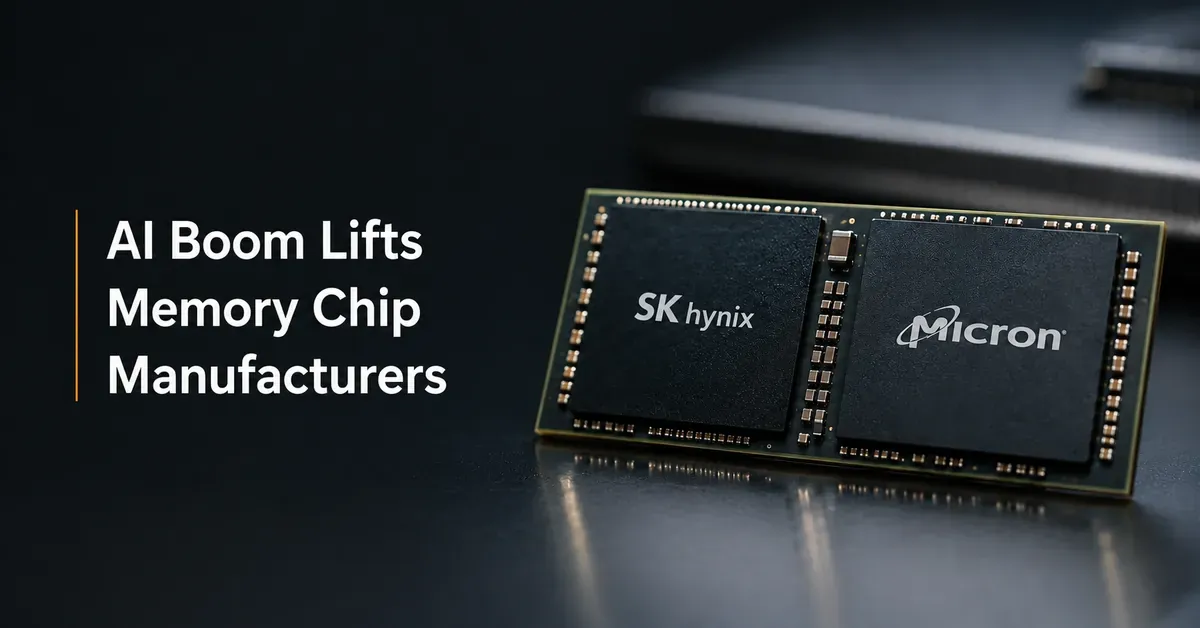
SK Hynix and Micron are benefiting from booming AI memory demand, strong earnings and supply shortages. Discover how the industry transformed and what it means for investors. Read more.
The artificial intelligence (AI) boom is reshaping the semiconductor industry, with memory chip makers emerging as some of its biggest winners. This week, SK Hynix unveiled plans for a US stock listing worth around 45.45 trillion won ($29.4 billion), while Micron Technology forecast quarterly sales and profits that comfortably beat Wall Street estimates.
The twin announcements reinforced investor confidence that spending on AI infrastructure remains strong and that advanced memory chips have become a critical part of the global AI supply chain.
Micron's upbeat guidance sent its shares sharply higher, easing concerns that AI-related spending was beginning to cool. The optimism spread quickly across Asia, where SK Hynix, Samsung Electronics and Kioxia Holdings extended their gains. Micron shares have climbed 267% this year, while SK Hynix has nearly quadrupled, making both companies among the strongest performers in the global semiconductor sector.
Why Are Memory Chip Makers Leading The AI Rally?
Conventional memory chips just can’t keep up with the massive data demands of generative AI. That is why the industry is shifting toward high-bandwidth memory (HBM). These chips are designed to sit close to AI processors, helping move data faster and reducing bottlenecks. As the generative AI boom accelerates, this specialised hardware has quietly shifted from a niche engineering solution to one of the tech industry’s most critical, high-stakes commodities.
SK Hynix recognised that opportunity early and invested heavily in HBM technology when rivals remained focused on traditional memory products. The strategy has paid off. Industry estimates suggest SK Hynix controlled around 62% of global HBM shipments in mid-2025, comfortably ahead of Micron and Samsung. Micron, meanwhile, said it has already shipped more than $1 billion worth of HBM4 chips and is ramping up production at twice the pace seen last year.
From Penny Stock To AI Powerhouse
The industry's resurgence marks a remarkable turnaround. In 2023, Micron and SK Hynix were battling weak demand, excess inventories and heavy losses. Micron alone reported nearly $6 billion in losses during its fiscal year, while SK Hynix also suffered a steep operating loss as memory prices collapsed.
SK Hynix's revival is even more striking given its history. The company, then known as Hynix Semiconductor, came close to collapse in the early 2000s and spent years under creditor control. Its shares fell as low as 135 won in 2003, earning it the nickname of a "penny stock" among Korean investors before years of investment in advanced memory technology transformed its fortunes.
Also Read - Bharat Dynamics Bags ₹1,348 Crore Defence Contract From HAL
Today, tight supply has replaced oversupply as the industry's biggest challenge. Years of cautious capacity expansion have left manufacturers struggling to keep pace with AI demand, allowing companies such as Micron and SK Hynix to secure longer-term contracts and stronger pricing. Micron Chief Executive Officer Sanjay Mehrotra said memory shortages are likely to continue beyond 2027, with emerging technologies such as robotics expected to drive the next wave of demand.
This article is for informational purposes only and should not be considered investment advice from Kotak Neo. For compliance T&C and disclaimers, Visit www.kotakneo.com/disclaimer
Right Tools, Rich Insights