Swiggy Q2 Results: Loss Narrows To ₹922 Crore As Revenue Jumps 36%; Instamart Loss Widens
 Add Preferred News Source
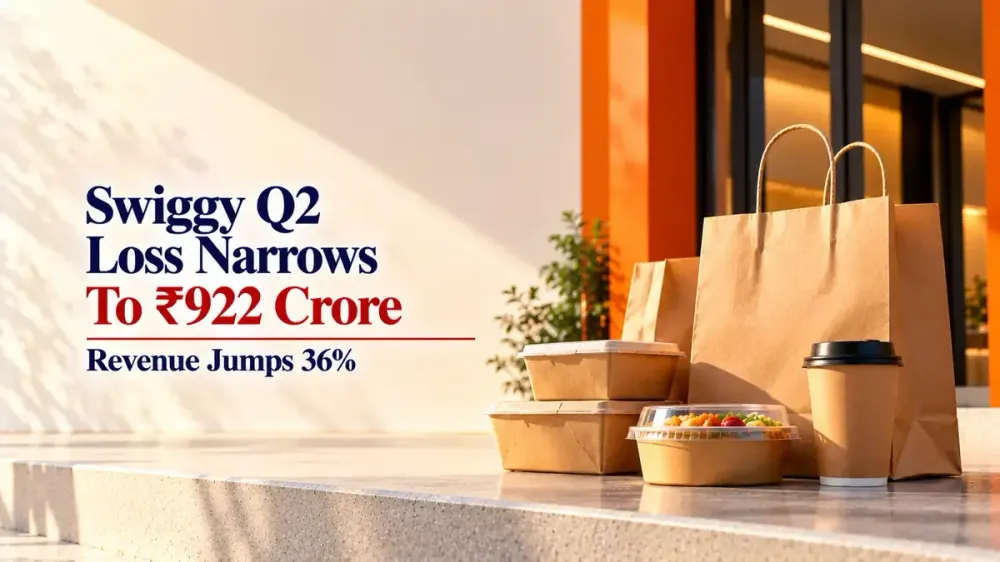
Swiggy Q2 results showed consolidated net loss narrowing to ₹922 crore from ₹1,092 crore a year earlier as revenue rose 36% to ₹7,571 crore. Food delivery posted record adjusted EBITDA, while Instamart's loss widened amid continued investments in quick commerce.
Food and grocery delivery platform Swiggy reported its Q2 results for FY27 on Thursday, October 22, with consolidated net loss narrowing 15.6% year-on-year to ₹922 crore from ₹1,092 crore in the same quarter last year. Swiggy Q2 revenue from operations jumped 36.1% to ₹7,571 crore from ₹5,561 crore.
The results were announced after market hours on Thursday following a meeting of the company's board to consider and approve the financial results for the quarter and half year ended September 30, 2026. While revenue growth remained strong, Swiggy's quarterly loss was higher than the ₹792 crore average estimate of analysts tracked by LSEG. Revenue, however, came in above the ₹7,281 crore analyst estimate.
On a sequential basis, Swiggy's loss widened from ₹791 crore in the June quarter, while revenue increased from ₹6,812 crore. Total expenses rose nearly 30% year-on-year to ₹8,703 crore from ₹6,711 crore and were also higher than ₹7,813 crore in the preceding quarter.
Swiggy shares were already under pressure ahead of the earnings announcement. The stock opened at ₹230.75 on Thursday against the previous close of ₹229.10 and declined during the session. Swiggy shares eventually closed 5.01% lower at ₹211.30.
The September-quarter performance showed a sharp contrast between Swiggy's two key businesses. Food delivery reported its highest-ever adjusted EBITDA of ₹341 crore, while Instamart's adjusted EBITDA loss widened to ₹895 crore as the company continued spending on pricing, customer acquisition and expansion.
Swiggy Food Delivery Profit Hits Record High
Swiggy's core food delivery business continued to improve in the September quarter, with adjusted EBITDA rising to a record ₹341 crore from ₹240 crore in the year-ago period.
Higher advertising revenue and improved delivery efficiencies supported profitability in the segment, even as Swiggy continued to invest heavily in its quick-commerce operations.
The food delivery performance is increasingly important for Swiggy as the mature business generates stronger earnings while the company deploys capital to expand Instamart.
Management maintained its guidance for the food delivery business, indicating that it remains confident about the segment's growth and profitability trajectory.
Swiggy Instamart Business Update
Swiggy's quick-commerce business continued to grow rapidly, but the expansion came with higher losses.
Instamart's adjusted EBITDA loss widened to ₹895 crore from ₹849 crore in the year-ago quarter as spending on pricing, customer acquisition and expansion remained elevated. Instamart's net order value, or NOV, rose 34.8% year-on-year to ₹6,594 crore during the September quarter.
Swiggy added 69 net dark stores during the quarter, taking Instamart's network to 1,240 stores across 133 cities as the company continued expanding its quick-commerce presence.
The expansion and spending also weighed on unit economics. Instamart's contribution margin deteriorated to negative 1% of gross order value from negative 0.2% in the preceding quarter.
Swiggy is competing in a quick-commerce market where companies continue to spend heavily on store expansion, pricing and customer retention as demand for rapid delivery of groceries and other products grows.
Swiggy Management Signals Shift In Instamart Strategy
Swiggy management indicated that Instamart's losses could be nearing a peak as the business scales, while outlining a strategy focused on differentiation rather than only expanding product selection.
MD and Group CEO Sriharsha Majety said Swiggy is looking to differentiate Instamart through a more curated selection and improvements in the overall customer buying experience.
The company has also qualified as an Indian-owned-and-controlled company and is moving towards a structure that could provide greater flexibility in the way Instamart operates.
Swiggy expects the ability to move towards an inventory-led model to potentially improve Instamart's contribution margin by around 80 basis points.
The change would allow the company greater control over inventory and could help improve economics in the quick-commerce business as it works towards profitability.
For Swiggy, the September quarter therefore showed two different trajectories. Its food delivery business delivered record adjusted earnings and improving efficiencies, while Instamart continued to grow rapidly but remained a significant drag on consolidated profitability.
Revenue growth beat analyst expectations during the quarter, but the higher-than-expected consolidated loss showed that the cost of expanding quick commerce remains a key factor for Swiggy as it looks to narrow losses while competing for a larger share of India's fast-growing delivery market.
This article is for informational purposes only and should not be considered investment advice from Kotak Neo. For compliance T&C and disclaimers, Visit www.kotakneo.com/disclaimer

Rochelle Britto has spent 8+ years decoding India's markets, businesses, and consumer economy, reporting for ET Prime and Times Internet along the way, covering the stories behind the numbers.
A Mumbai native and perpetual planner of the next holiday, she stays far, far away from the eternal question, “Where are we going next?” When she's not chasing headlines, she's chasing new cultures, open roads, and a bit of quiet in nature.
Right Tools, Rich Insights