Ola Electric Looks Beyond Scooters As Gigafactory Targets Energy Storage, Drones And Defence
 Add Preferred News Source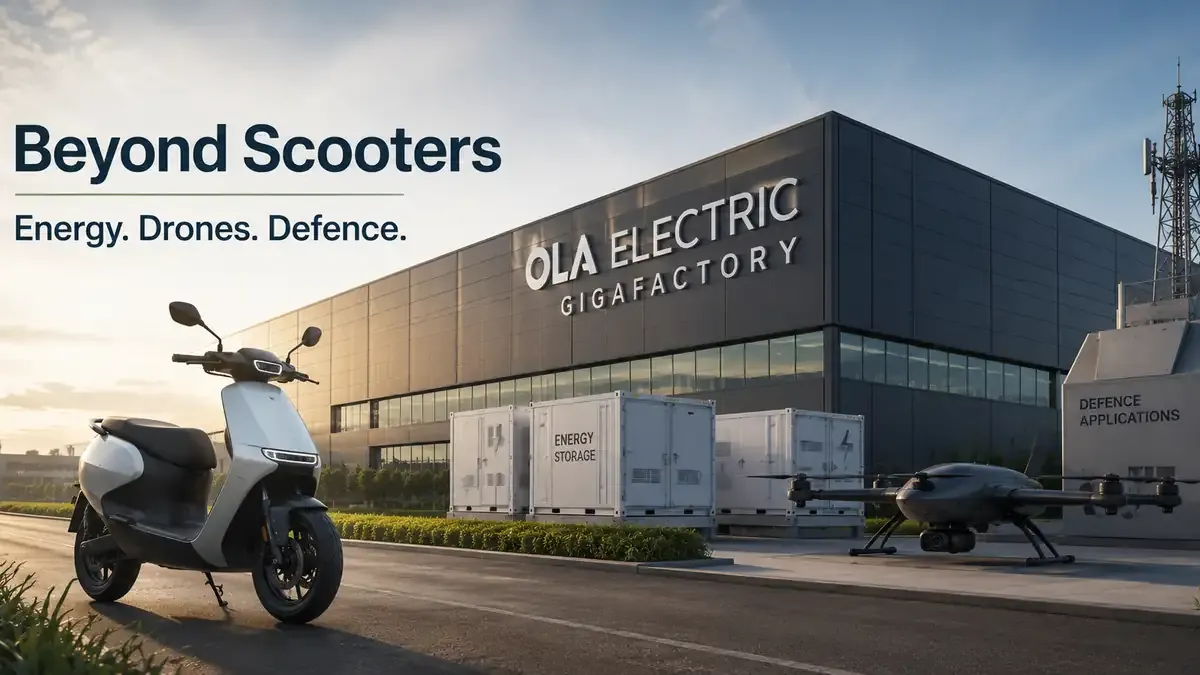
Ola Electric is targeting energy storage, drones and defence through its Tamil Nadu Gigafactory. Further, the company is increasing battery capacity and improving vehicle deliveries to maximise its market share.
Ola Electric is expanding the role of its Tamil Nadu Gigafactory beyond electric scooters. The company is positioning the facility as a broader battery manufacturing platform for energy storage, defence and drone applications.
During its Q1 FY27 earnings call, chairman Bhavish Aggarwal highlighted several new initiatives. These include a 20-GWh energy storage agreement, battery systems for the power grid and partnerships covering defence drones and near-space platforms.
Ola Electric has signed its first memorandum of understanding for Mahashakti, a utility-scale energy storage system. The agreement covers 20 GWh of deployment by 2032.
Aggarwal said India could require at least 400 GWh of energy storage capacity over the next five to six years. He added that the estimate could prove conservative.
The company is also preparing a cheaper Lithium Iron Phosphate (LFP) cell version of its Shakti home and commercial storage product. The new version is scheduled to launch on 15 August.
Two Battery Chemistries For Multiple Applications
Ola Electric's expansion is based on using two different battery chemistries. The company plans to move around 80% of its automotive portfolio to LFP cells.
LFP batteries are cheaper and offer longer cycle life. Nickel Manganese Cobalt (NMC) cells will continue to be used in the remaining 20% of the automotive portfolio, particularly performance-focused models.
NMC technology will also be used for specialised applications such as drones. Ola Electric plans to use LFP cells across its energy storage products.
The company expects its Shakti Gen 2 product, which uses LFP cells, to deliver higher gross margins than its automotive business does.
The automotive division remains the company's main revenue source. Automotive revenue stood at ₹455 crore in Q1 FY27, up 72% sequentially.
The cell business generated ₹5 crore during the quarter. Meanwhile, Ola's service business is expected to grow from around ₹130 crore in FY26 to ₹400–500 crore by FY28.
Gigafactory Expansion And Financial Performance
Ola Electric's battery cell yields currently stand in the high-70% to 80% range. This remains below the roughly 90% level that analysts generally view as commercially viable.
The company temporarily halted production for two months while expanding cell capacity from 2.5 GWh to 6 GWh. The expanded capacity is expected to become operational later this month.
Ola Electric plans to increase capacity from 6 GWh to 20 GWh. This expansion will require a separate equity raise at the cell business level.
The structure is intended to limit the impact on the parent company's balance sheet. However, the consolidated business continues to record an operating cash burn of around ₹195 crore per quarter.
The company expects the same Gigafactory to eventually support several markets. These include scooters, motorcycles, home batteries, grid-scale storage and defence applications.
Ola Electric also reported an improvement in its automotive performance. Deliveries nearly doubled during the June quarter.
Its market share increased from 5.1% to 8.4%. Gross margins remained above 30% despite an 11% increase in commodity costs.
Also Read - Molbio Diagnostics Raises ₹281 Crore From Anchor Investors Ahead Of IPO
This article is for informational purposes only and should not be considered investment advice from Kotak Neo. For compliance T&C and disclaimers, visit www.kotakneo.com/disclaimer.

Vishwa is a content and SEO strategist with 10+ years of experience across fintech and FMCG. She has a knack for connecting dots others miss, spotting trends early, and finding angles on topics most miss to question.
At Kotak Neo, she drives content strategy for neoshorts, Kotak News Desk, and Investing Guide.
Outside work, she's drawn to art, painting and architecture, and enjoys travelling to explore them firsthand.