 Add Preferred News Source

1,006 Views| 08 Nov 2026
Indian Oil Plans to Buy Crude Oil and LPG Ships as US-Iran War Pushes Freight Costs Higher
Summary
Indian Oil has received board approval to purchase vessels as shipping costs rise during the US-Iran conflict. Its existing charter contracts have helped keep freight expenses below spot market rates, while the company is also exploring shipbuilding in India.
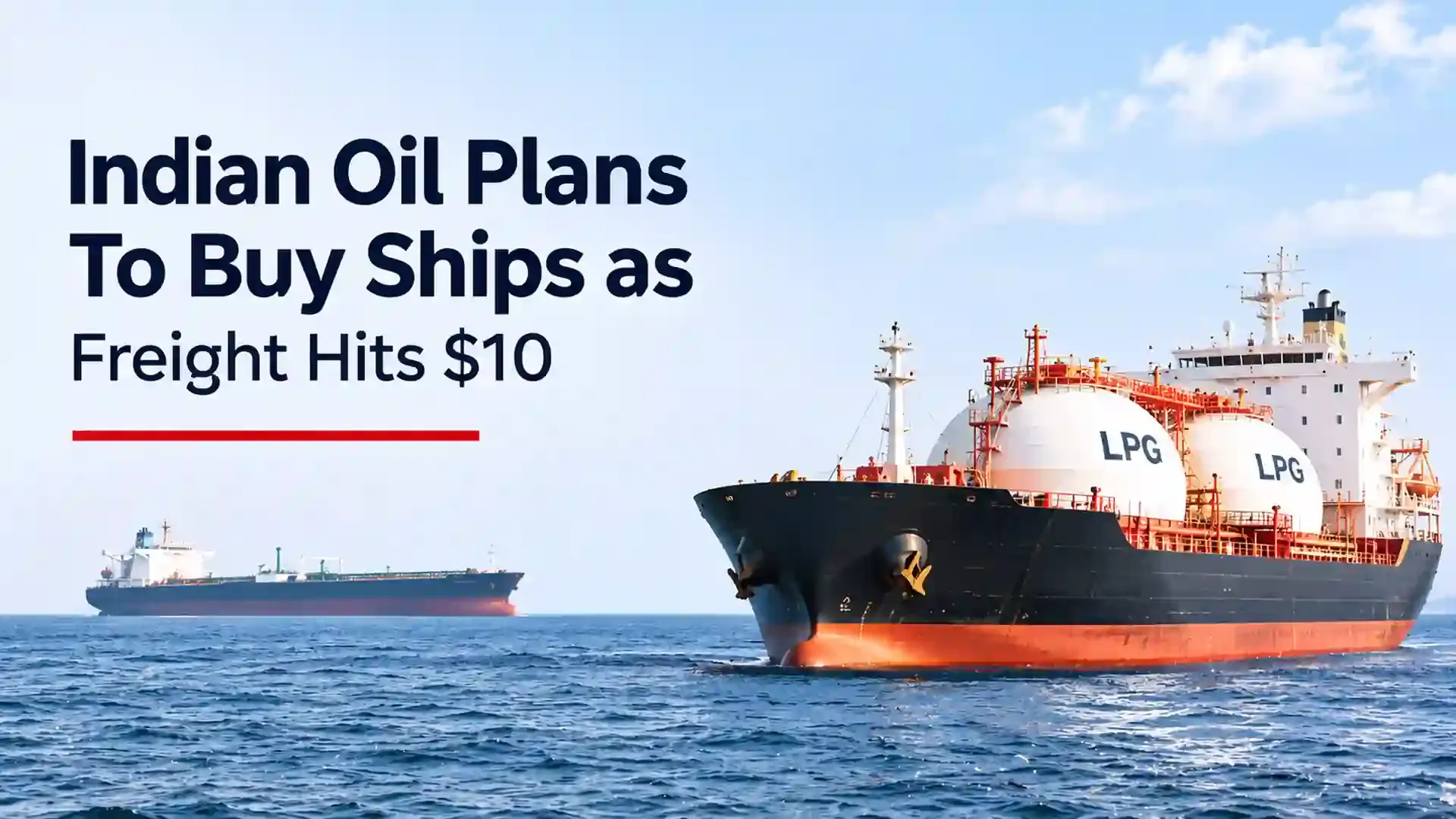
Indian Oil Corporation (IOC) plans to buy crude oil tankers and liquefied petroleum gas (LPG) ships as freight costs rise amid the US-Iran war. The state-run oil company has received board approval to purchase a few vessels, while spot freight rates for crude oil shipments have reached $8–$10 per barrel, compared with around $2–$2.50 per barrel under its existing shipping arrangements.
Indian Oil's finance director Anuj Jain shared the details during the company's earnings call on October 31. He said tenders for the purchase of vessels had been issued several months ago. The company currently has three crude oil tankers and nine LPG carriers on time charter, which have helped it manage shipping expenses during the conflict.
Freight rates for LPG have also increased sharply. Spot rates have risen to around $160–$180 per tonne from normal levels of about $40 per tonne. The increase comes as the war disrupts shipping through the Strait of Hormuz, a major route for crude oil and LPG supplies from the Middle East.
Apart from buying ships, Indian Oil is also looking at options to build vessels in India. However, the company has not disclosed how many ships it plans to purchase, the investment required or when the vessels will be delivered.
Indian Oil Gets Board Approval to Buy Crude Oil and LPG Ships
During the October 31 earnings call, Jain said Indian Oil was working on three areas of its shipping operations. These include managing its existing chartered fleet, purchasing vessels and exploring options to build ships in India.
The company has already received board approval to purchase a few vessels. Tenders were issued several months earlier, although Indian Oil has not shared the number of ships covered under the latest approval or the expected cost of the purchases.
Indian Oil is also in discussions with stakeholders about building ships at Indian shipyards. The company is examining this option as part of its plans to increase shipping capacity.
The refiner had earlier explored plans to acquire four medium-range vessels through an arrangement involving Shipping Corporation of India and other state-run oil companies. It has not confirmed whether those vessels are part of the latest purchase plan.
Indian Oil's Shipping Costs Rise as Spot Freight Rates Reach $10 per Barrel
Indian Oil's existing shipping contracts have helped it avoid some of the sharp increase in freight rates. The company pays around $2–$2.50 per barrel to transport crude oil under its charter arrangements, while spot market rates have climbed to $8–$10 per barrel.
The company also has nine LPG carriers on time charter. Spot freight charges for LPG shipments have risen to around $160–$180 per tonne, compared with about $40 per tonne under normal market conditions.
For Indian refiners, higher freight charges have increased the cost of importing crude oil. Even when crude is available at a lower price, the overall cost can rise once shipping and insurance expenses are added.
Indian Oil chairman A S Sahney said at an industry event in October that higher freight rates were reducing the benefit of buying discounted crude from overseas markets. He also spoke about the need to increase India's shipping capacity.
US-Iran War Disrupts Oil Shipments as Indian Oil Changes Crude Sourcing
The US-Iran war, which began in February 2026, has disrupted shipping through the Strait of Hormuz, one of the main routes used to transport crude oil and LPG from the Middle East.
The conflict has led to shipping delays, higher insurance charges and rising freight costs. Oil companies have also been looking at alternative routes and suppliers to maintain crude oil imports.
Freight charges for transporting crude oil from the Gulf to India have increased to around $10–$11 per barrel from $1–$1.50 before the war, according to industry estimates reported by The Economic Times.
Shipping crude oil from the United States to India has also become more expensive, with freight costs reaching around $20–$25 per barrel on some routes.
Indian Oil has been making changes to its crude sourcing arrangements during the conflict. The company has increased purchases from countries outside the Middle East, including Venezuela, Brazil and African nations.
During the first half of FY27, around 87% of Indian Oil's crude purchases were made in the spot market, compared with about 50% in the previous financial year. Russian crude accounted for around 55% of its purchases during the six-month period, while Middle Eastern supplies made up around 24%.
The company has been looking at different suppliers and shipping arrangements to maintain crude supplies while managing transportation costs.
Indian Oil has not announced a timeline for completing the proposed vessel purchases or confirmed when the new ships could enter service.
Also Read - Coca-Cola India IPO: HCCH Files DRHP for 99.75 Crore Shares, Promoter to Sell Up to 15% Stake
This article is for informational purposes only and should not be considered investment advice from Kotak Neo. For compliance T&C and disclaimers, Visit www.kotakneo.com/disclaimer
About the Author

Rochelle Britto
Rochelle Britto has spent 8+ years decoding India's markets, businesses, and consumer economy, reporting for ET Prime and Times Internet along the way, covering the stories behind the numbers.
A Mumbai native and perpetual planner of the next holiday, she stays far, far away from the eternal question, “Where are we going next?” When she's not chasing headlines, she's chasing new cultures, open roads, and a bit of quiet in nature.
Right Tools, Rich Insights

Latest News
- 1,094 Views| 08 Nov 2026
- 1,061 Views| 07 Nov 2026
- 1,039 Views| 07 Nov 2026
- 1,062 Views| 07 Nov 2026
- 1,039 Views| 07 Nov 2026
- 1,014 Views| 07 Nov 2026
- 1,049 Views| 06 Nov 2026
- 1,016 Views| 06 Nov 2026
- 1,004 Views| 06 Nov 2026